

Creating atmospheric underwater biomes, props, and visual development explorations.

(COMPANY) (ROLE) (FOCUS)
UKNOWN WORLDS, 2025 SENIOR CONCEPT ARTIST ENVIRONMENT DESIGN, PROP DESIGN
UKNOWN WORLDS, 2025 SENIOR CONCEPT ARTIST ENVIRONMENT DESIGN, PROP DESIGN


(INTRODUCTION)
I have been working as a Concept Artist on Subnautica 2, where I am responsible for the game’s environment design.
My role involves developing immersive and visually compelling underwater landscapes that align with the narrative and gameplay direction. I focus on shaping unique biomes, visual storytelling, and mood through lighting, composition, and form language, ensuring each environment supports both exploration and atmosphere. Collaborating closely with the art and level design teams, I translate early ideas into detailed visual concepts that guide the overall aesthetic of the game’s world.
My role involves developing immersive and visually compelling underwater landscapes that align with the narrative and gameplay direction. I focus on shaping unique biomes, visual storytelling, and mood through lighting, composition, and form language, ensuring each environment supports both exploration and atmosphere. Collaborating closely with the art and level design teams, I translate early ideas into detailed visual concepts that guide the overall aesthetic of the game’s world.



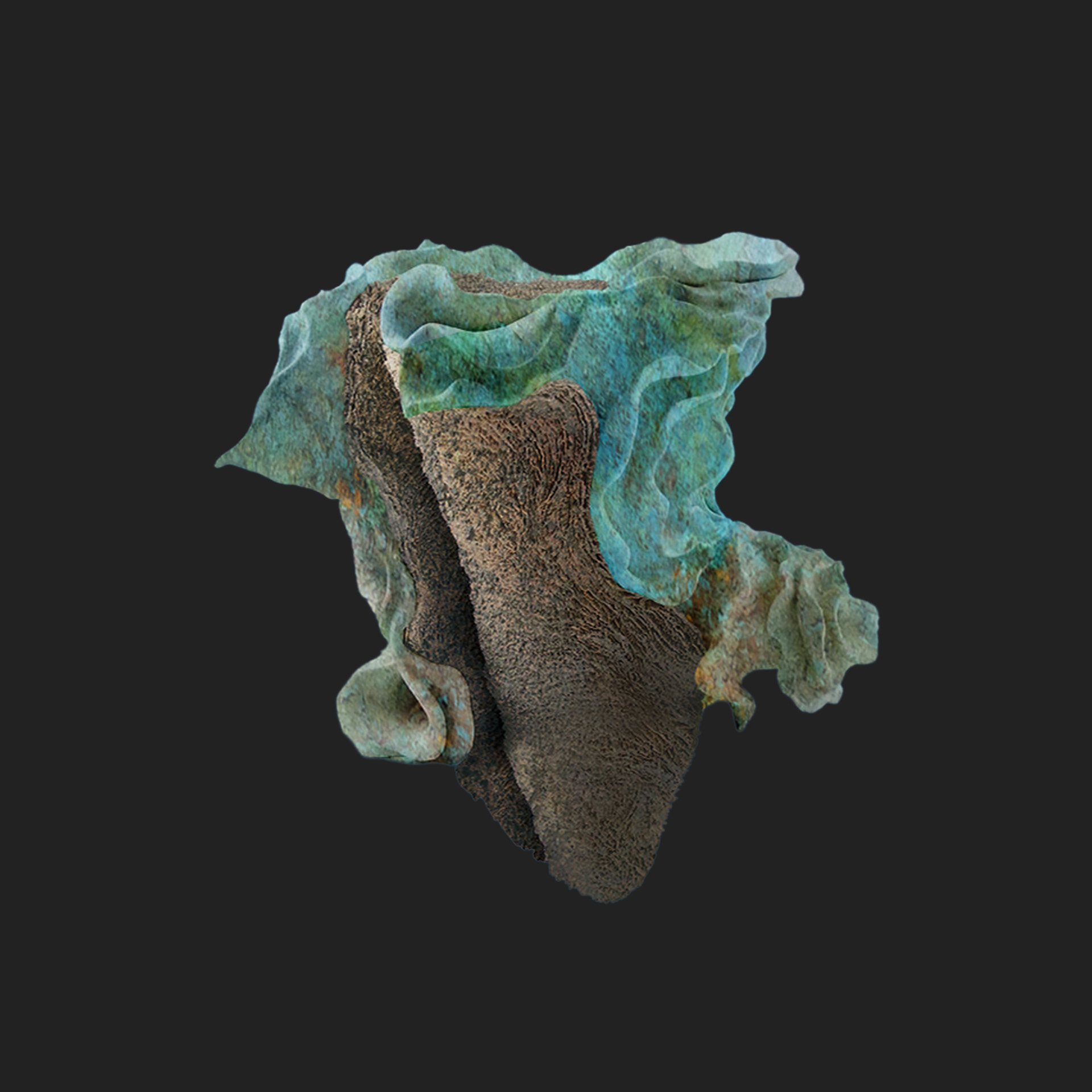



Visual Research & Concept Exploration— Establishing Shape-Language, Material Readability and Gameplay-Driven Form Silhouettes
The following visual development sheet focuses on early ideation work for Subnautica 2 each concept was approached from a gameplay-first perspective, ensuring visual clarity in underwater conditions, consistent identification read from mid-distance, and a strong silhouette hierarchy that remains readable even when the subject is partially occluded by fog, particulates, or bioluminescent caustics.
Shape-language is aligned with the franchise’s existing industrial–research vocabulary, yet each new form introduces updated modularity and subtle material refinements to reflect a more advanced stage of Alterra-grade manufacturing.
Shape-language is aligned with the franchise’s existing industrial–research vocabulary, yet each new form introduces updated modularity and subtle material refinements to reflect a more advanced stage of Alterra-grade manufacturing.
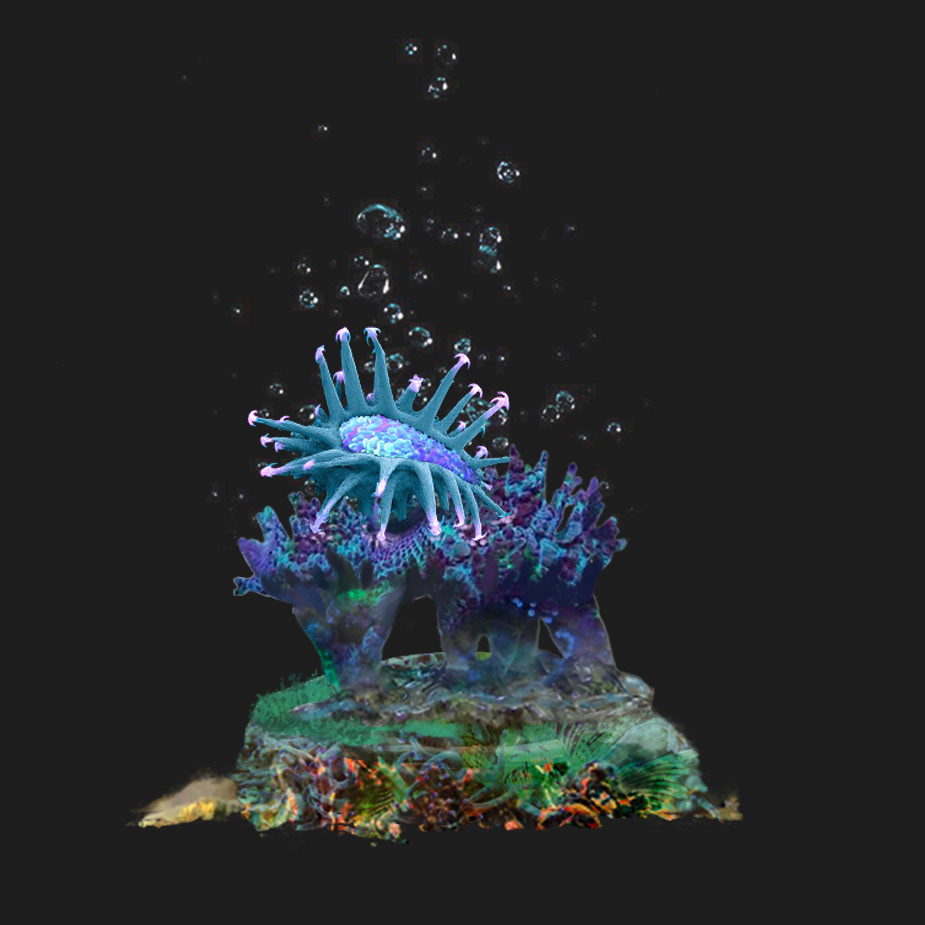
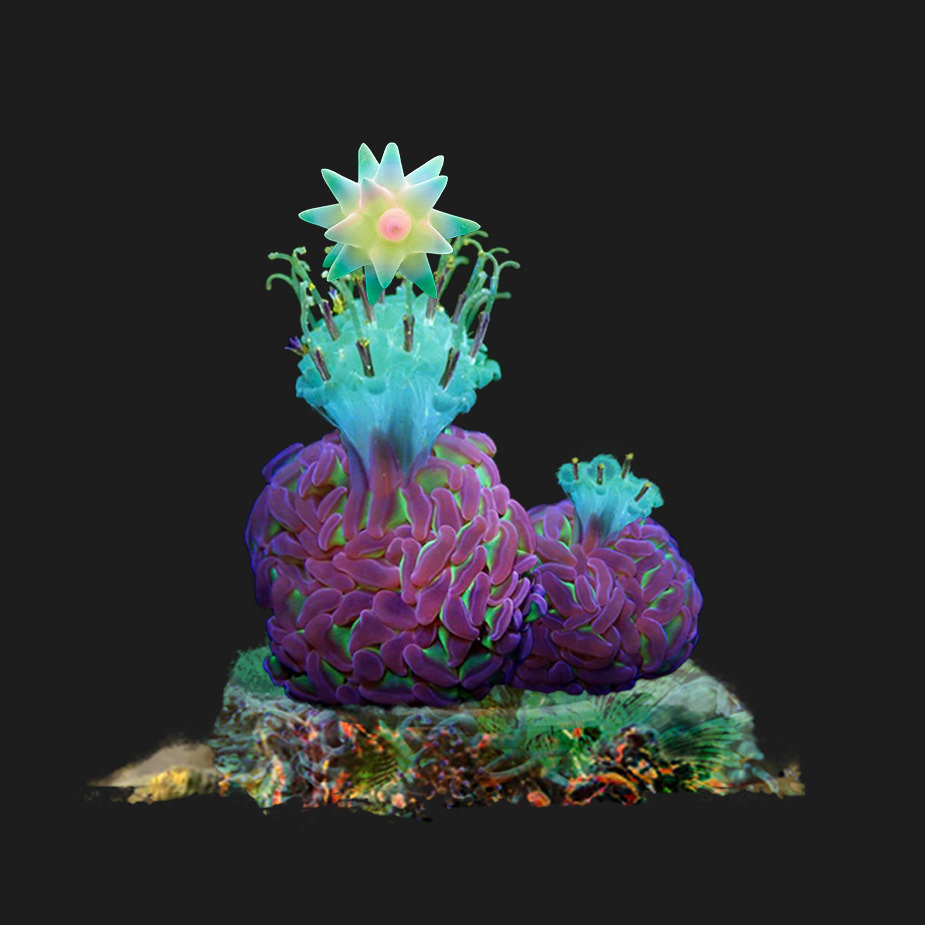


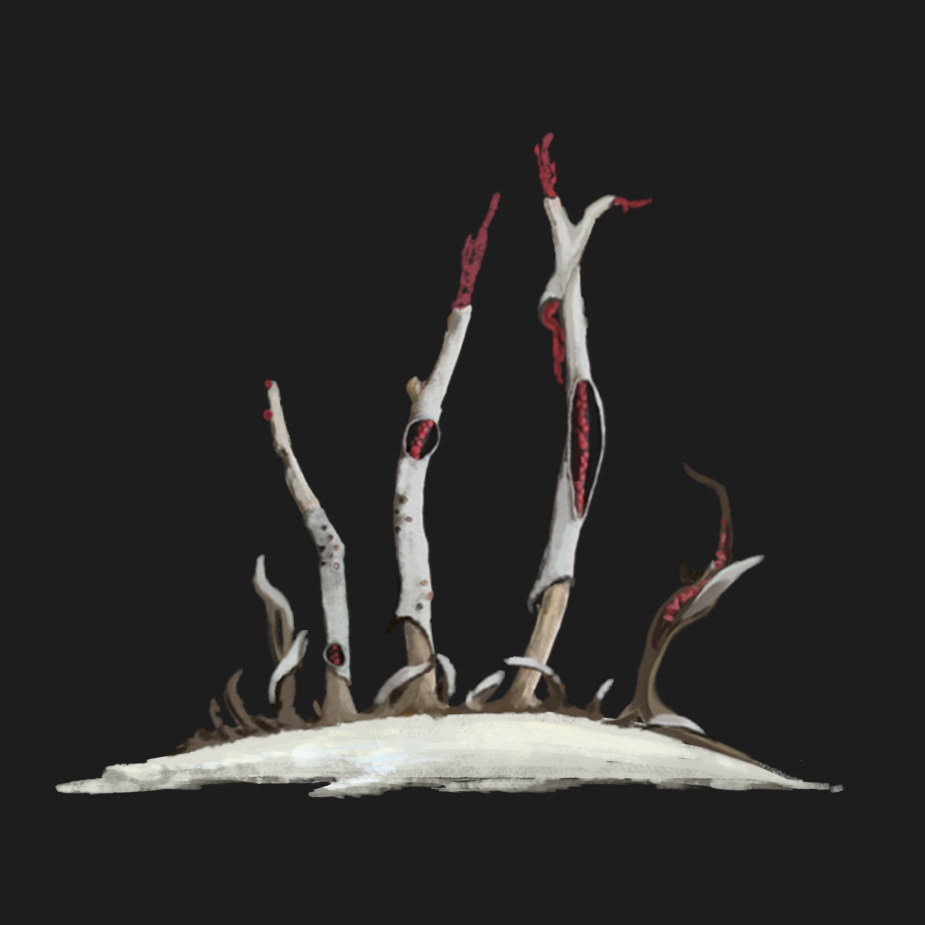


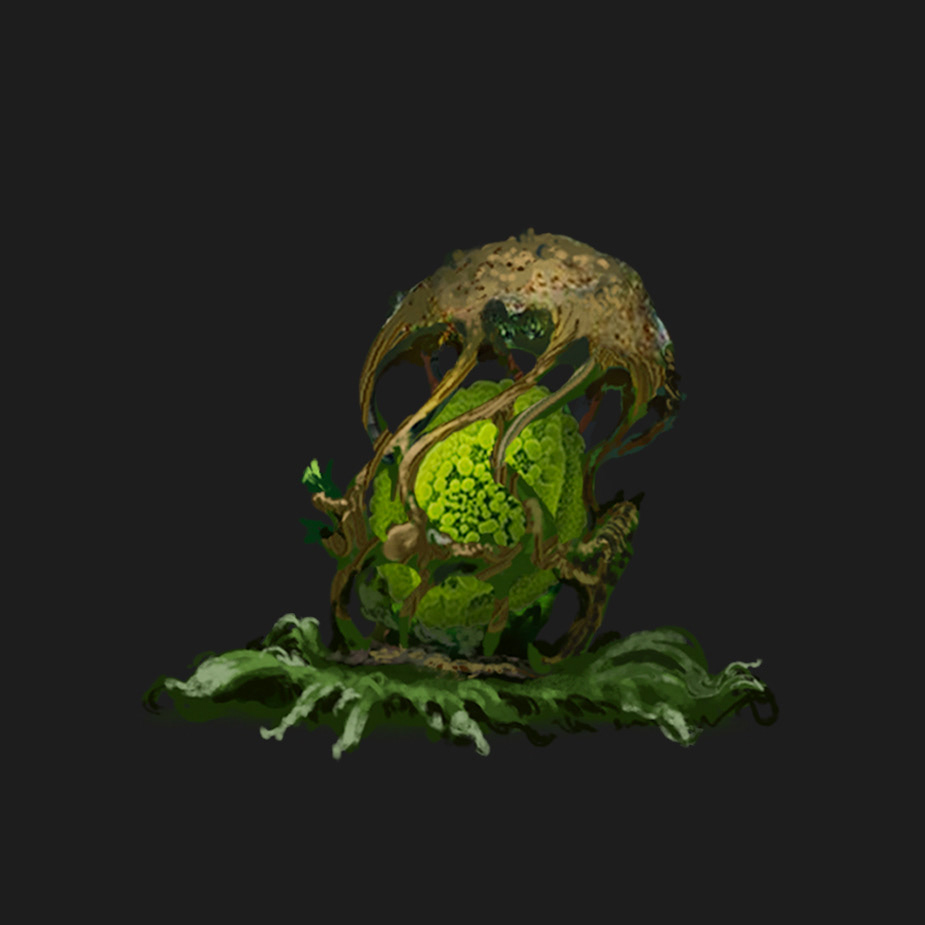
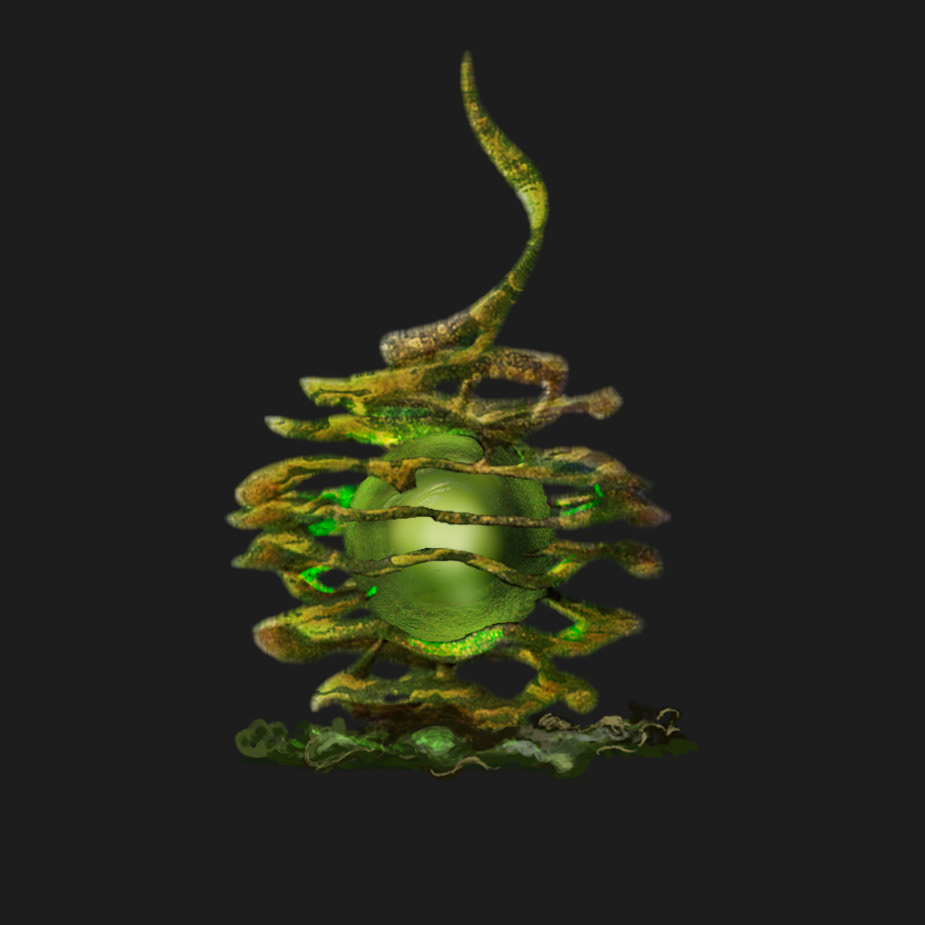


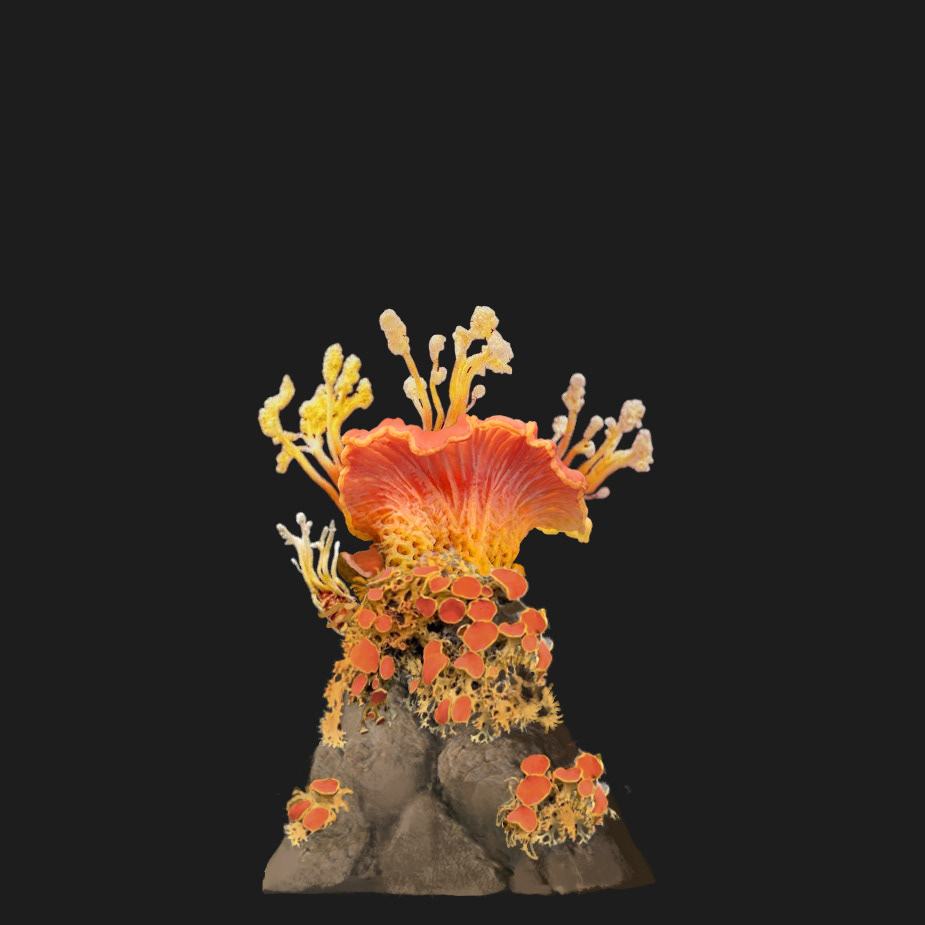


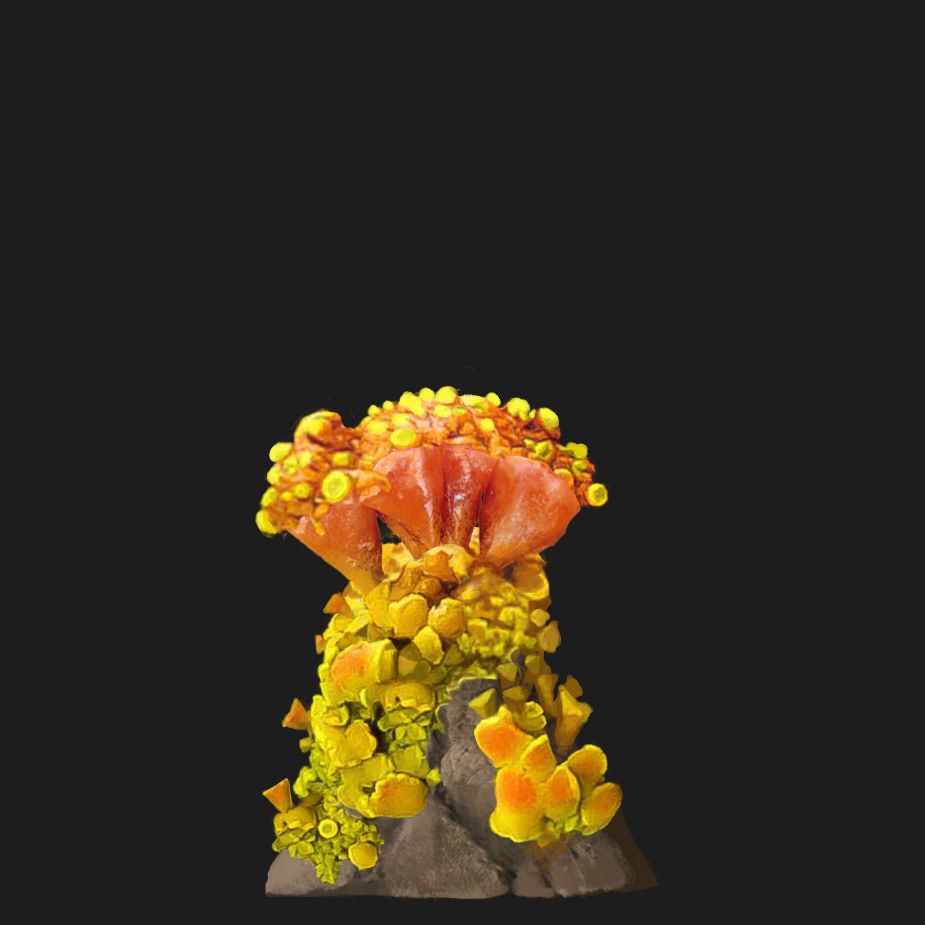
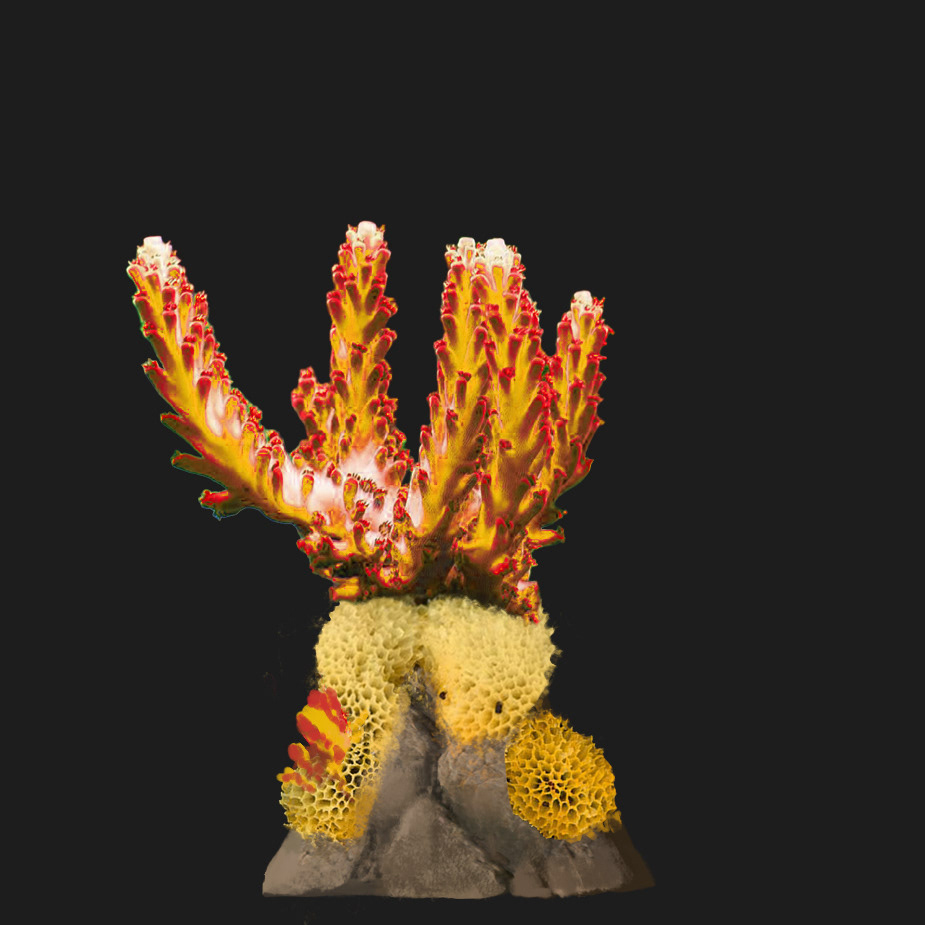

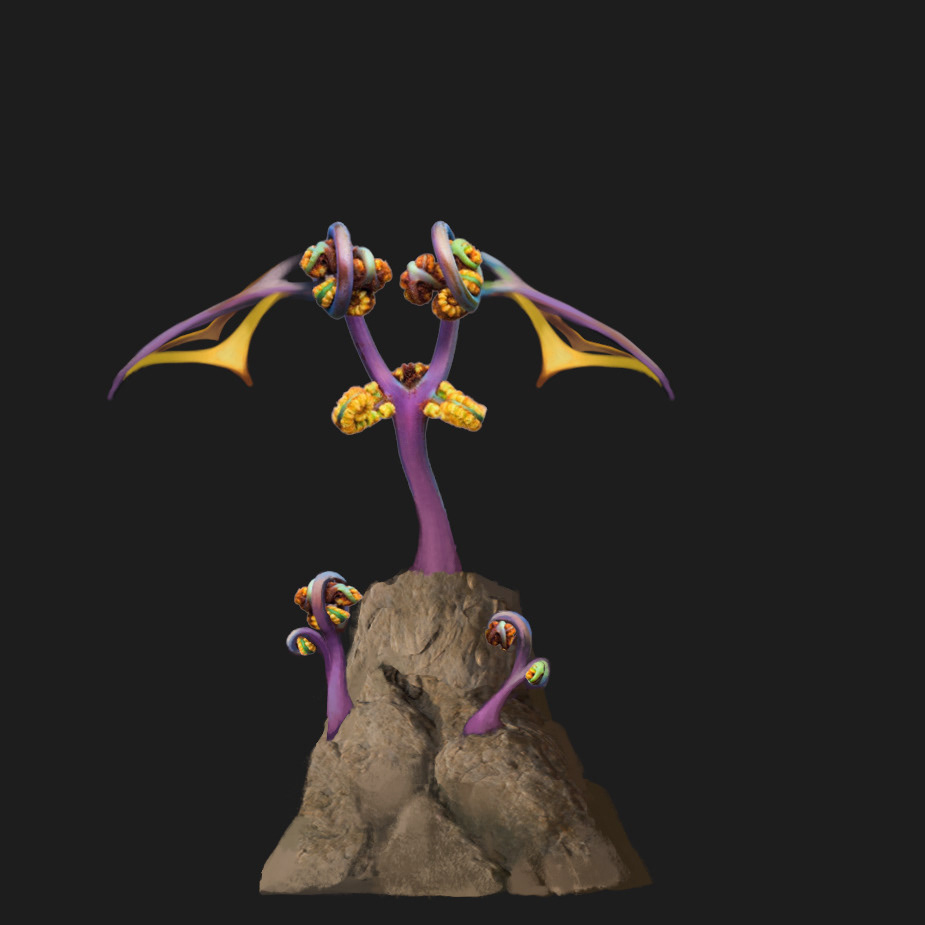


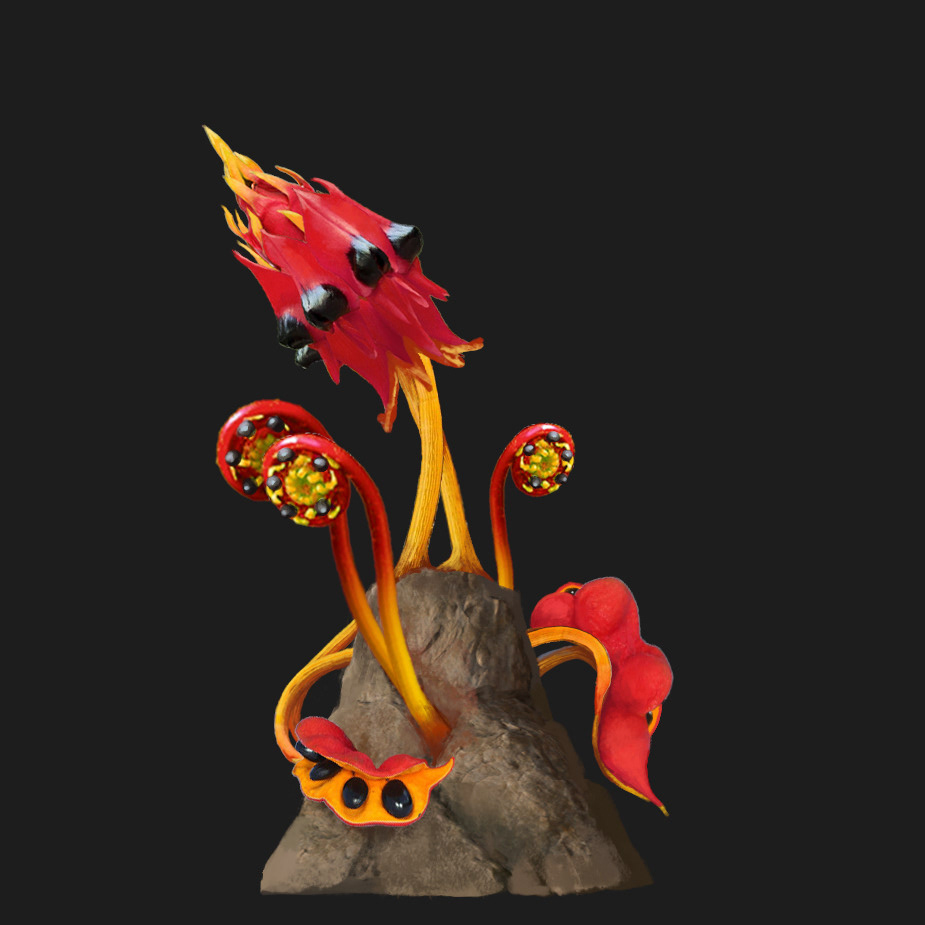

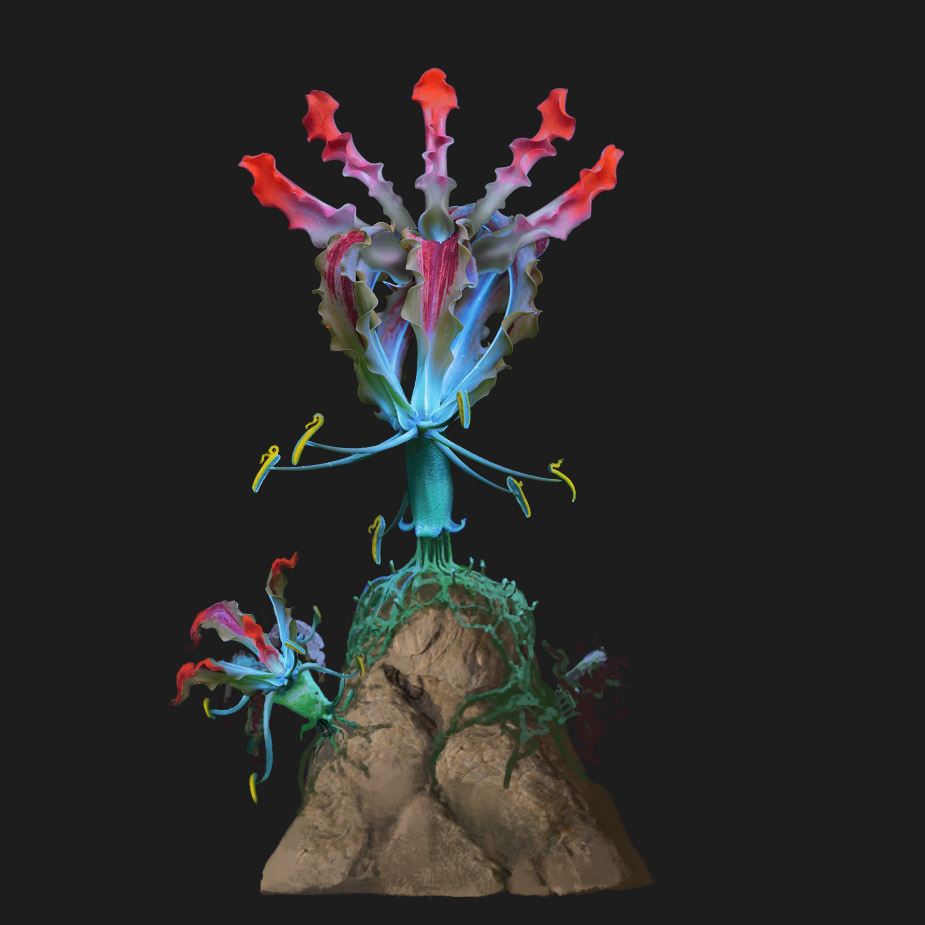
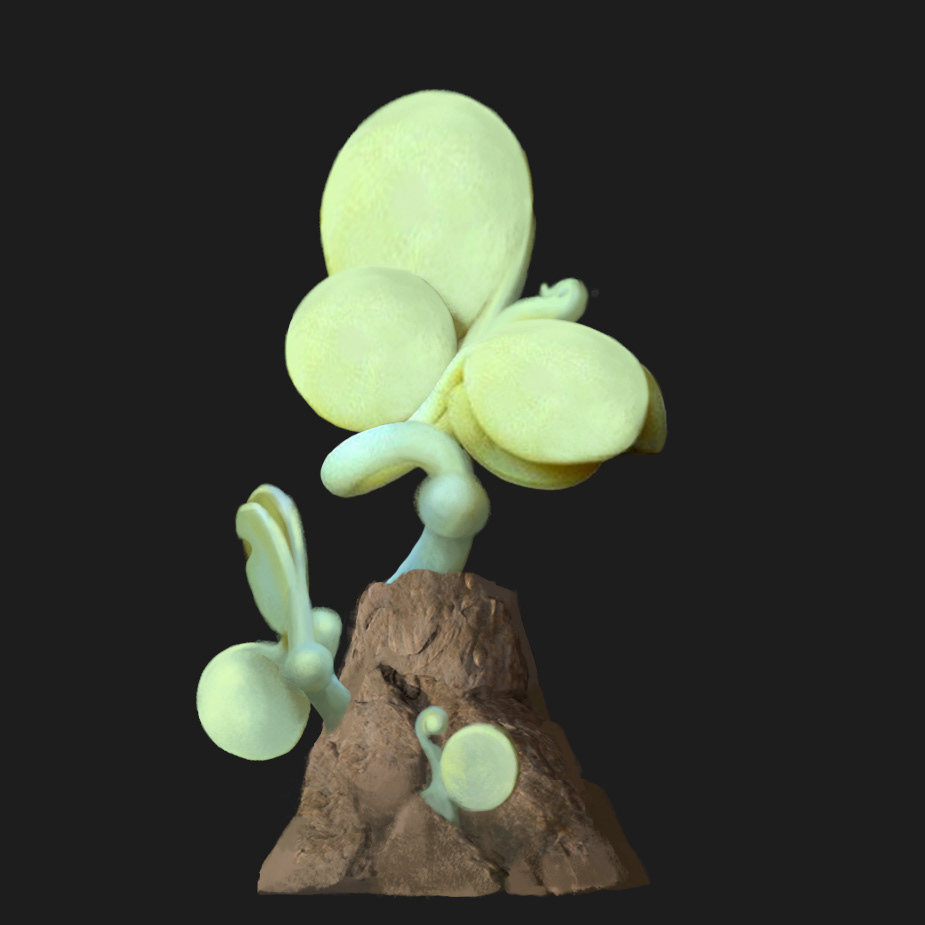

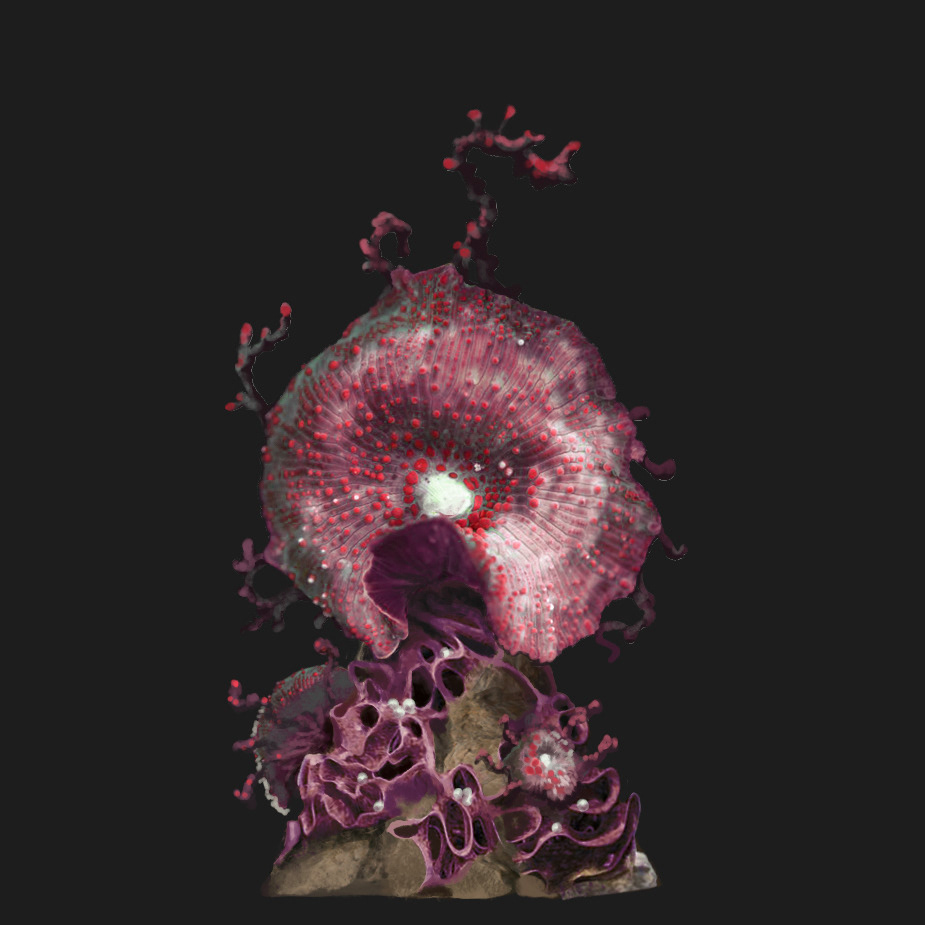


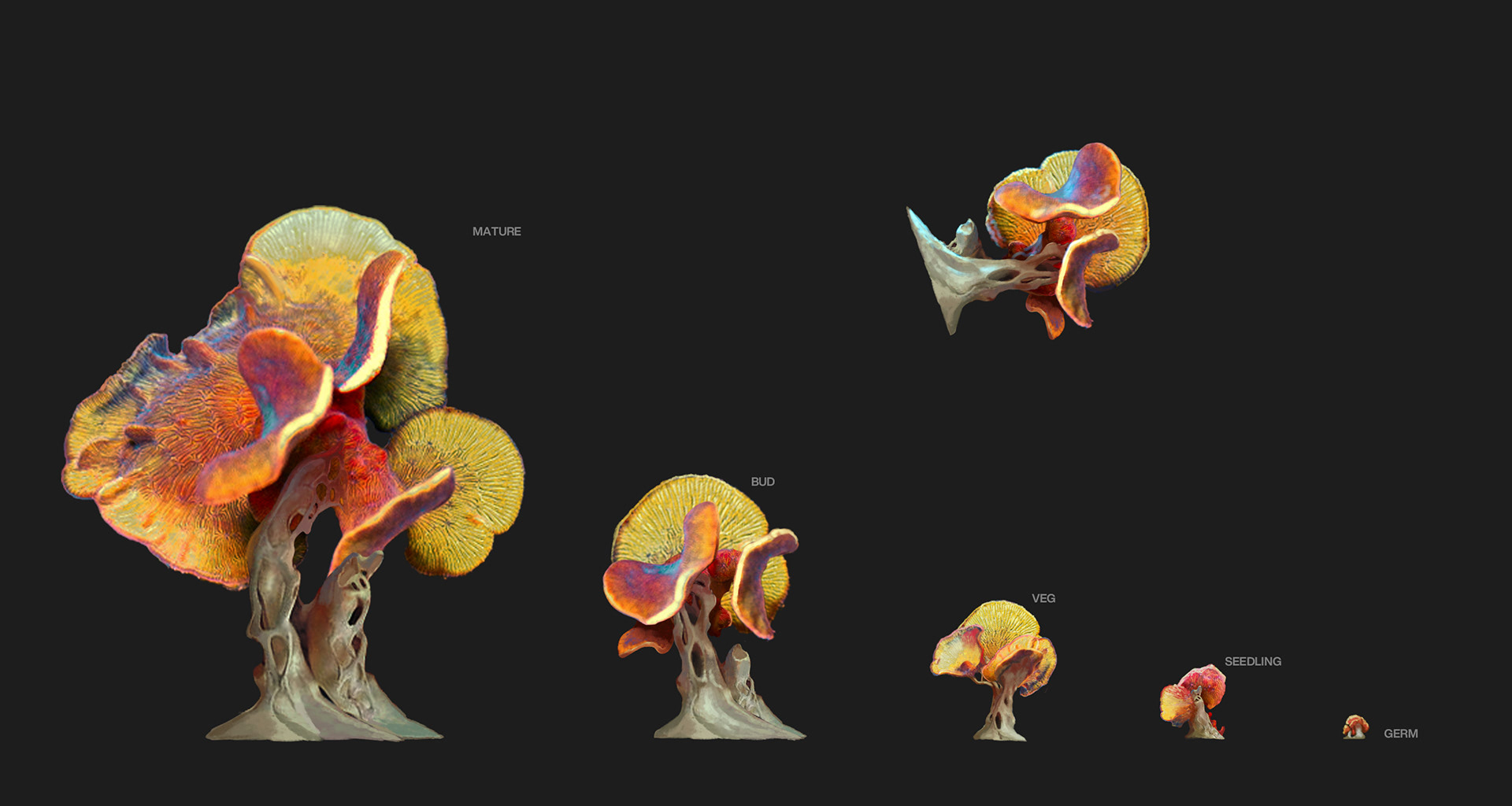
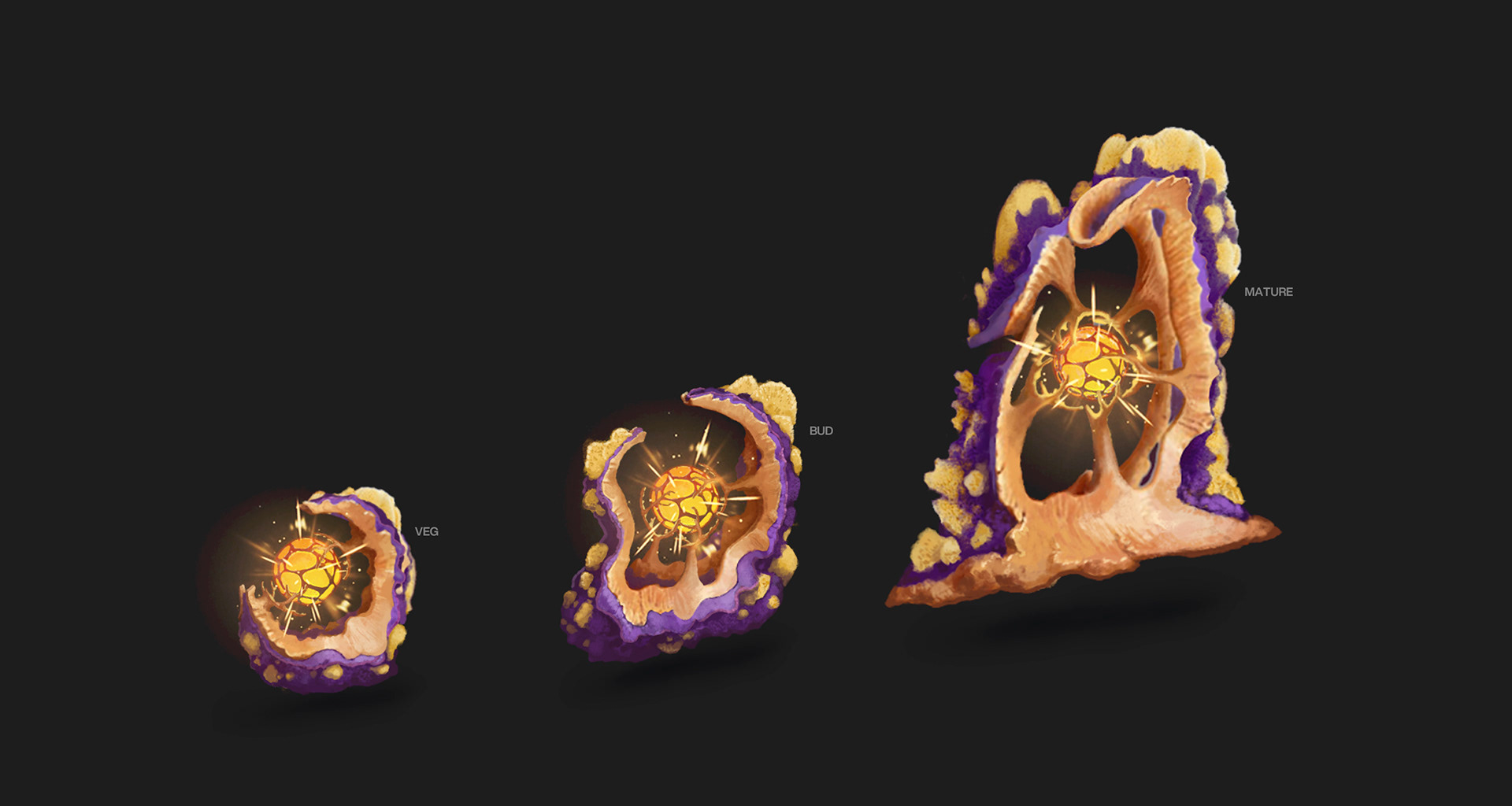


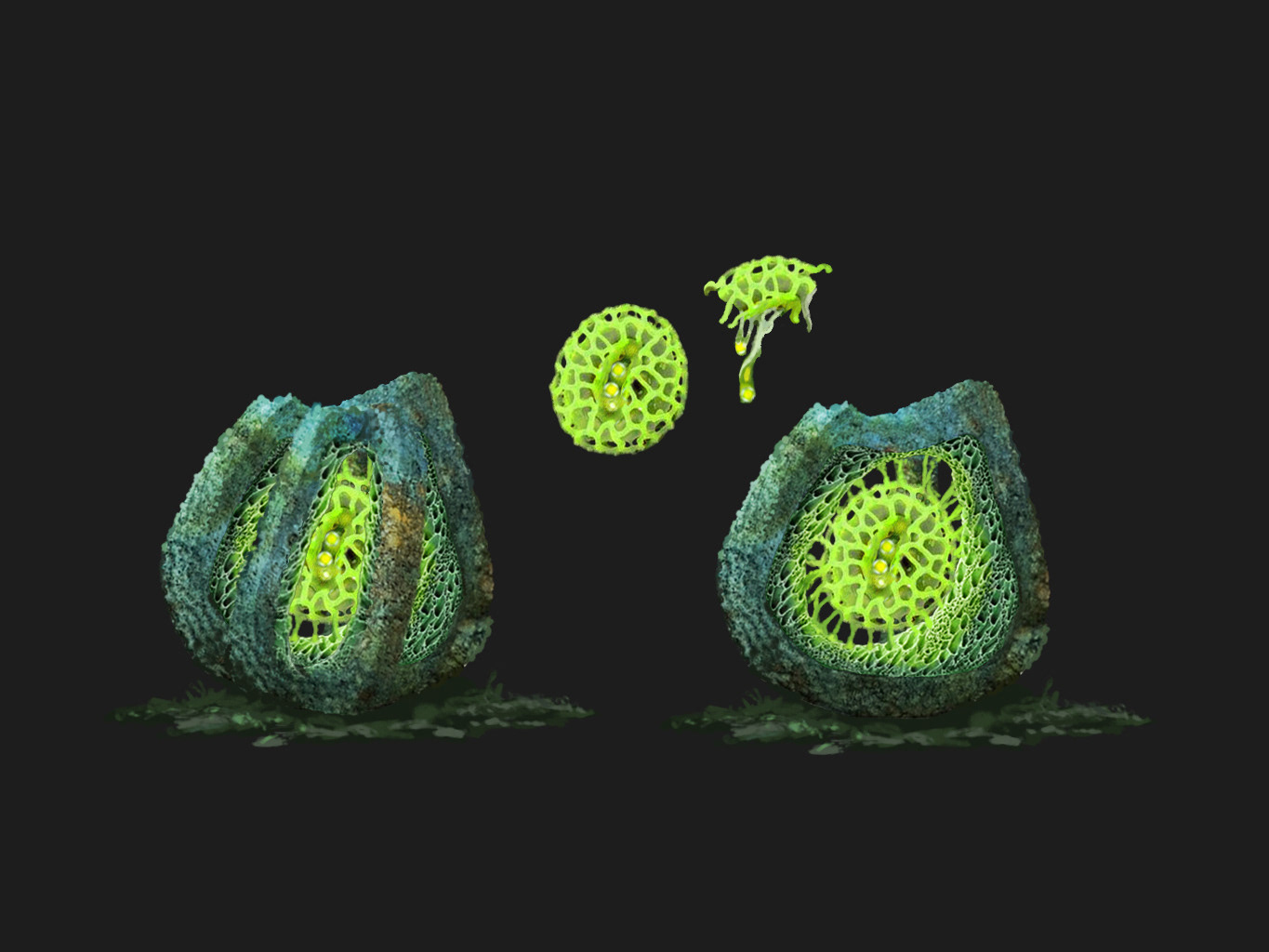
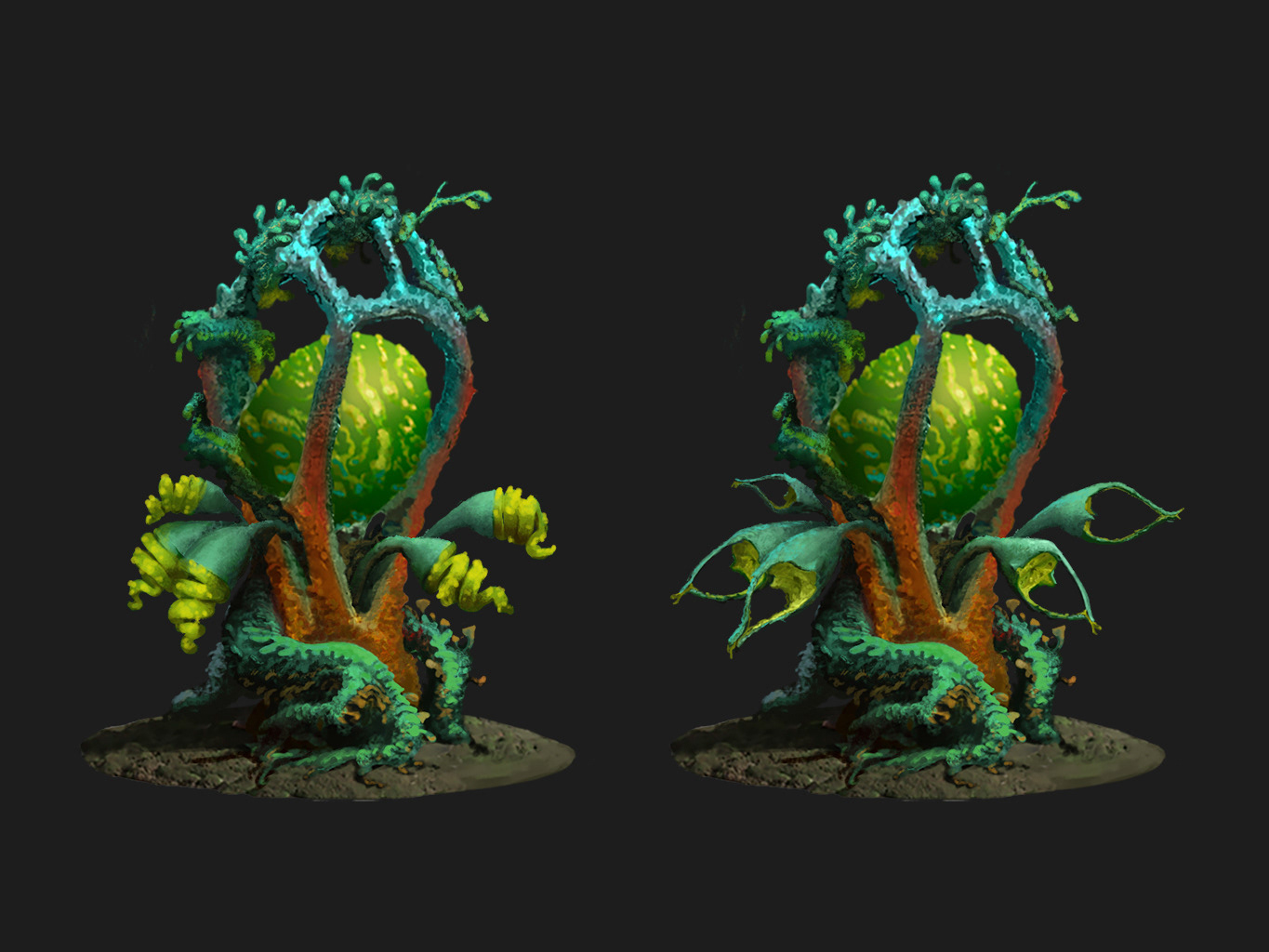
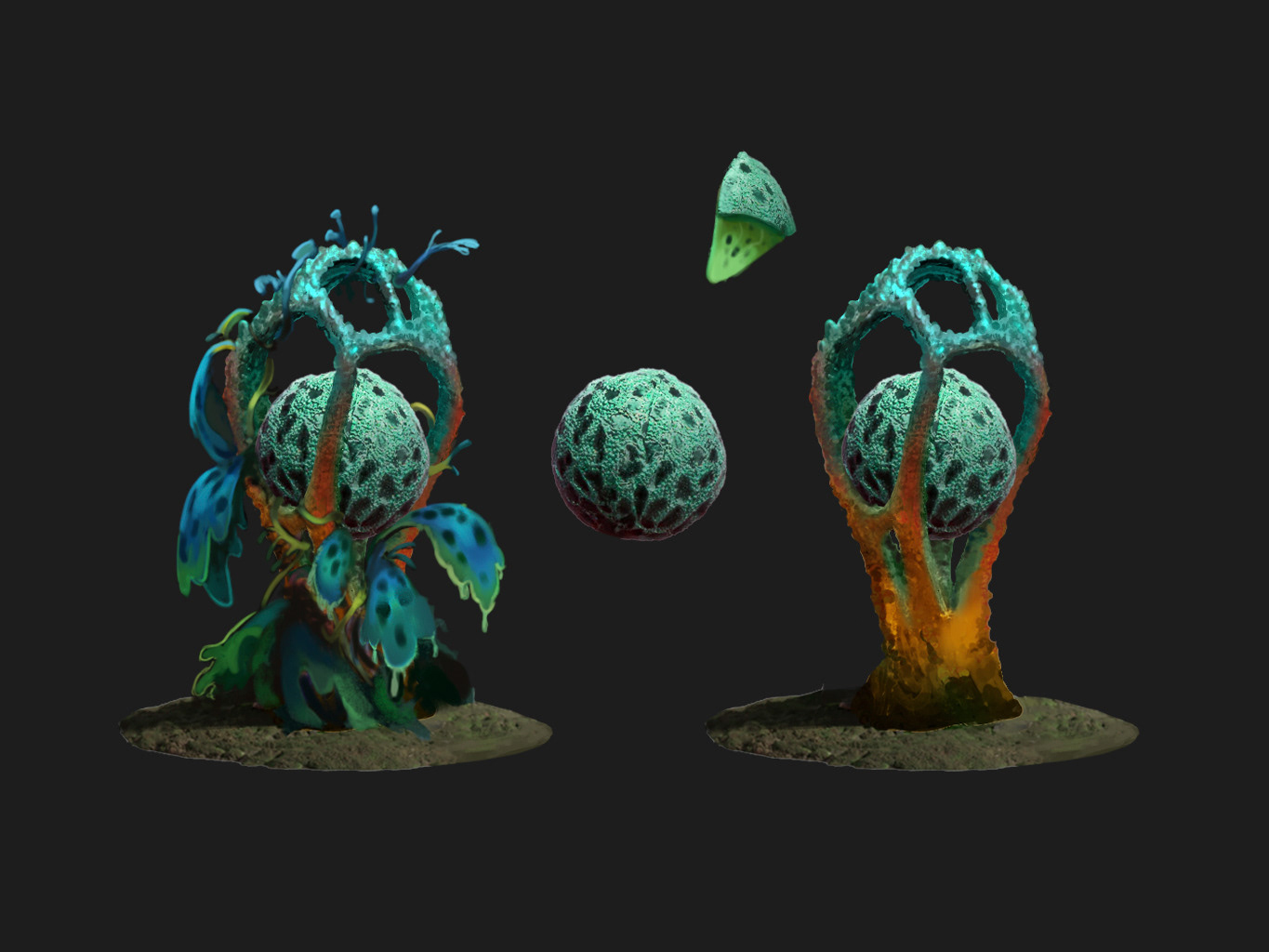
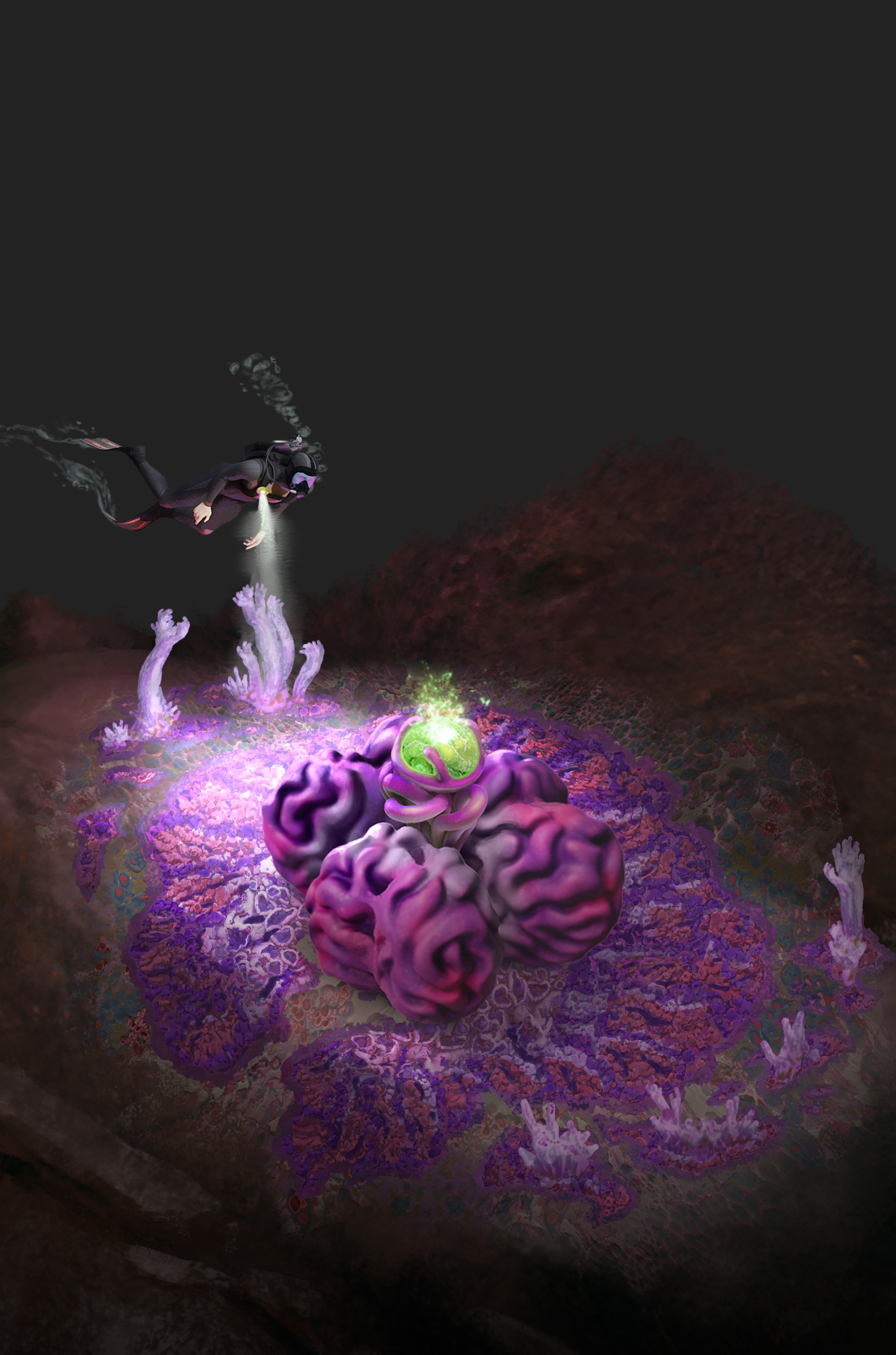
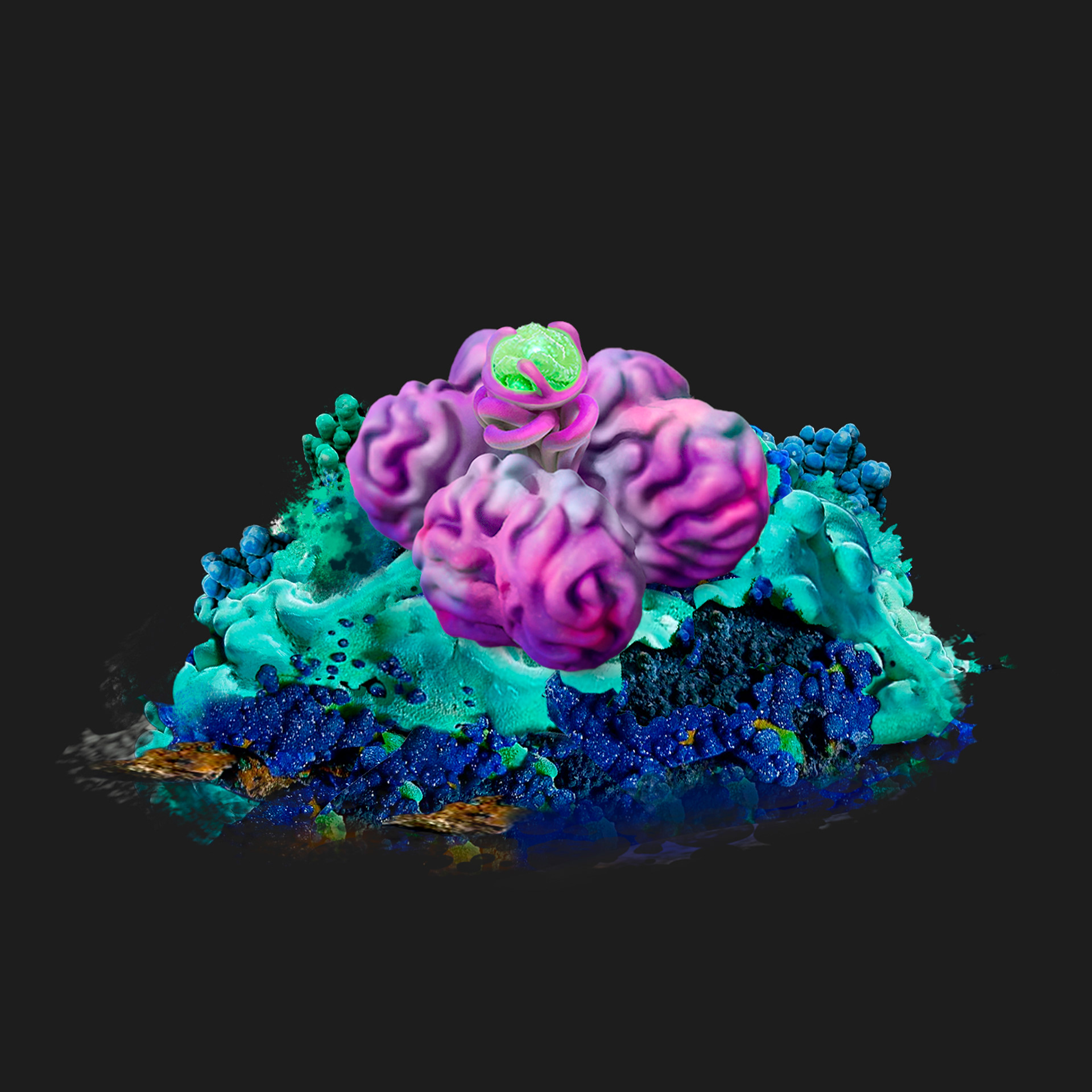
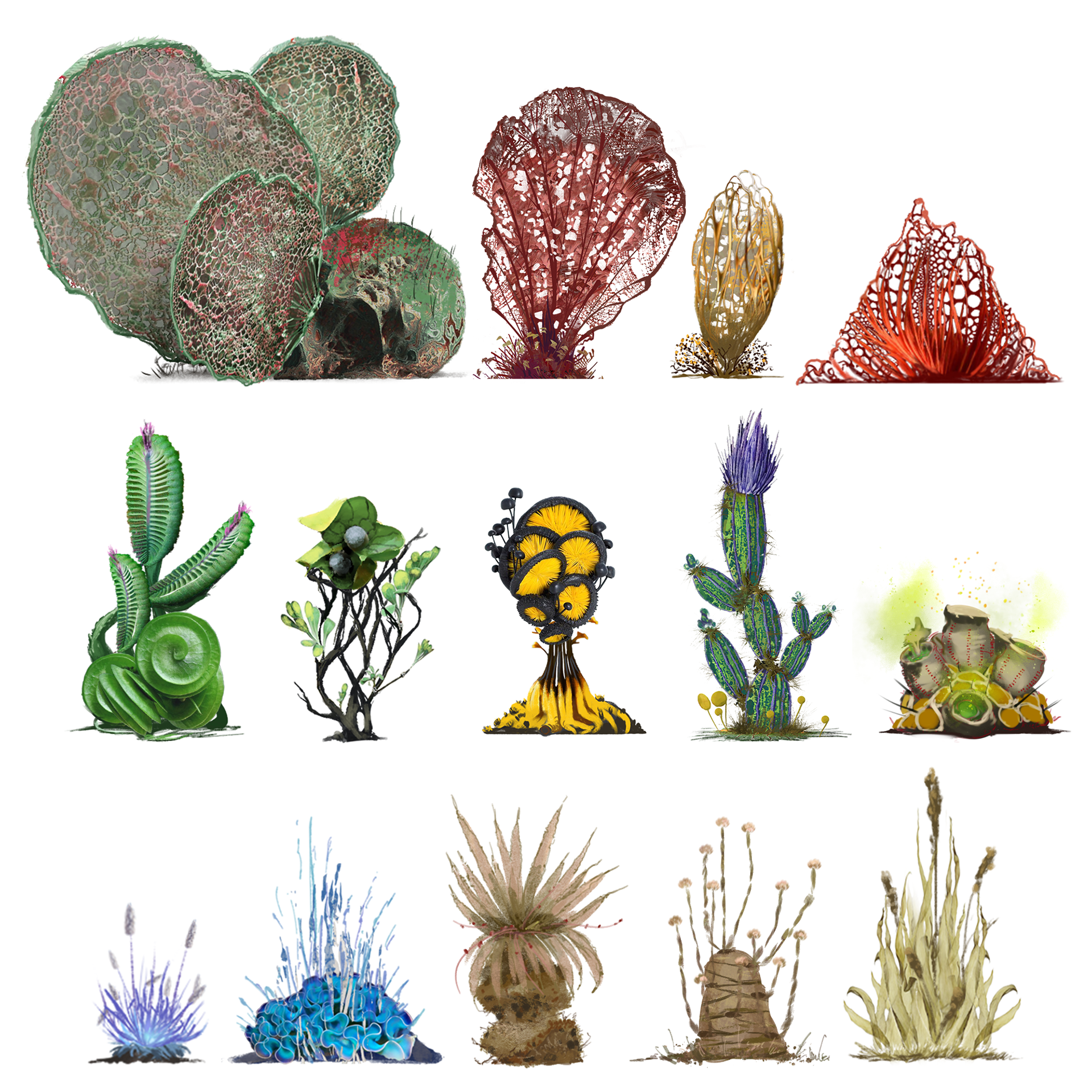
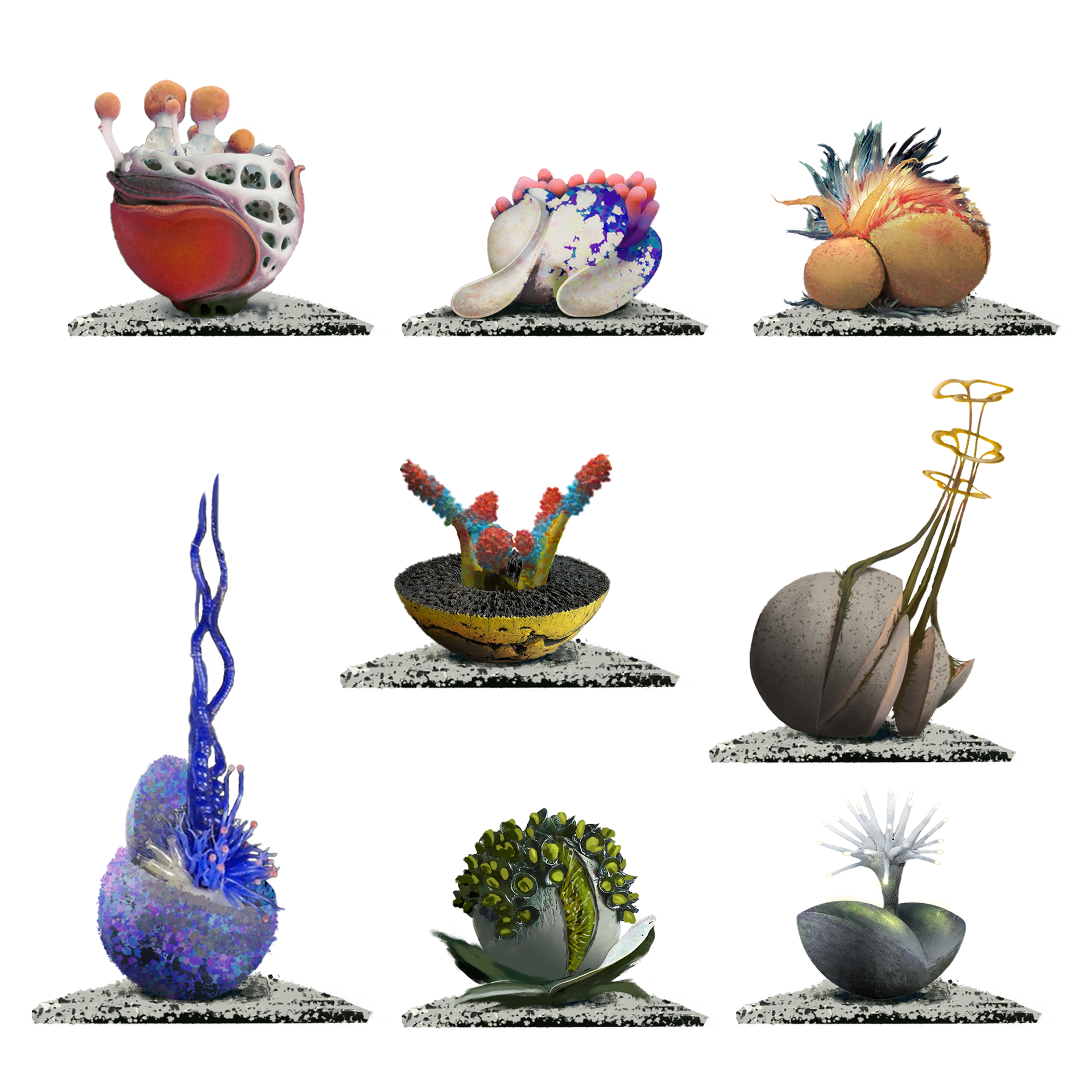
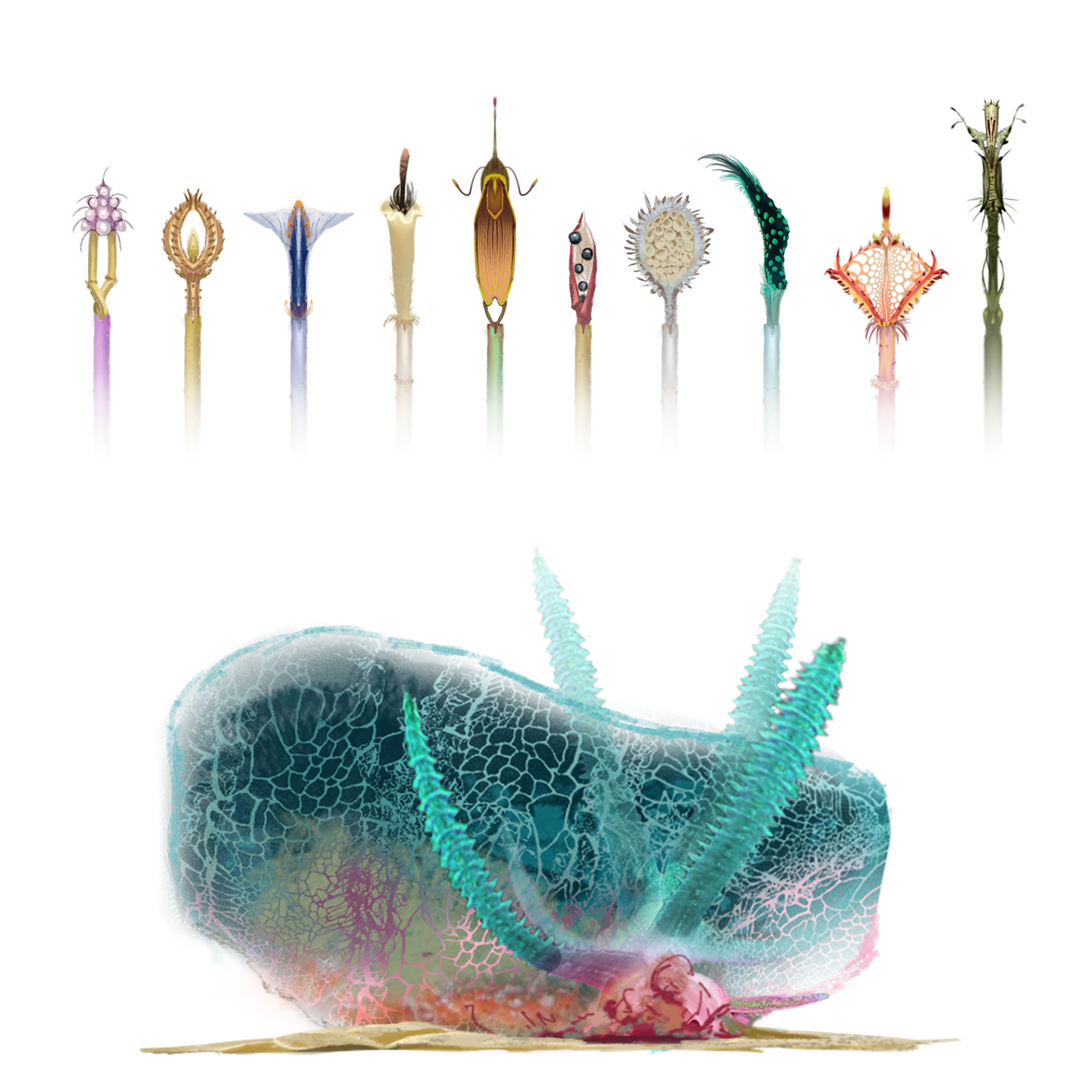
This section explores a wide variety of alien underwater plant-forms designed to bring visual diversity and curiosity into the game world.
Each specimen tests how small sprouts could grow into larger, more expressive structures — some harmless and ambient, others more reactive or collectible.
Instead of strict scientific realism, the focus here is on playful options for gameplay usage: plants that might store resources, plants that could release spores when disturbed, or plants that simply add personality to a biome.
Scaling and silhouette change help communicate growth stages so the player can quickly read if something is small, mature, harvested or dangerous to touch. These are not background decorations — they are potential interaction props for Subnautica II’s ocean space, giving players more reasons to explore, experiment and gather materials while discovering new visual surprises along the way.








(IMPACT)
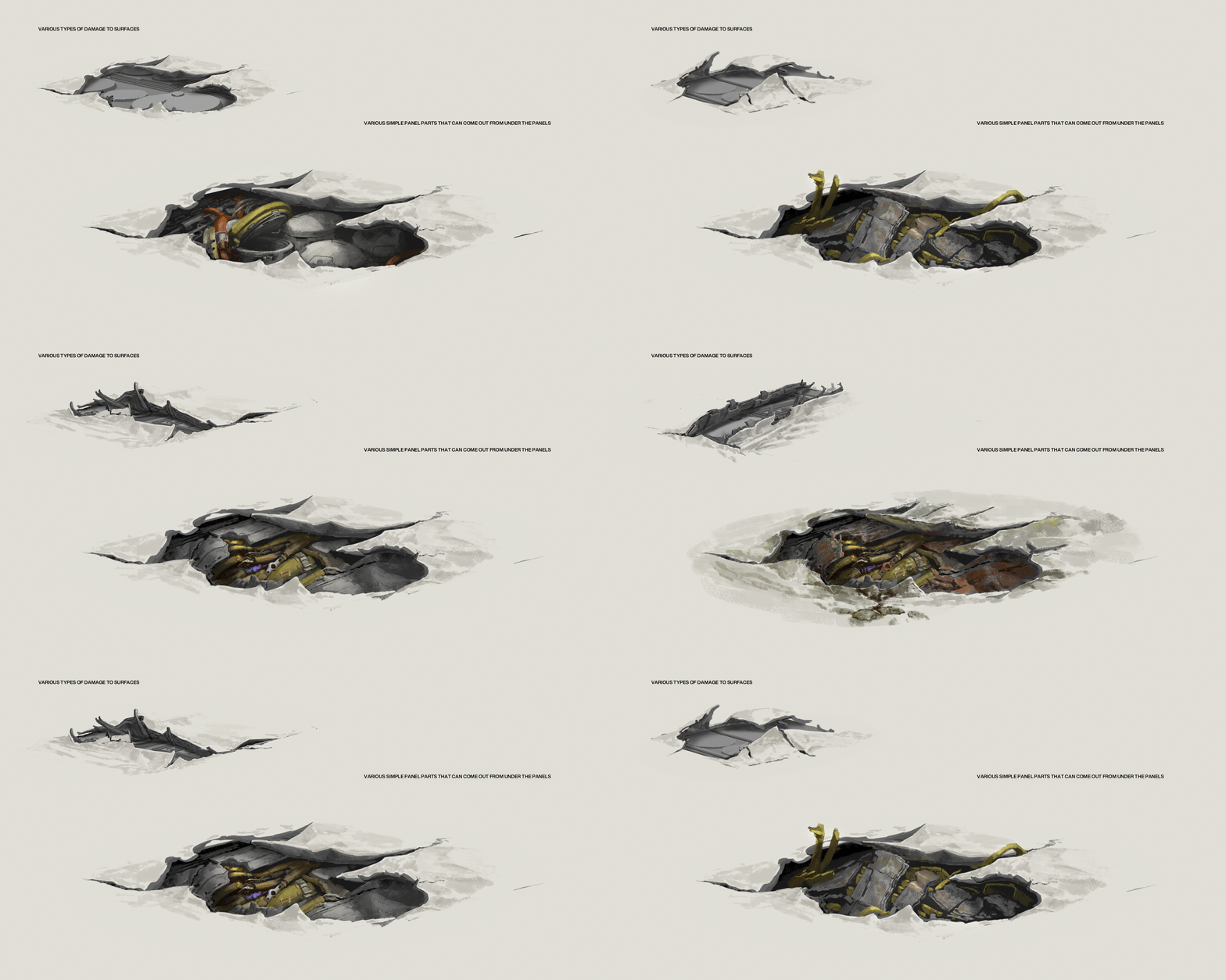
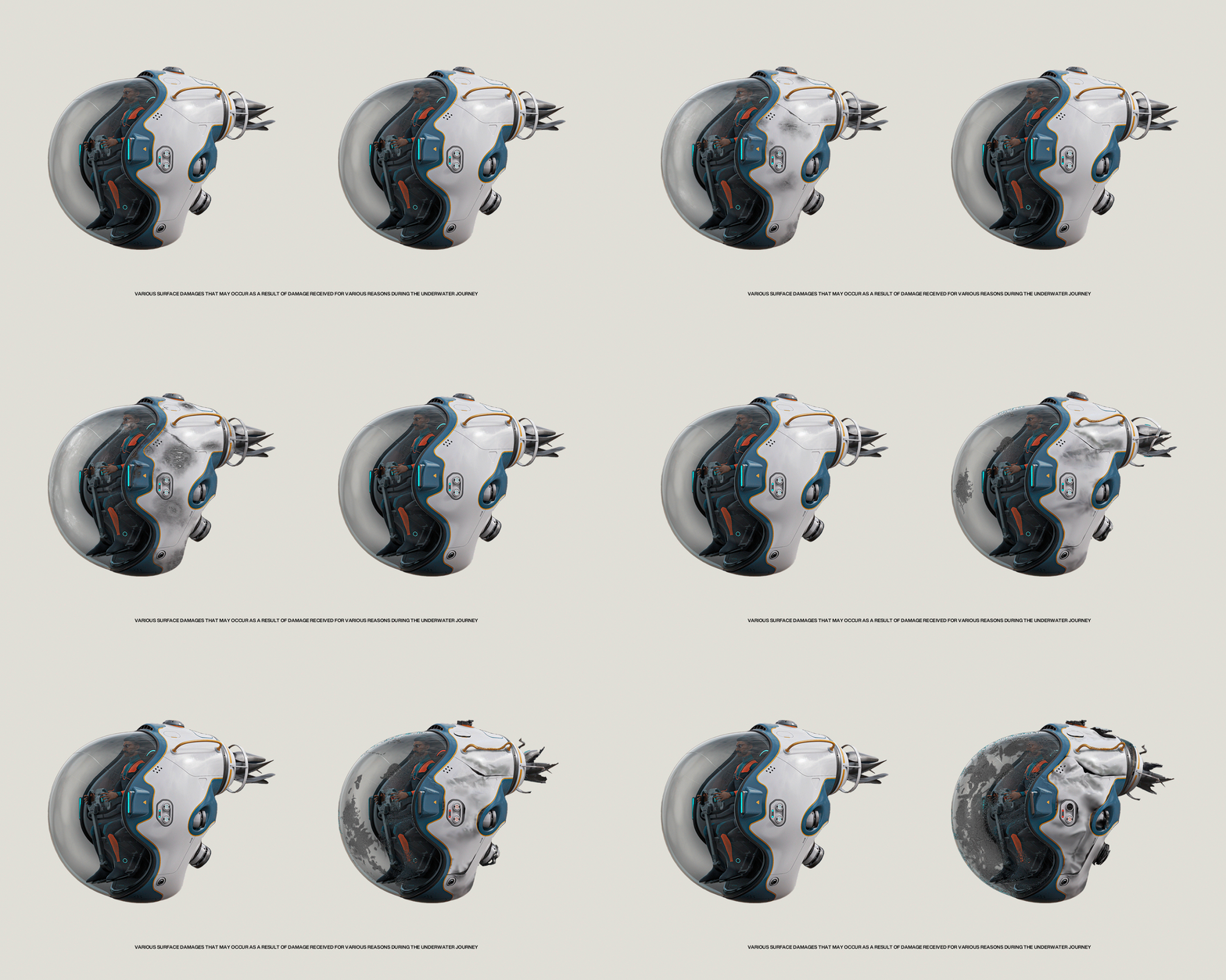
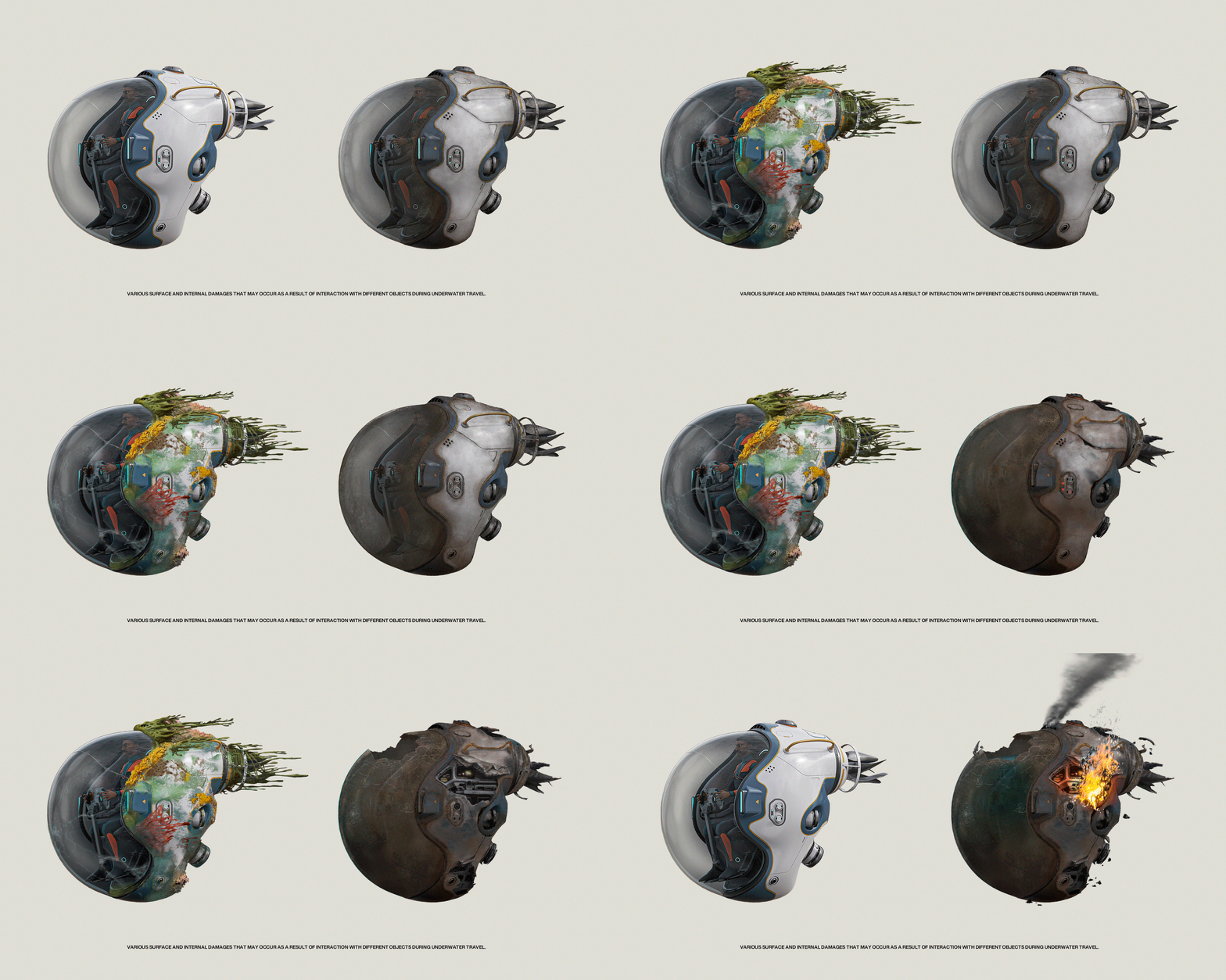
This page shows a series of fun, gameplay-focused design ideas rather than a single connected system. The quartz-chip concepts explore how players might read alien data in a simple, recognisable way — small holographic details and clear casing shapes help signal “this object translates information”. The wall modules are a playful look at how underwater bases could show wear and tear over time, giving players visual feedback when systems start failing or modules need repair.
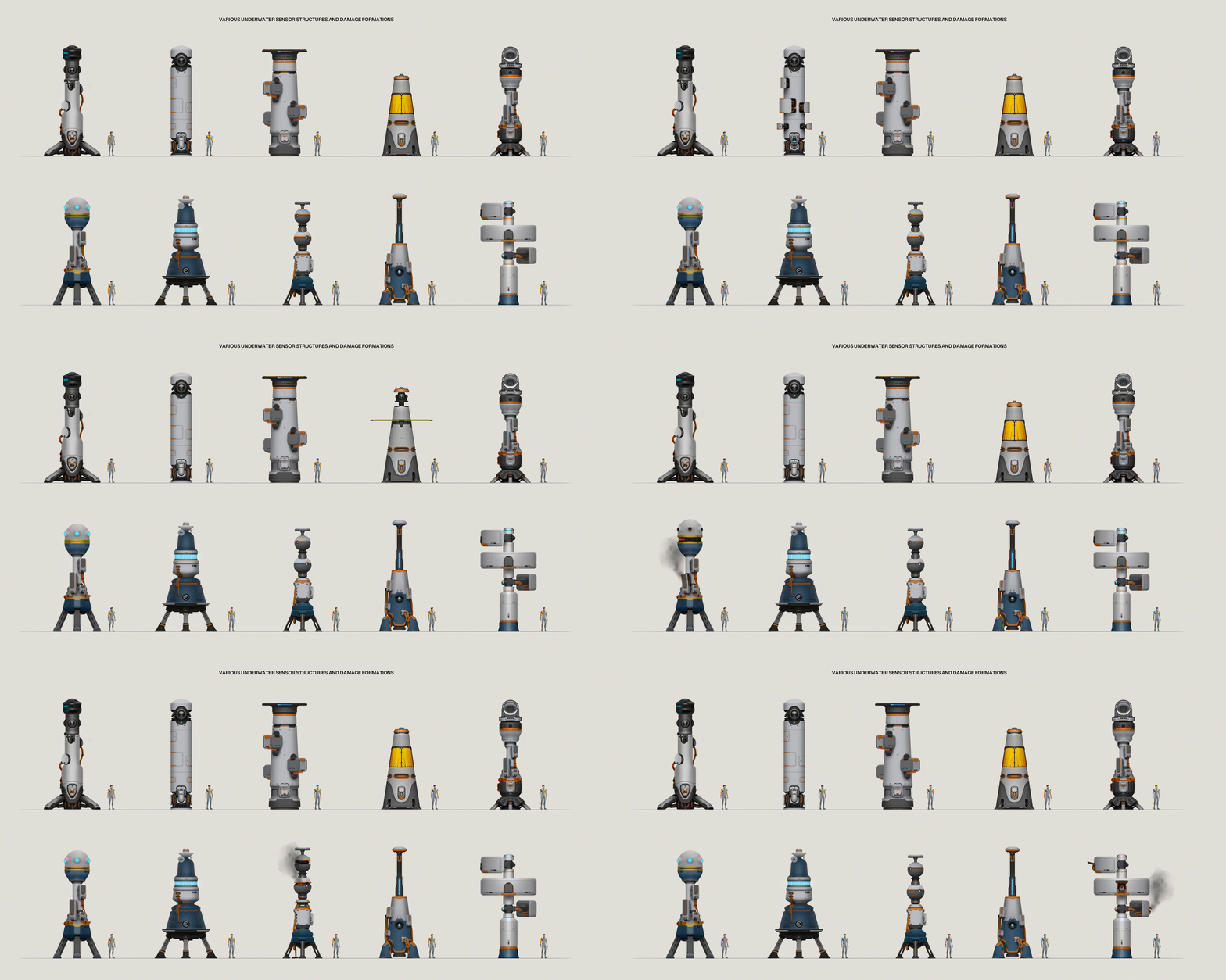
The sensor tower block tests how larger scanning structures might broadcast or glitch, offering a visual clue to the player that something is wrong even before they interact with it. The damaged vehicle studies examine how a submersible could physically show impact results — panels dent, seals distort, and the craft begins to feel more lived-in as the player makes mistakes. And finally the aged, overgrown structures are here to help imagine how old abandoned bases might look in the sequel — slowly being reclaimed by coral, algae and sediment. All of these small ideas are sketches made to explore personality, humour and clear player feedback — keeping the Subnautica II universe readable, playful and full of visual storytelling.
The sensor tower block tests how larger scanning structures might broadcast or glitch, offering a visual clue to the player that something is wrong even before they interact with it. The damaged vehicle studies examine how a submersible could physically show impact results — panels dent, seals distort, and the craft begins to feel more lived-in as the player makes mistakes. And finally the aged, overgrown structures are here to help imagine how old abandoned bases might look in the sequel — slowly being reclaimed by coral, algae and sediment. All of these small ideas are sketches made to explore personality, humour and clear player feedback — keeping the Subnautica II universe readable, playful and full of visual storytelling.


NEXT PROJECT ↓
Creating atmospheric underwater biomes, props, and visual development Transformers.

(COMPANY) (ROLE) (FOCUS)
SPLASH DAMAGE, 2024 SENIOR CONCEPT ARTIST ENVIRONMENT DESIGN, PROP DESIGN, KEY ART, WORLD DESIGN
SPLASH DAMAGE, 2024 SENIOR CONCEPT ARTIST ENVIRONMENT DESIGN, PROP DESIGN, KEY ART, WORLD DESIGN


(INTRODUCTION)
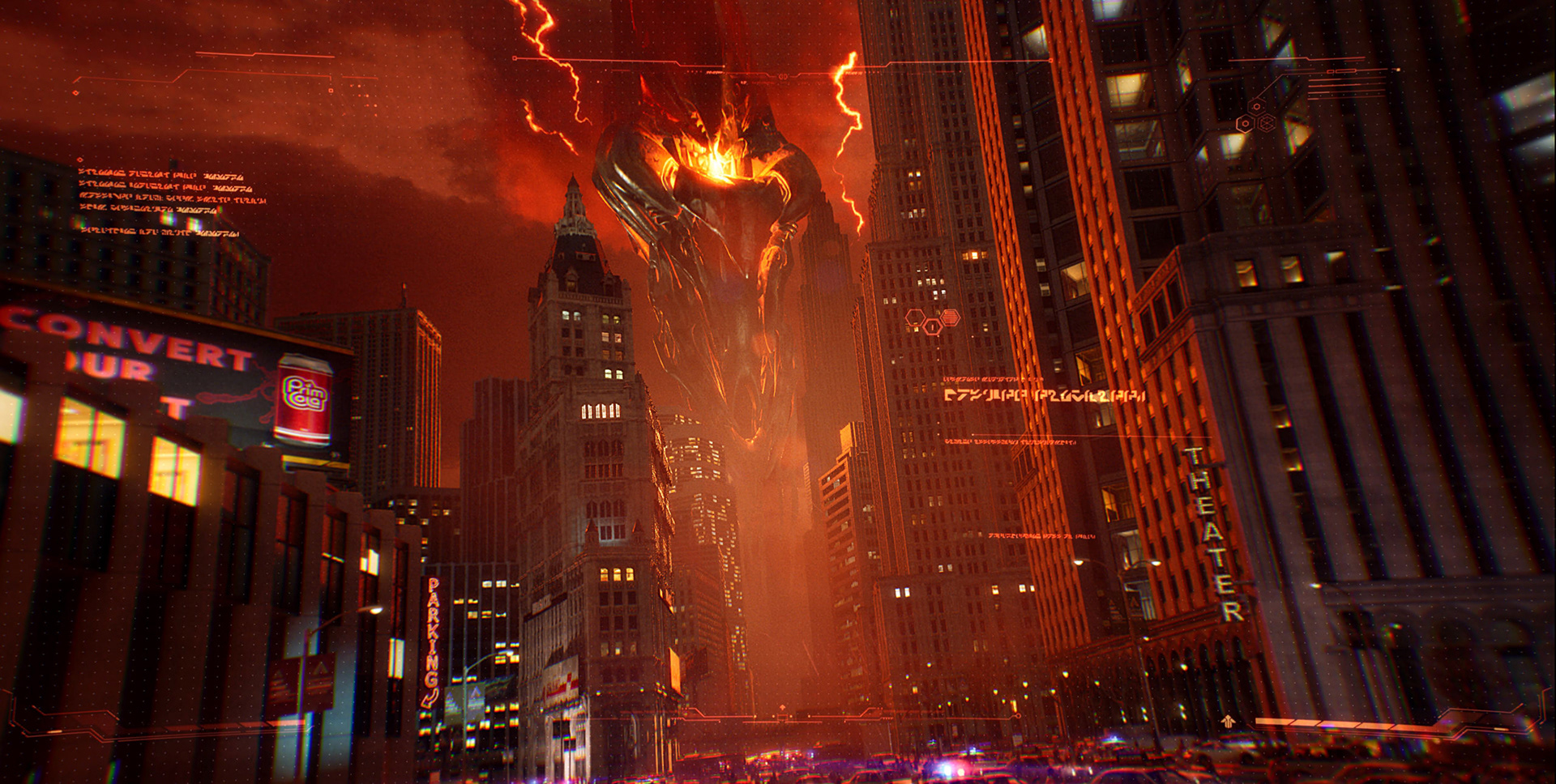
During my 3-year tenure on the Transformers: Reactivate project, I developed extensive environment concept art for New York City, the Nevada deserts, and the Cybertron planet. This process involved not only visualization but also the challenging integration of the Cybertronian language into world elements. Creating a world where buildings, rocks, and plant elements evolved with this language was both a significant challenge and a unique experience.
My design approach focused on understanding the nature of the Transformers’ home planet, Cybertron, and transferring that planetary language into various structures on Earth. I created specialized libraries to achieve this and showcased them practically, blending visual and functional aspects to enrich the experience.
The project's main goal was to present a dynamic post-apocalyptic setting where Autobots clash with a new set of enemies, the Legion. This cooperative-focused game allows up to four players to team up and protect humanity from a new threat.
Feedback from the art director and over 300 individuals within the company highlighted the impact of my work, noting it as a significant source of inspiration. The environment designs aimed to add depth and innovation to the project, providing players with a memorable experience.



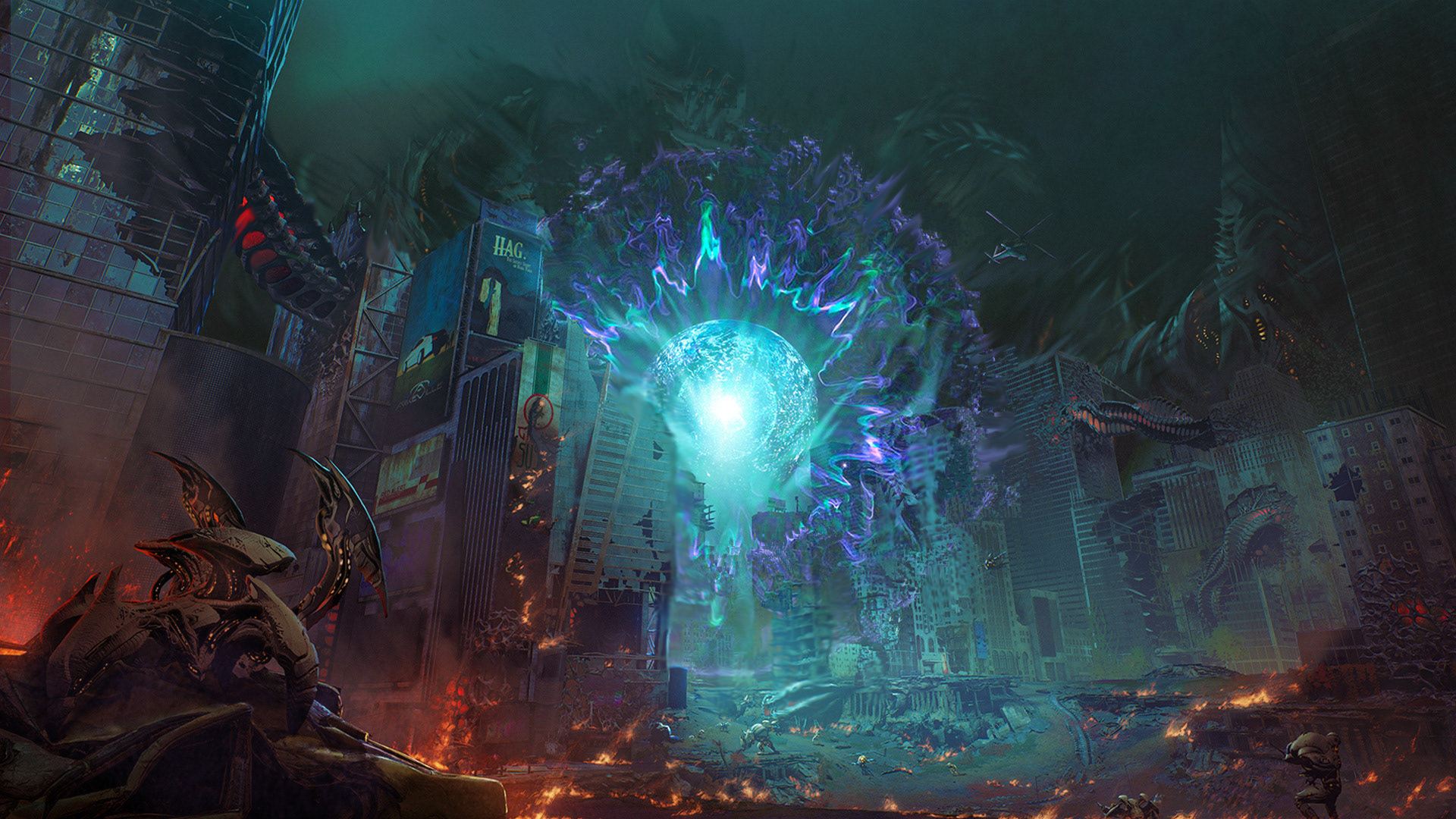




The Legion Invasion — A Battle for Survival
In the vast reaches of space, a mysterious and relentless alien race known as the Legion emerged, their origins unknown. Driven by an insatiable hunger for resources, they set their sights on Cybertron, the home of the Transformers. The Legion, armed with their colossal Harvester ships, laid waste to the planet, consuming it from the outside in, until the once-mighty Cybertron was shattered into fragments.
The Autobots and Decepticons, long-time enemies locked in an eternal struggle, found themselves with a common foe. Forced to abandon their decimated home, they fled into space, only to be pursued relentlessly by the Legion. The alien invaders, now focused on Earth, sought to consume the planet's resources just as they had with Cybertron. The Harvester descended upon New York City, tearing through the earth’s crust and absorbing its materials, transforming them into energy to fuel the Legion's war machine. On Earth, the Autobots and Decepticons put aside their differences, uniting against the common threat. Despite their combined strength, the Legion proved to be an unstoppable force. In a desperate bid to save Earth, Optimus Prime made the ultimate sacrifice, using the Creation Matrix within his chest as an EMP bomb. The blast temporarily neutralized the Legion, but at a great cost—Optimus, along with all Transformers, were deactivated in the process.
However, the Legion, adaptive and resilient, soon evolved and reactivated, continuing their devastating assault. In the aftermath, humanity was left in ruins, with much of the population decimated and forced to live underground. A small group of survivors, aware of Optimus Prime's sacrifice, took it upon themselves to revive the Autobots. They scoured the remnants of the planet and the voids of space, repairing and reawakening the fallen heroes. But the battle could not be won by the Autobots alone; once more, they needed the help of their old enemies, the Decepticons.
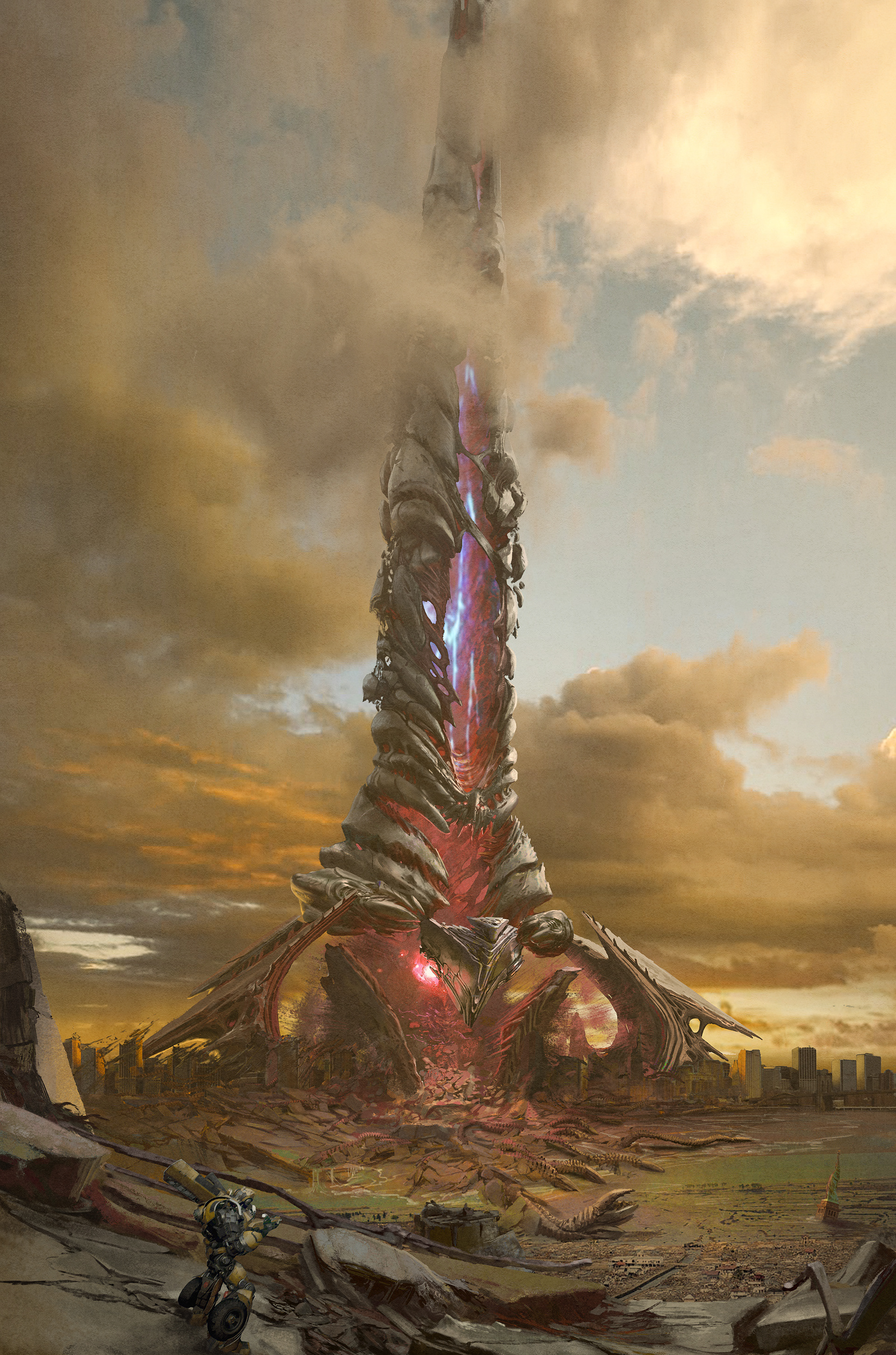
As the Legion's Harvester tore through Earth’s crust, sending snake-like drilling machines to carve up the planet’s fabric, the surviving humans, alongside the reawakened Transformers, launched a desperate counterattack. The military forces, now organized under the Earth Defense Command (EDC), fought side by side with the Autobots and Decepticons, hoping to turn the tide of the battle.
This epic tale of resistance, hope, and unity against a seemingly invincible enemy unfolds as former rivals, Autobots and Decepticons, must work together with humanity to fend off the Legion’s relentless onslaught. Central to this story are the iconic leaders, Optimus Prime and Megatron, who must set aside their deep-seated animosity for the survival of all.
This epic tale of resistance, hope, and unity against a seemingly invincible enemy unfolds as former rivals, Autobots and Decepticons, must work together with humanity to fend off the Legion’s relentless onslaught. Central to this story are the iconic leaders, Optimus Prime and Megatron, who must set aside their deep-seated animosity for the survival of all.
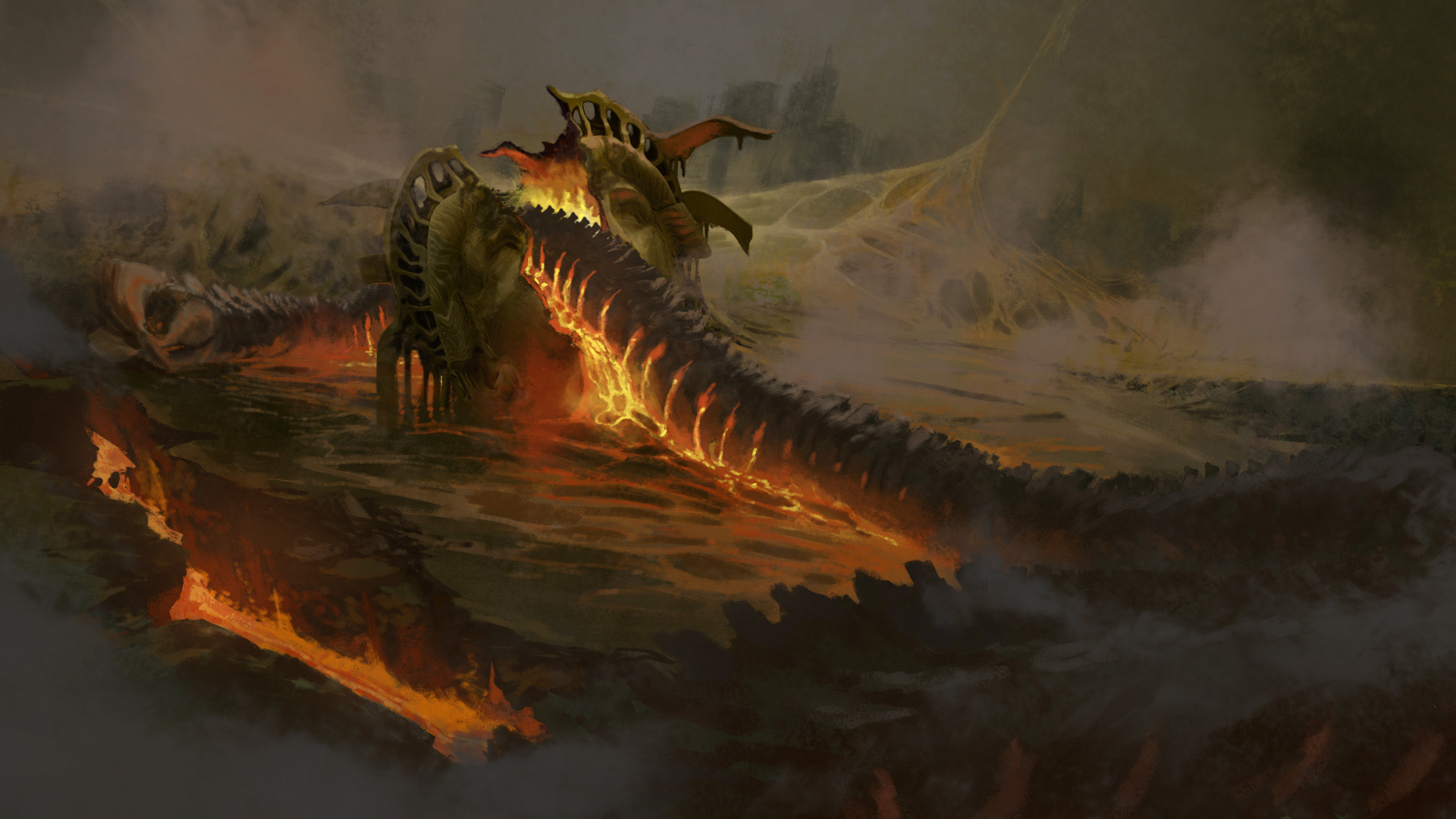

Inside the Harvester — A Machine of Devastation
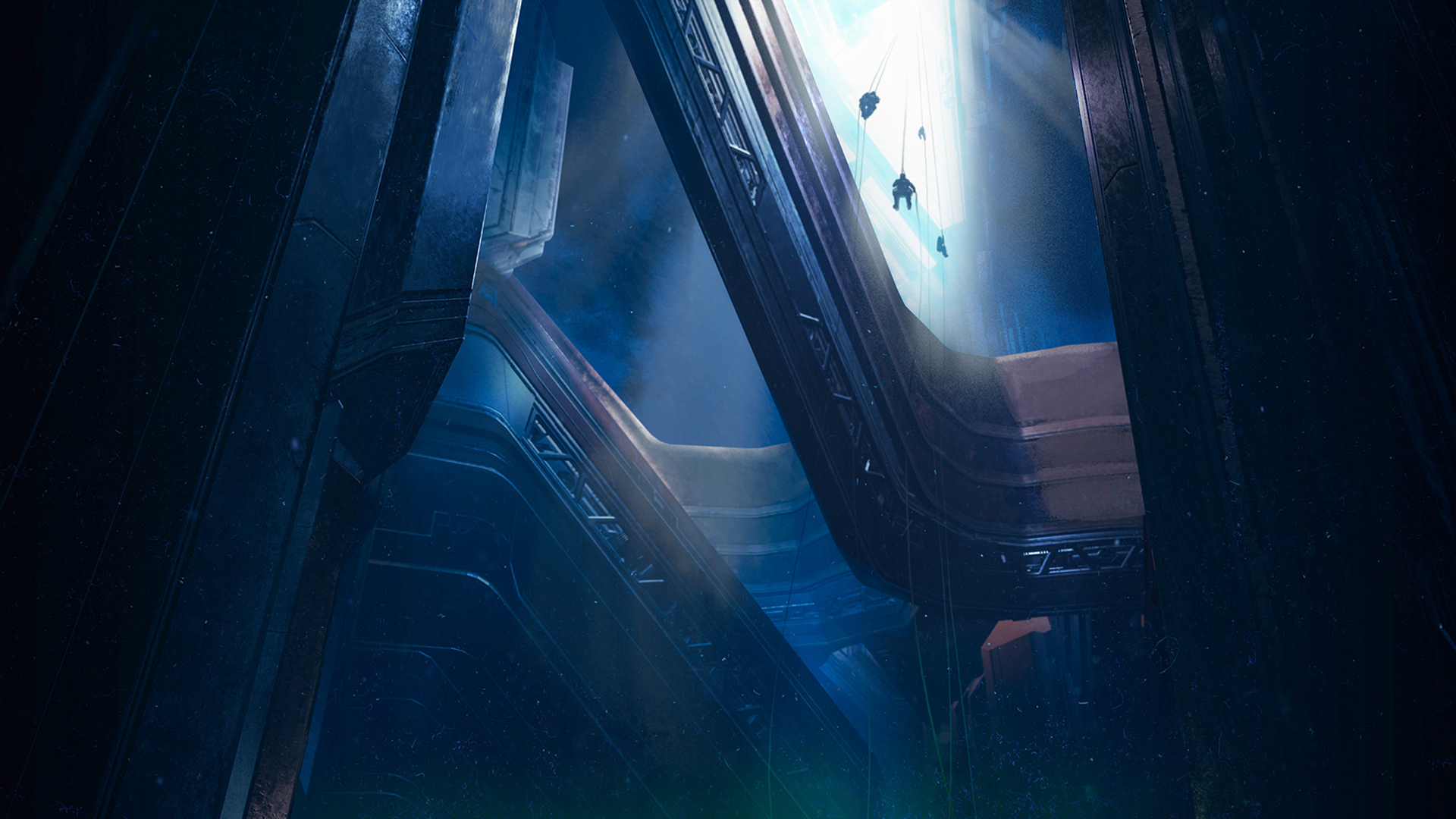
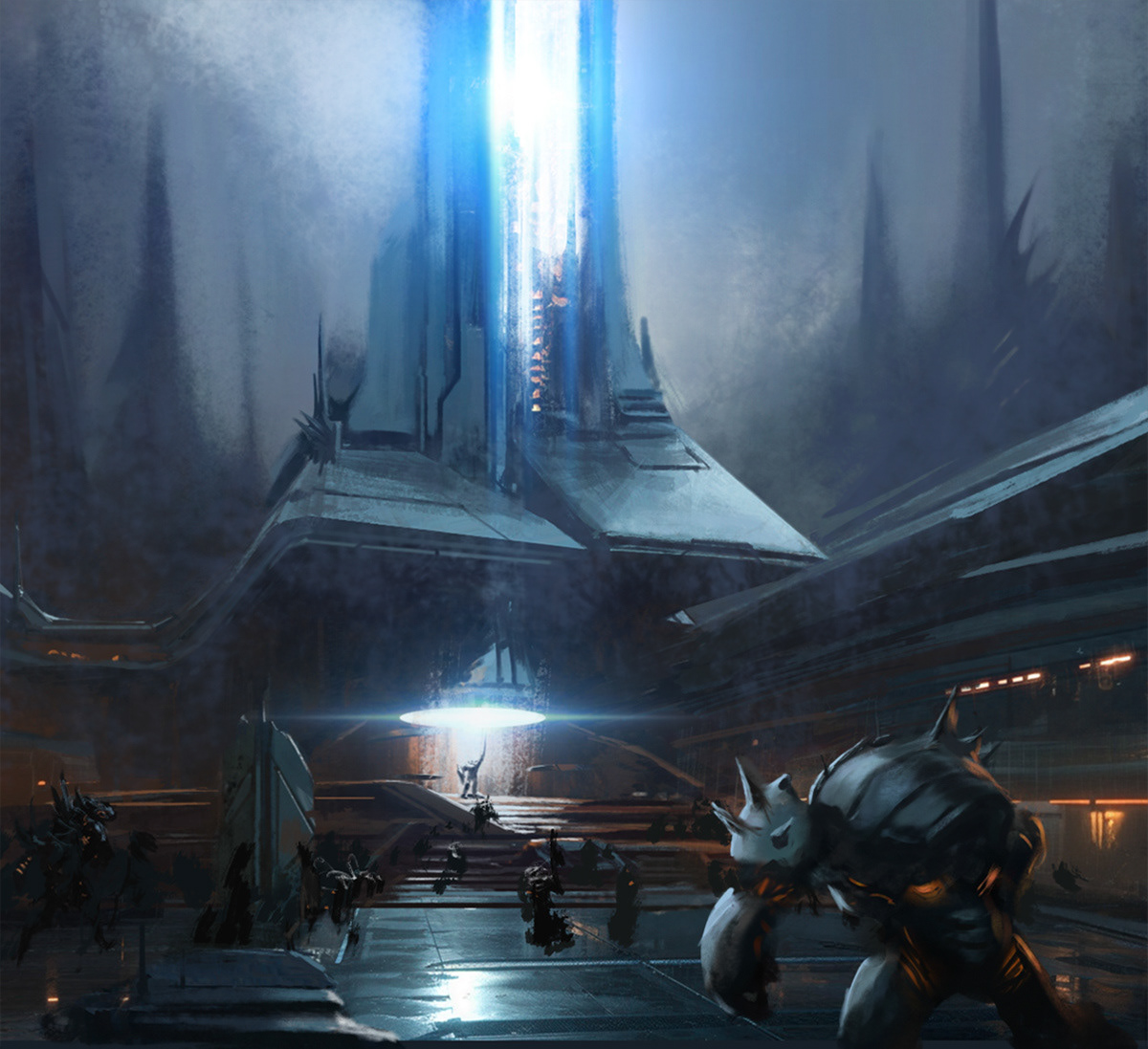
The Legion’s colossal machine, the Harvester, plays a crucial role in their conquests. After drawing in Earth's materials, its internal mechanical grinders and filters process these resources. The Harvester meticulously separates and transforms them into energy and elements, serving as a vital converter that nourishes the Legion’s soldiers.
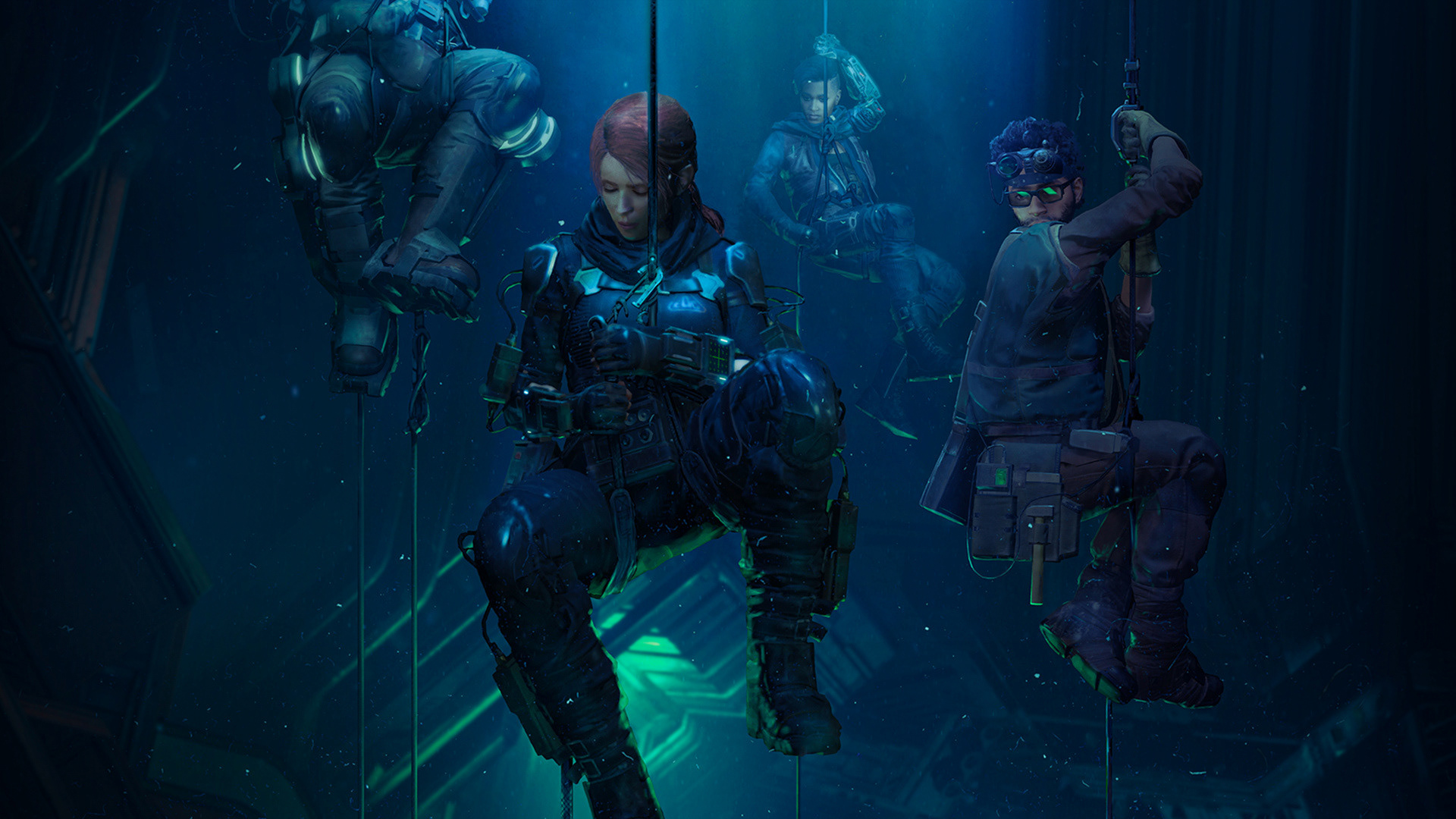
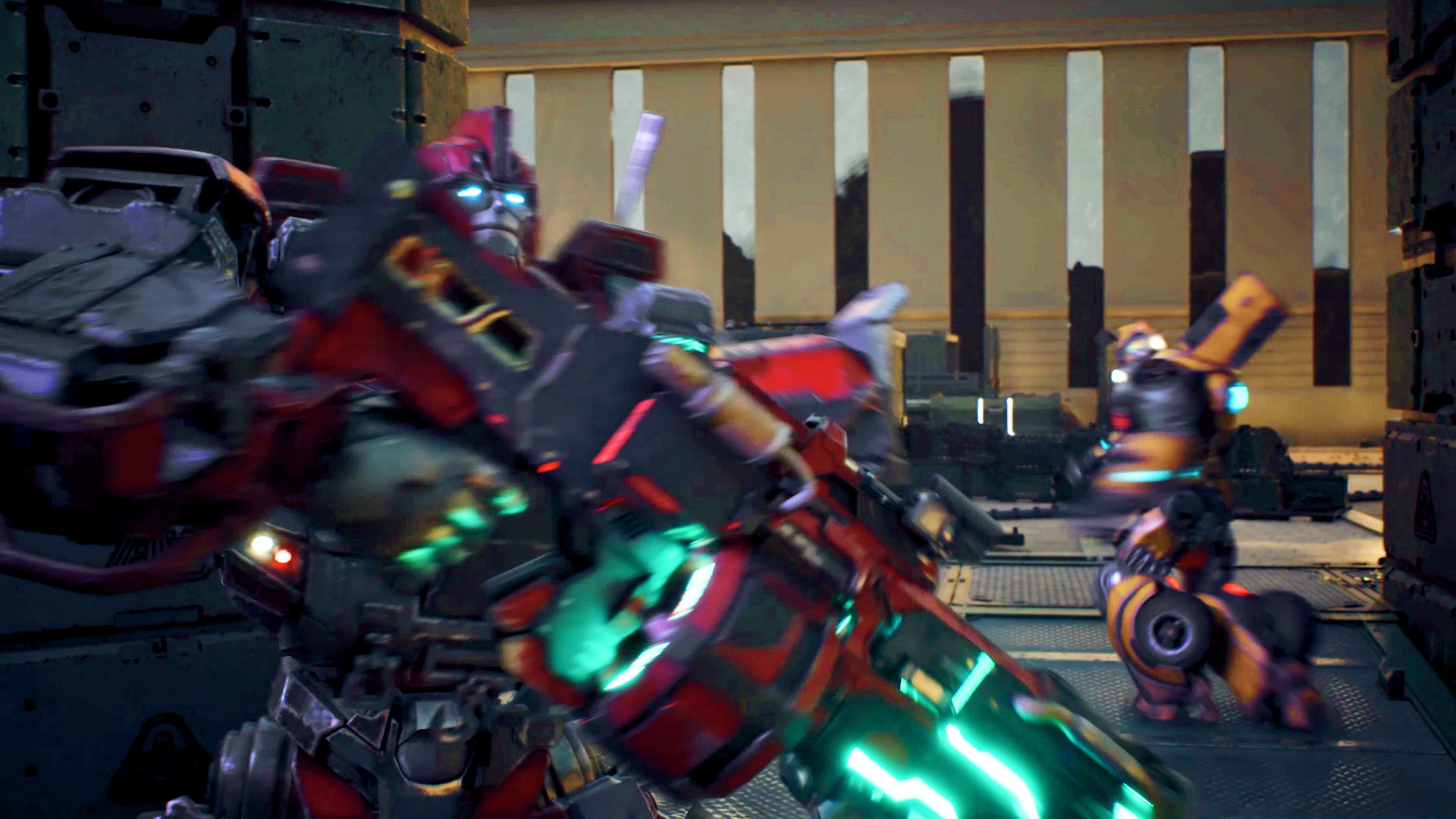
To neutralize this massive machine, the Transformers launch a daring operation. Their mission is to place an explosive module inside the Harvester and destroy it from within. As they infiltrate the machine, they engage in fierce battles with Legion soldiers. The battlefield is a chaotic scene of debris and wreckage, with remnants of New York’s massive metro stations, towering buildings, and abandoned vehicles floating through the air. The Transformers' struggle inside the Harvester becomes a critical fight for the future of Earth. The machine’s interior turns into a nightmarish battlefield, filled with mechanical parts and consumed materials.
To neutralize this massive machine, the Transformers launch a daring operation. Their mission is to place an explosive module inside the Harvester and destroy it from within. As they infiltrate the machine, they engage in fierce battles with Legion soldiers. The battlefield is a chaotic scene of debris and wreckage, with remnants of New York’s massive metro stations, towering buildings, and abandoned vehicles floating through the air. The Transformers' struggle inside the Harvester becomes a critical fight for the future of Earth. The machine’s interior turns into a nightmarish battlefield, filled with mechanical parts and consumed materials.







New York’s Swamp — The Power of the Legion
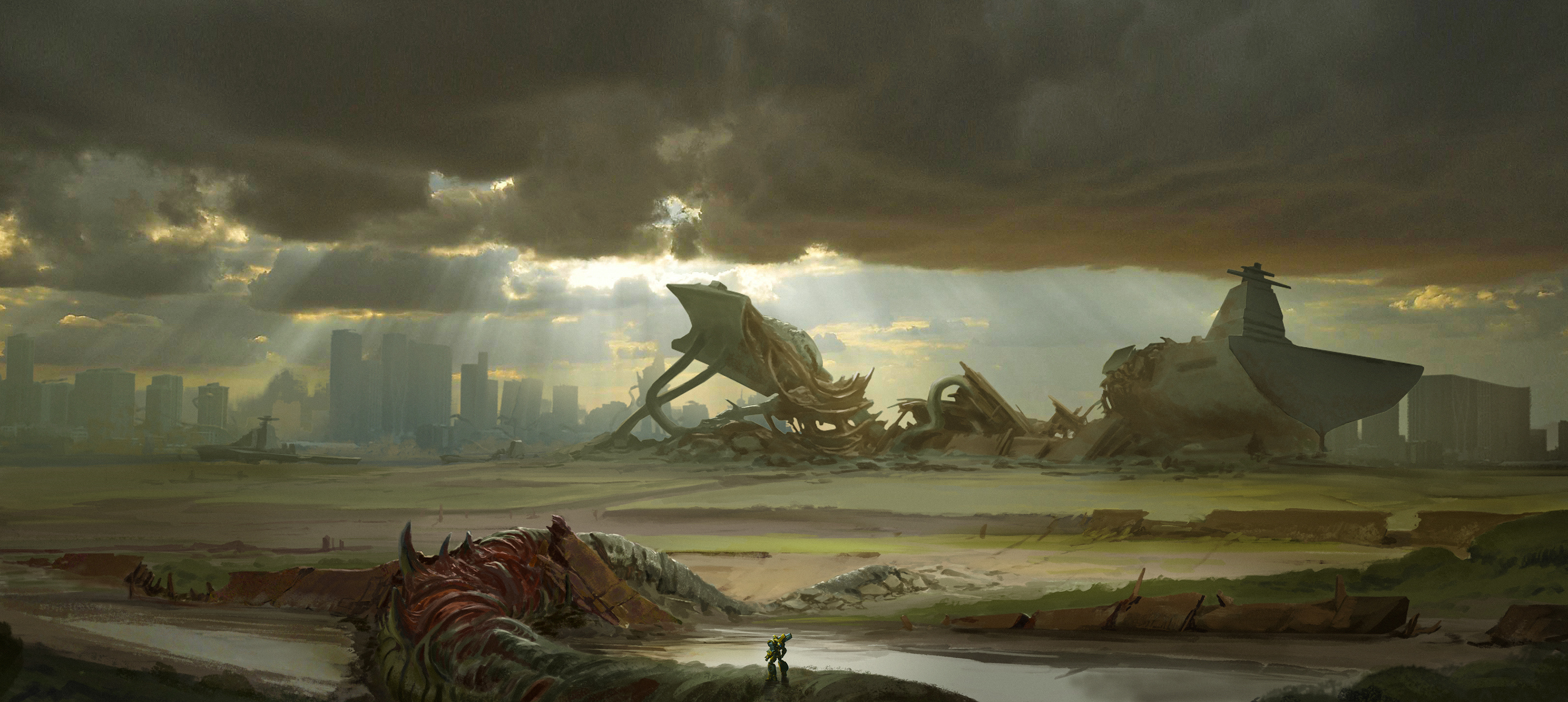
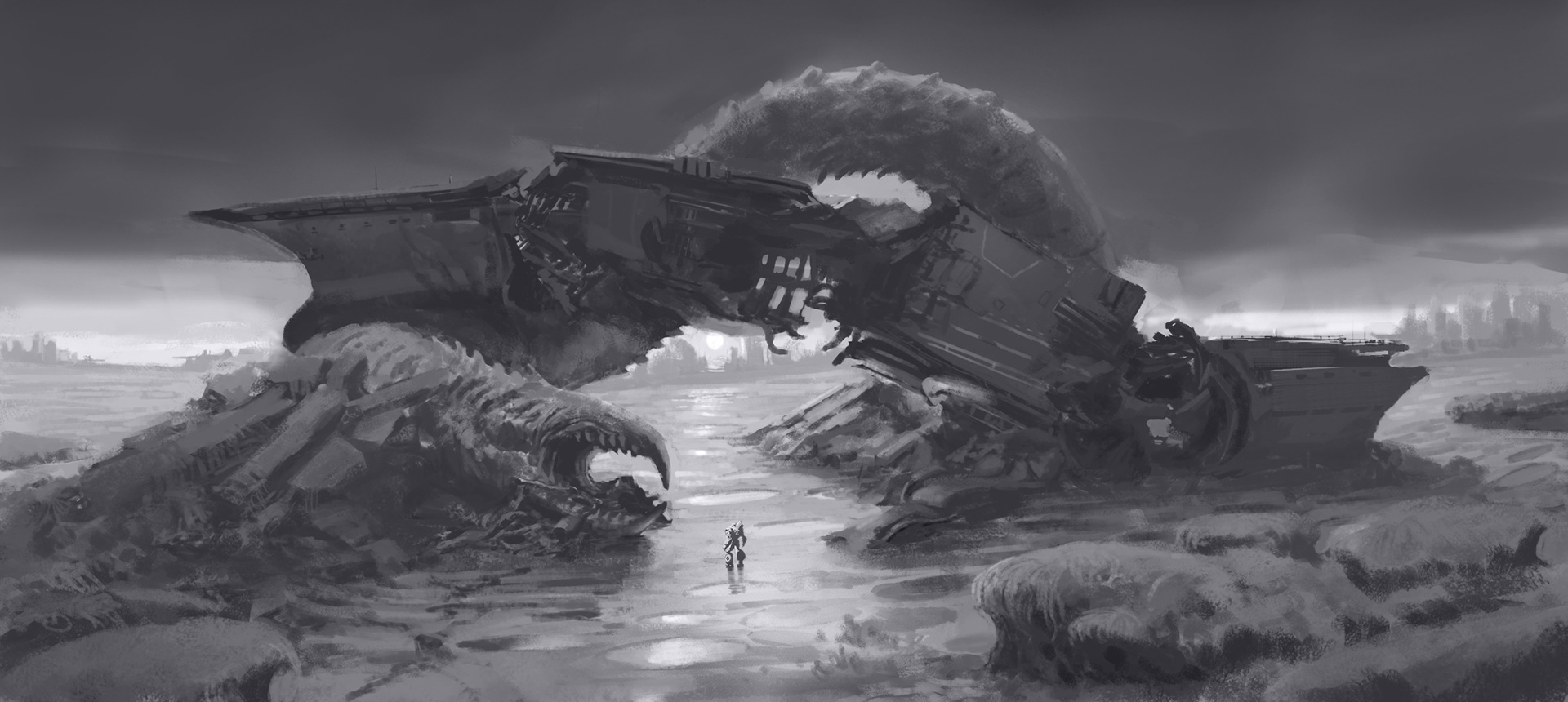
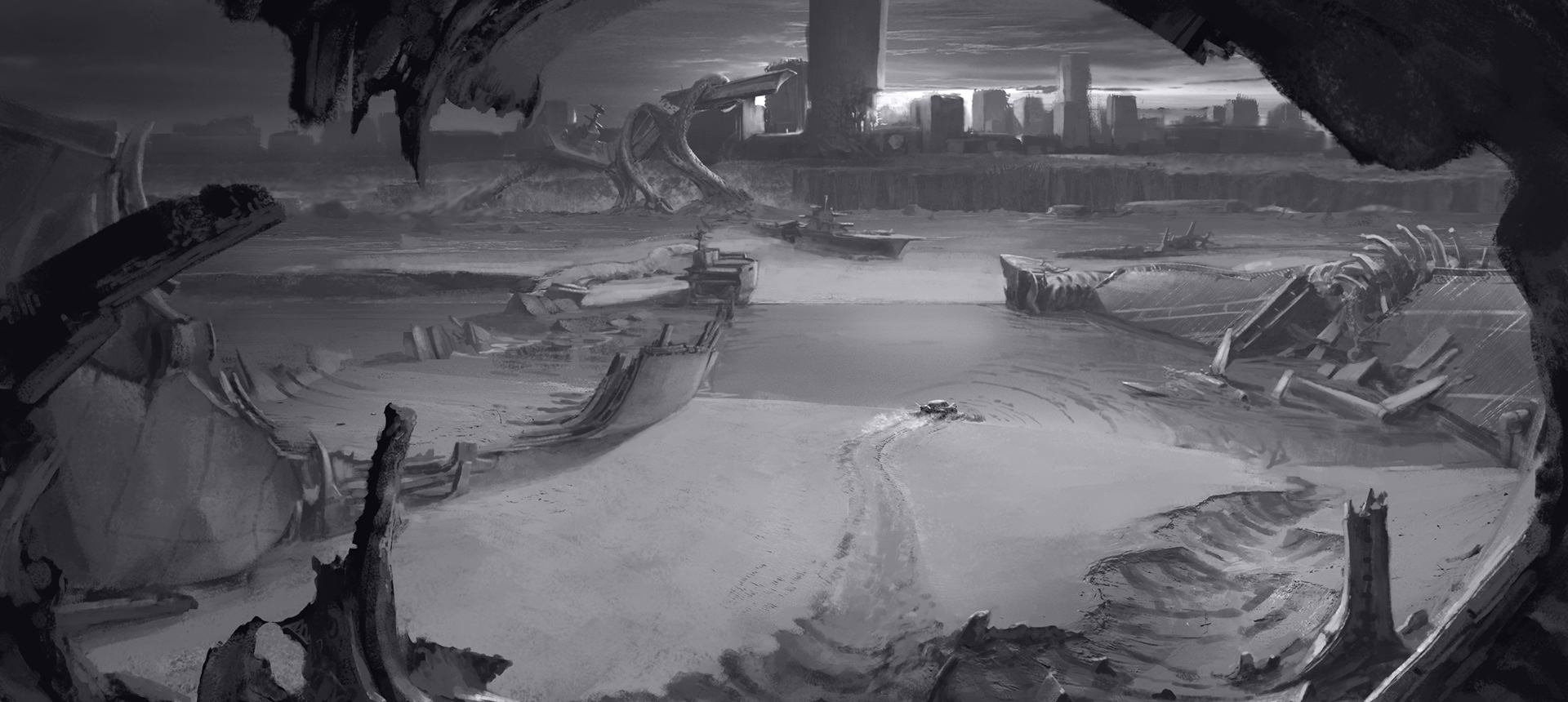
As the Legion’s Harvester descended upon New York, its massive machinery began tearing through the city’s crust. Deep fissures opened beneath the city, pulling in the surrounding ocean waters and turning the once vibrant landscape into a giant swamp. The water receded quickly, leaving the canals and coastline drained and the land covered in deadly mud.
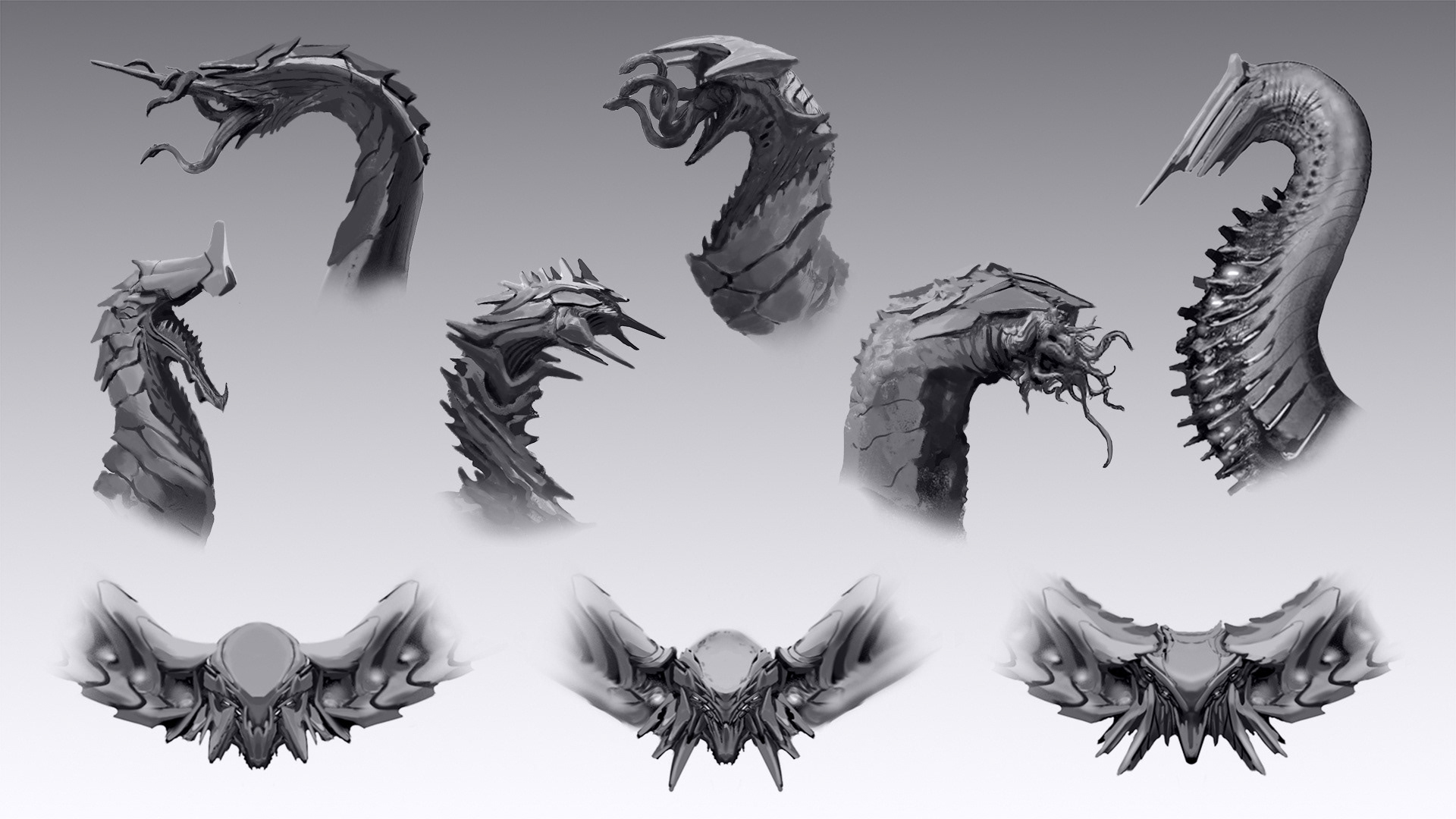
Within this darkened mire, the Legion’s mechanical limbs emerged from the depths, targeting the remaining ships. These snake-headed drilling machines tore through the hulls, ripping the vessels apart piece by piece. Steel beams twisted easily, and hulls groaned as they collapsed.The ships were swiftly destroyed under the cold, relentless force of the Legion.
Just as it consumed the city, the Legion devoured everything in its path, leaving New York’s coastline as a vast graveyard of debris. The Legion, unstoppable, tore everything to shreds.







The Last Stand — Unveiling the Ancient Weapon
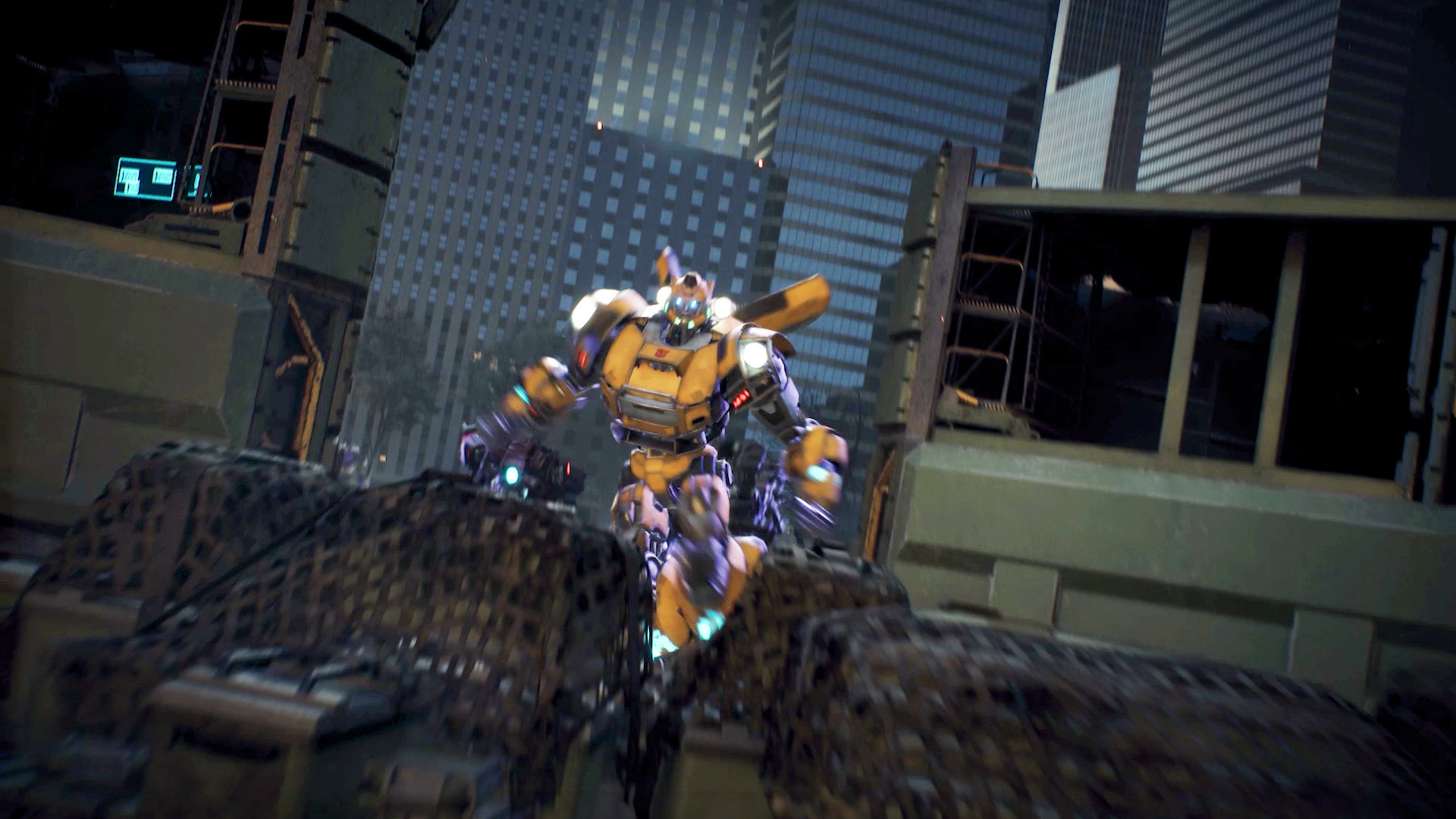
Thousands of years ago, an ancient weapon was abandoned and forgotten on Earth. However, with the Legion's assault on the planet, this relic has become crucial once again. In the depths of a city, humans, with the aid of Transformers, strive to uncover and reactivate this long-lost weapon.
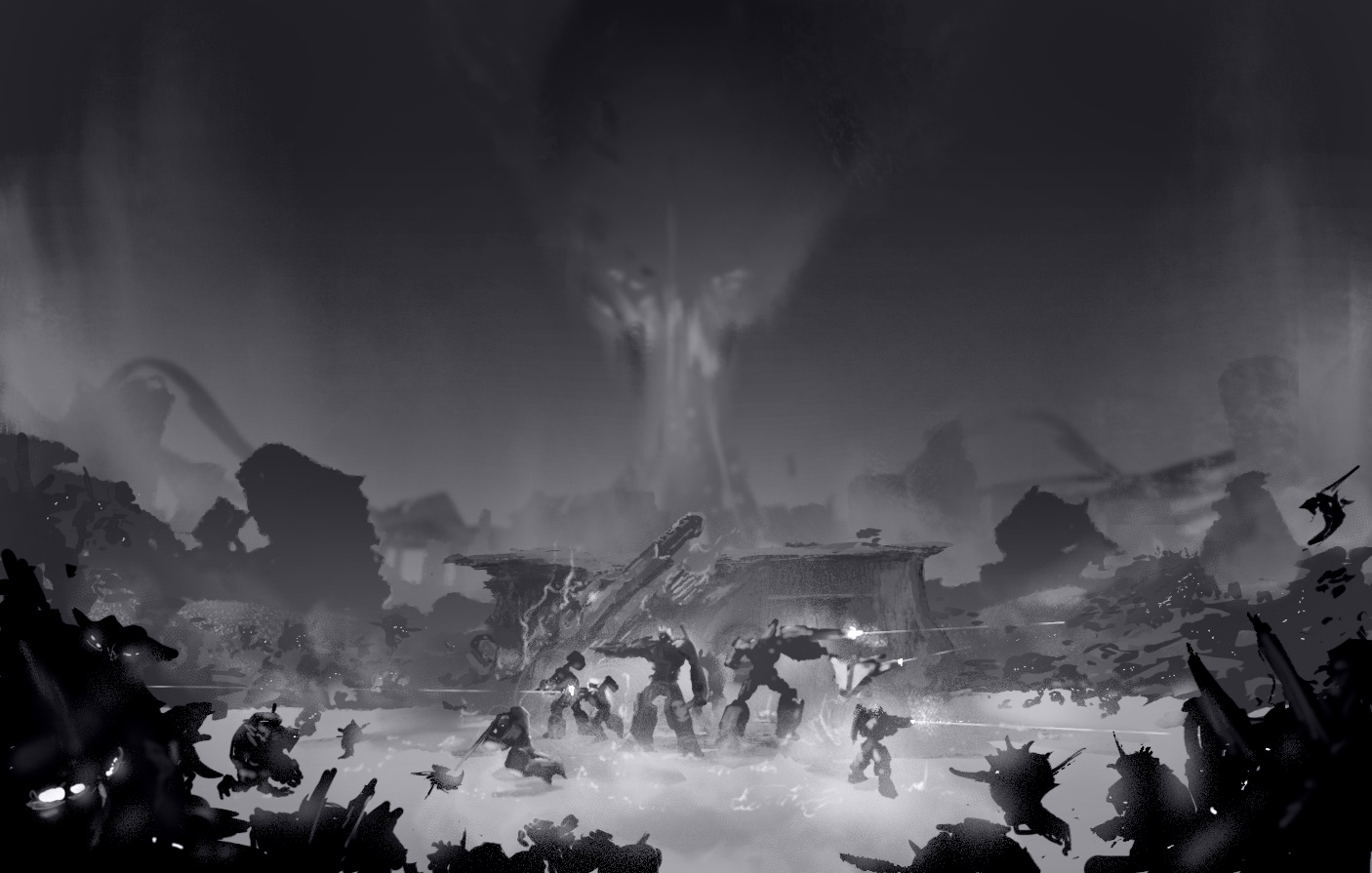
Aware of the impending threat, the Legion dispatches all of its forces to the site, determined to prevent the weapon’s recovery. As the excavation progresses, the area becomes a battleground. Transformers and humans stand united, fiercely resisting the Legion's onslaught. In a dramatic clash, they fight with unwavering determination to secure the weapon and turn the tide of the battle.
Aware of the impending threat, the Legion dispatches all of its forces to the site, determined to prevent the weapon’s recovery. As the excavation progresses, the area becomes a battleground. Transformers and humans stand united, fiercely resisting the Legion's onslaught. In a dramatic clash, they fight with unwavering determination to secure the weapon and turn the tide of the battle.






The Desert’s Evolution — Legion's Resilience
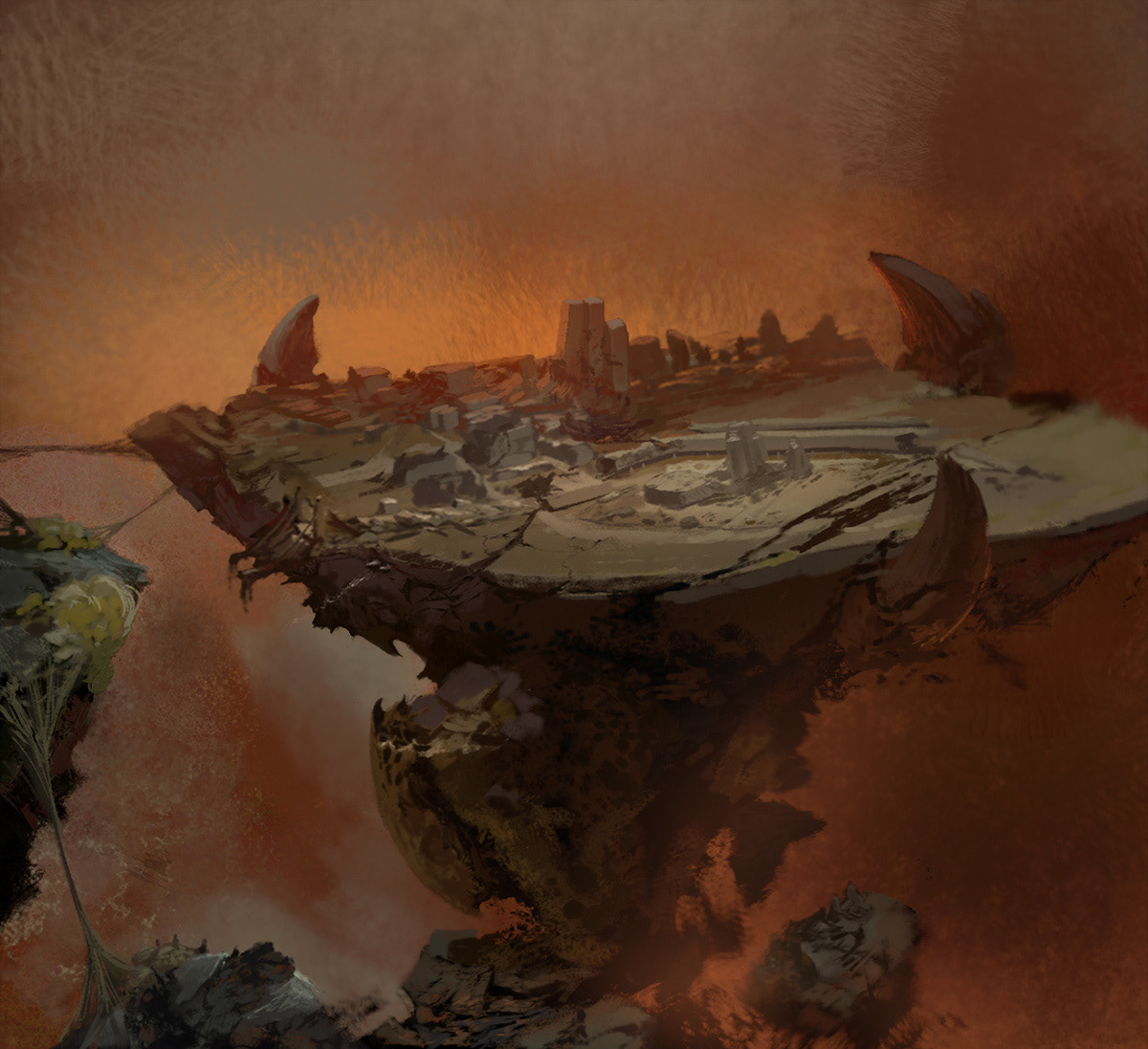
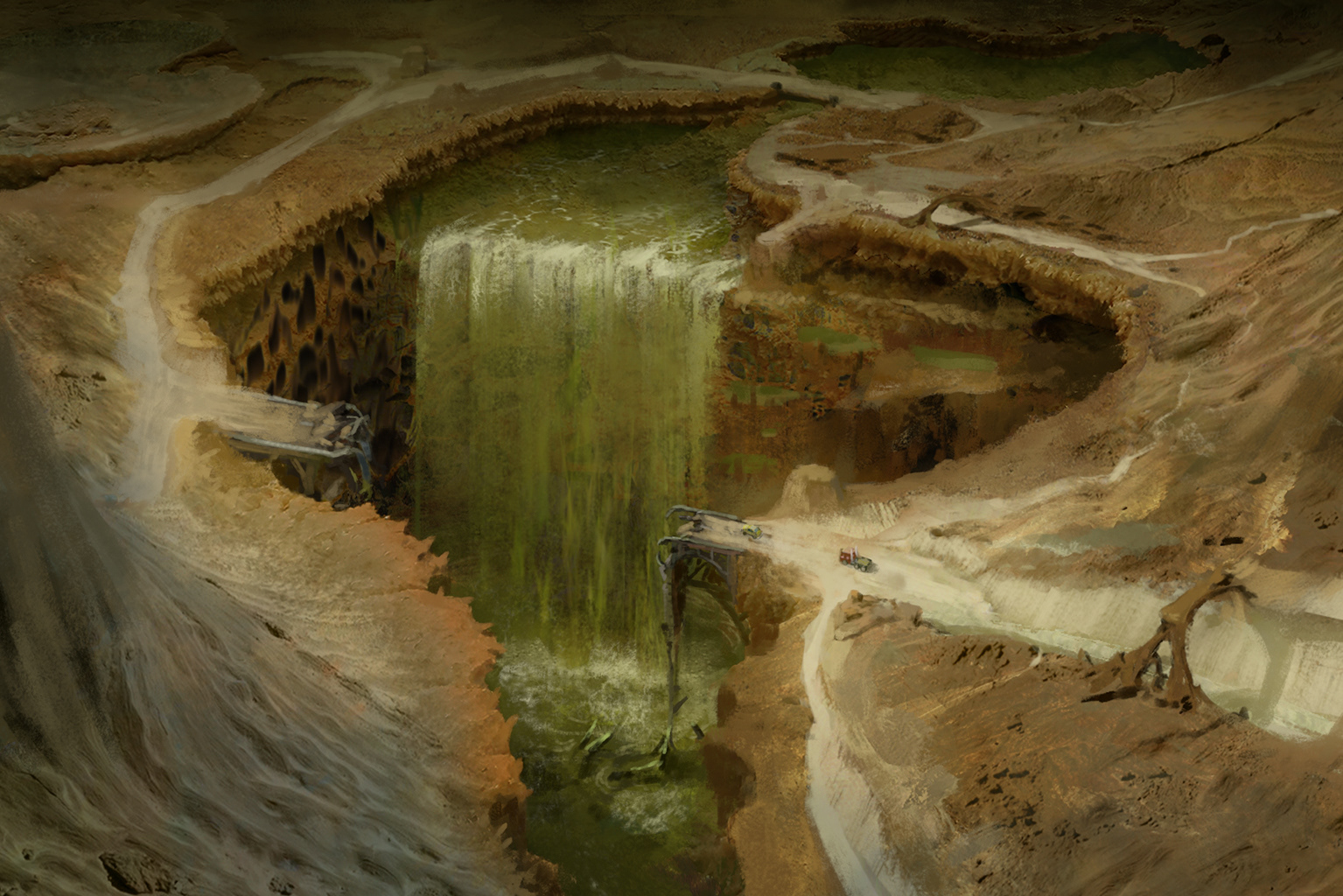
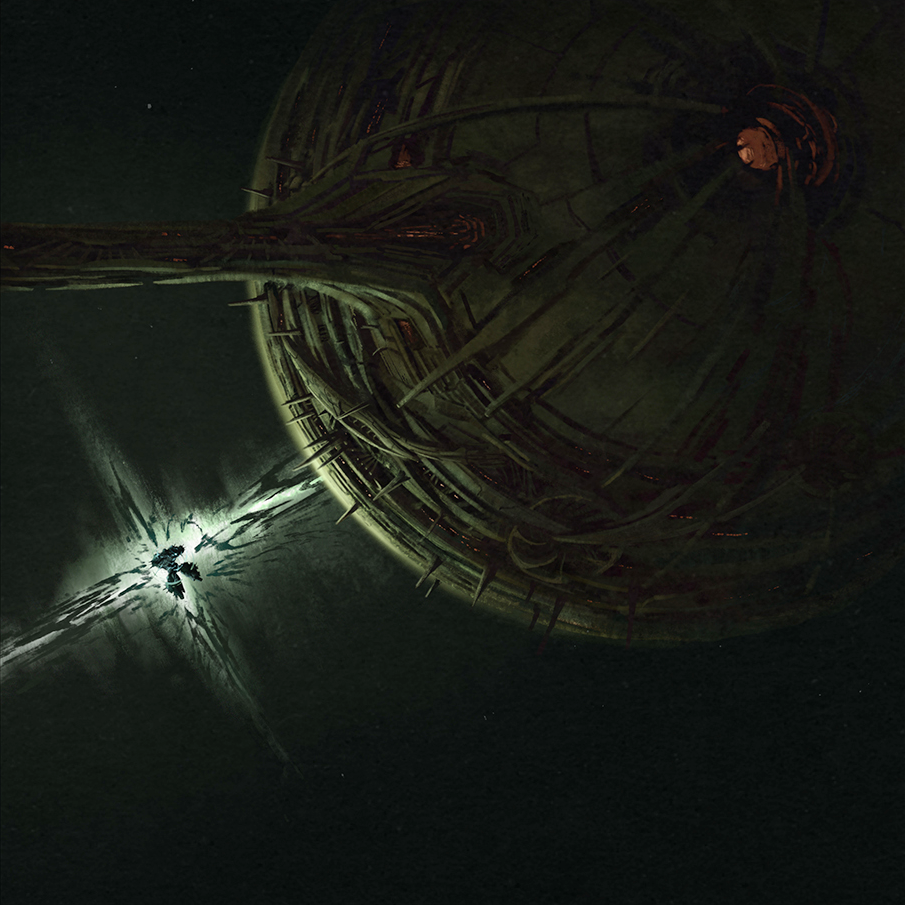
In a desperate effort to repel the Legion, humans and Transformers fought valiantly across every corner of the planet. In their most powerful strike, they deployed their atomic bombs against the Legion. The first attack shattered the Harvester into countless fragments, but the Legion’s remarkable ability to adapt and mutate led to an astonishing recovery.
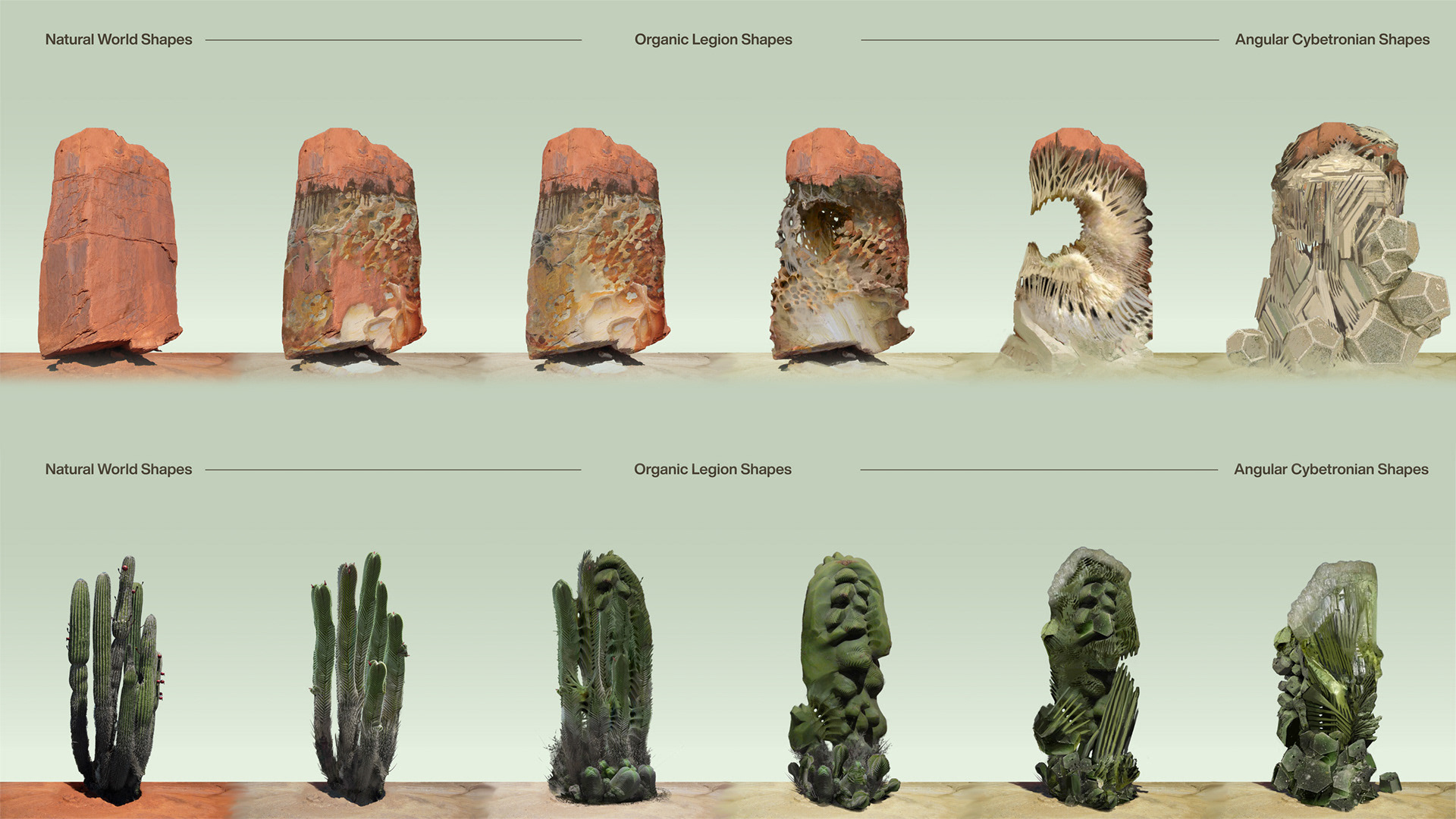
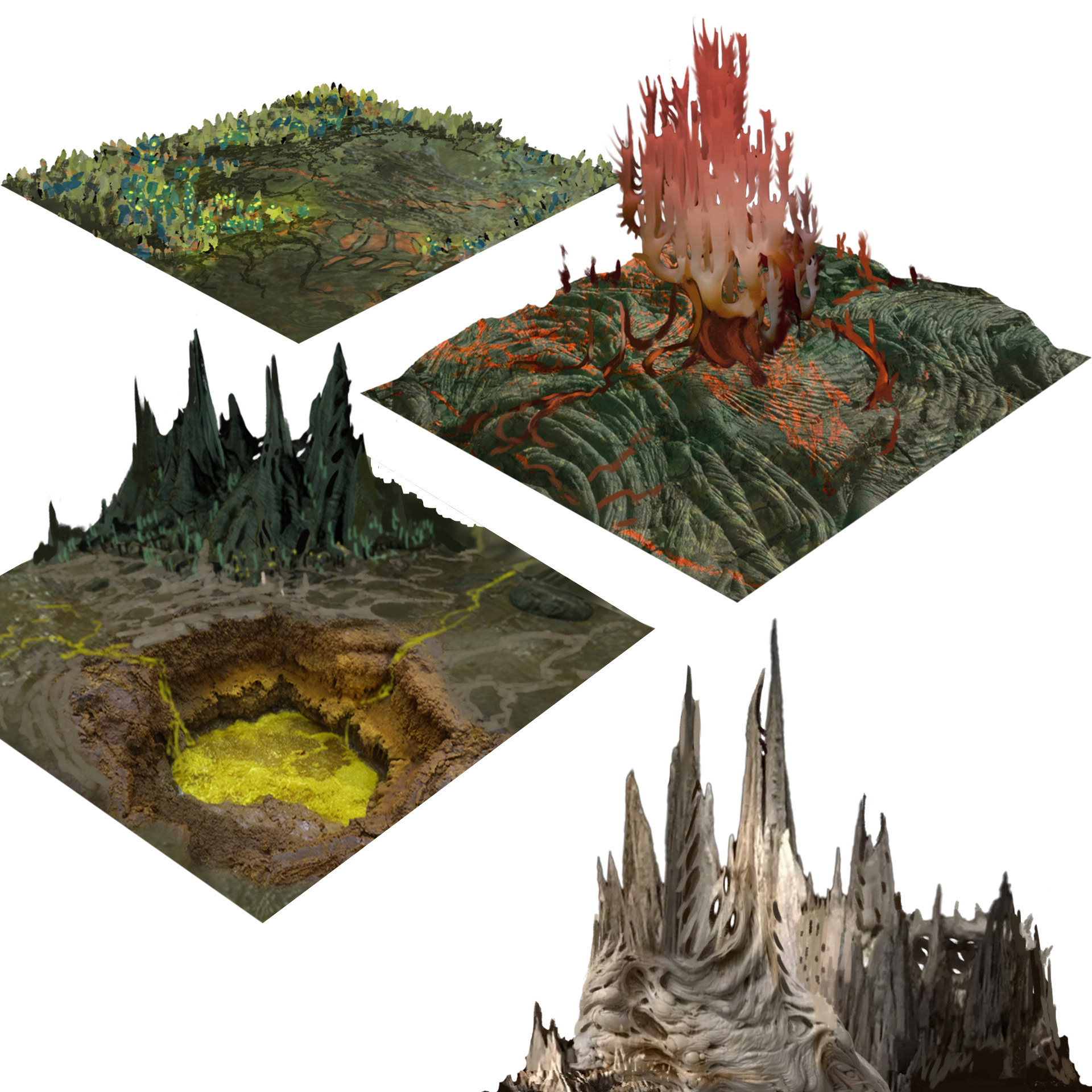
Through an incredible process of regeneration and mutation, the Harvester reassembled from its shattered remains and evolved into a more formidable force. As it renewed itself, the surrounding desert transformed dramatically. The once barren landscape was filled with acidic lakes created by the Harvester’s remnants. Neither plant life nor rock formations could escape this transformation; everything evolved alongside the Harvester, altering the desert's very identity.
Through an incredible process of regeneration and mutation, the Harvester reassembled from its shattered remains and evolved into a more formidable force. As it renewed itself, the surrounding desert transformed dramatically. The once barren landscape was filled with acidic lakes created by the Harvester’s remnants. Neither plant life nor rock formations could escape this transformation; everything evolved alongside the Harvester, altering the desert's very identity.







Daily Life and Planetary Design of the Transformers
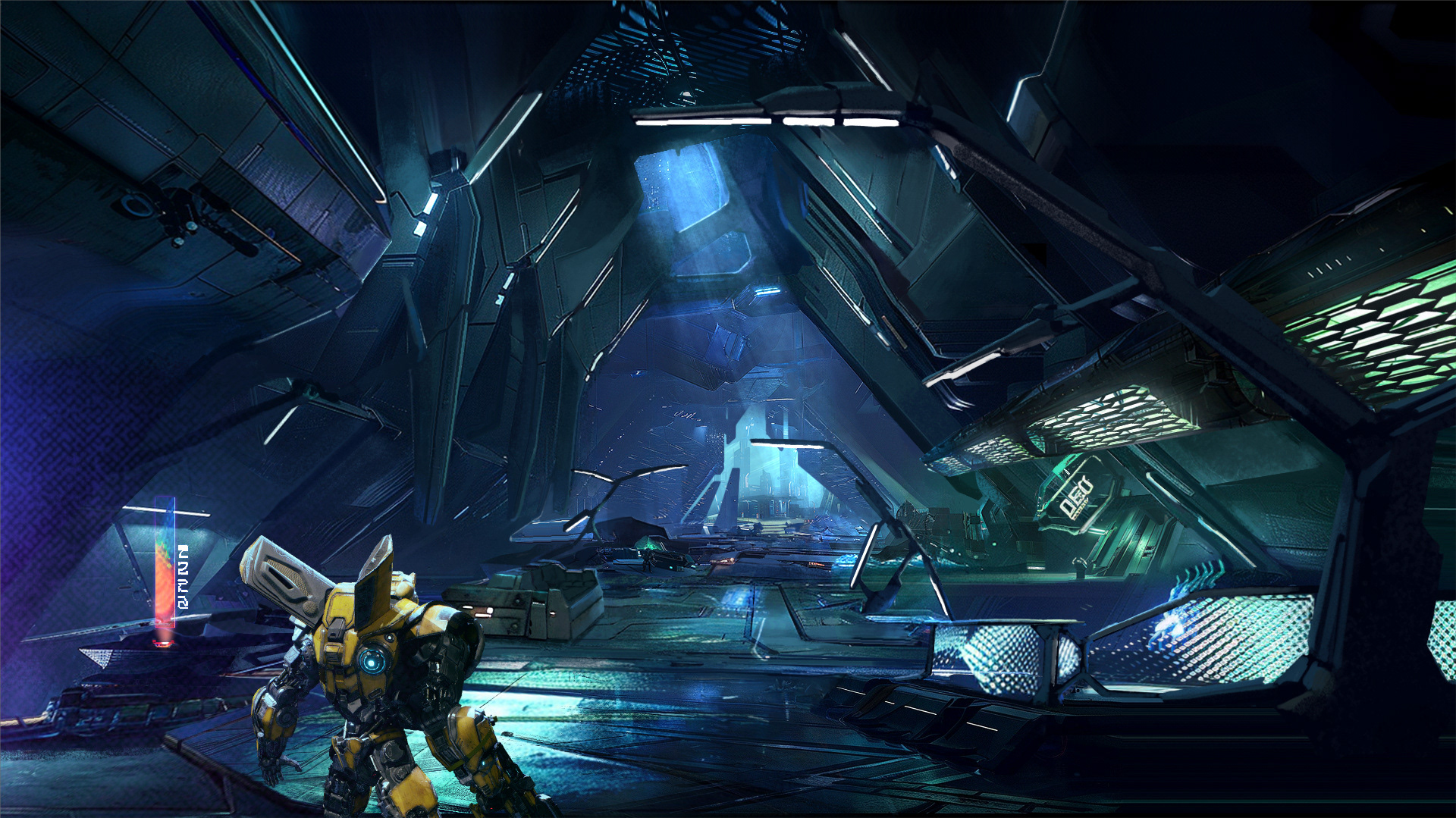
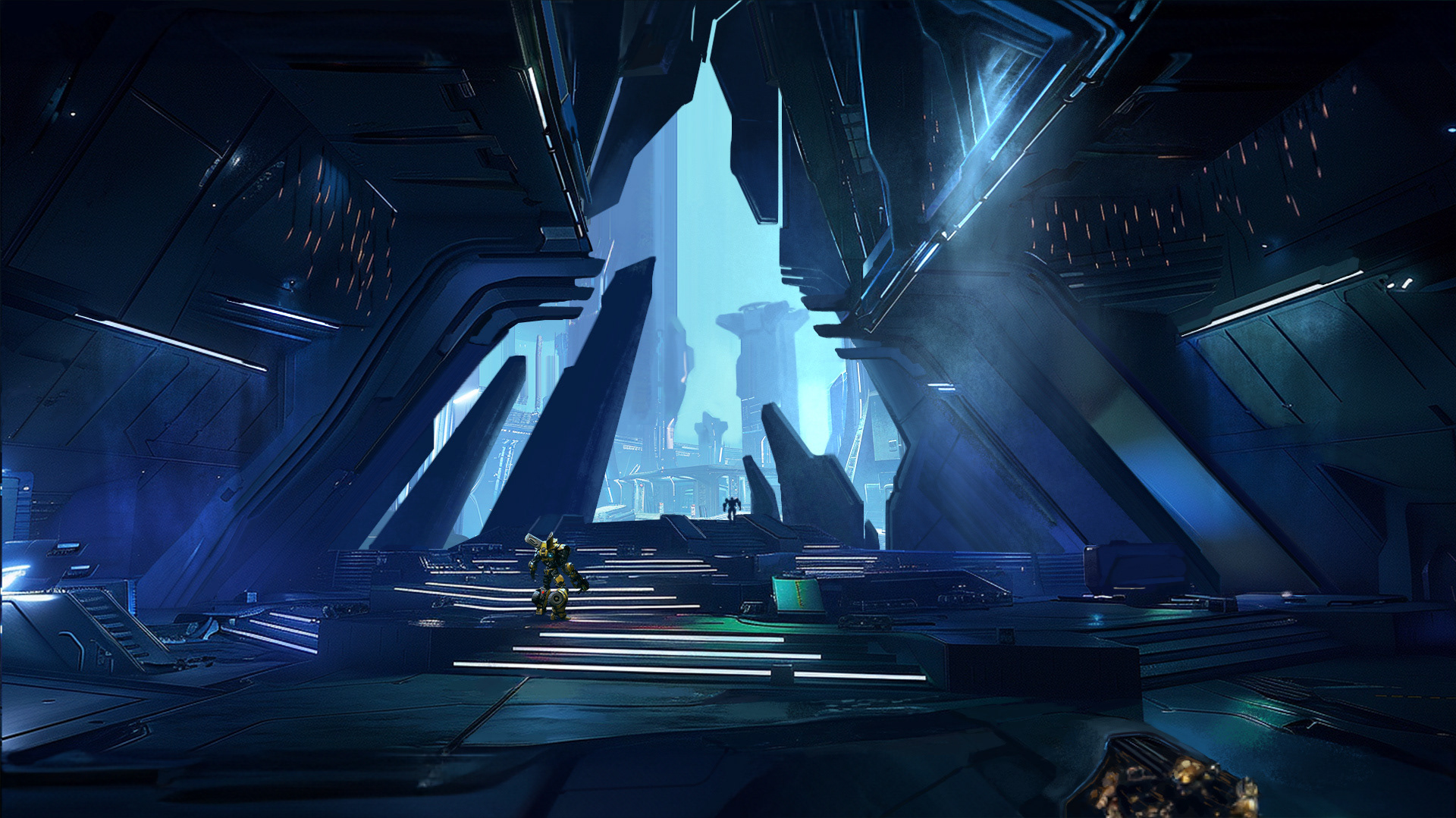
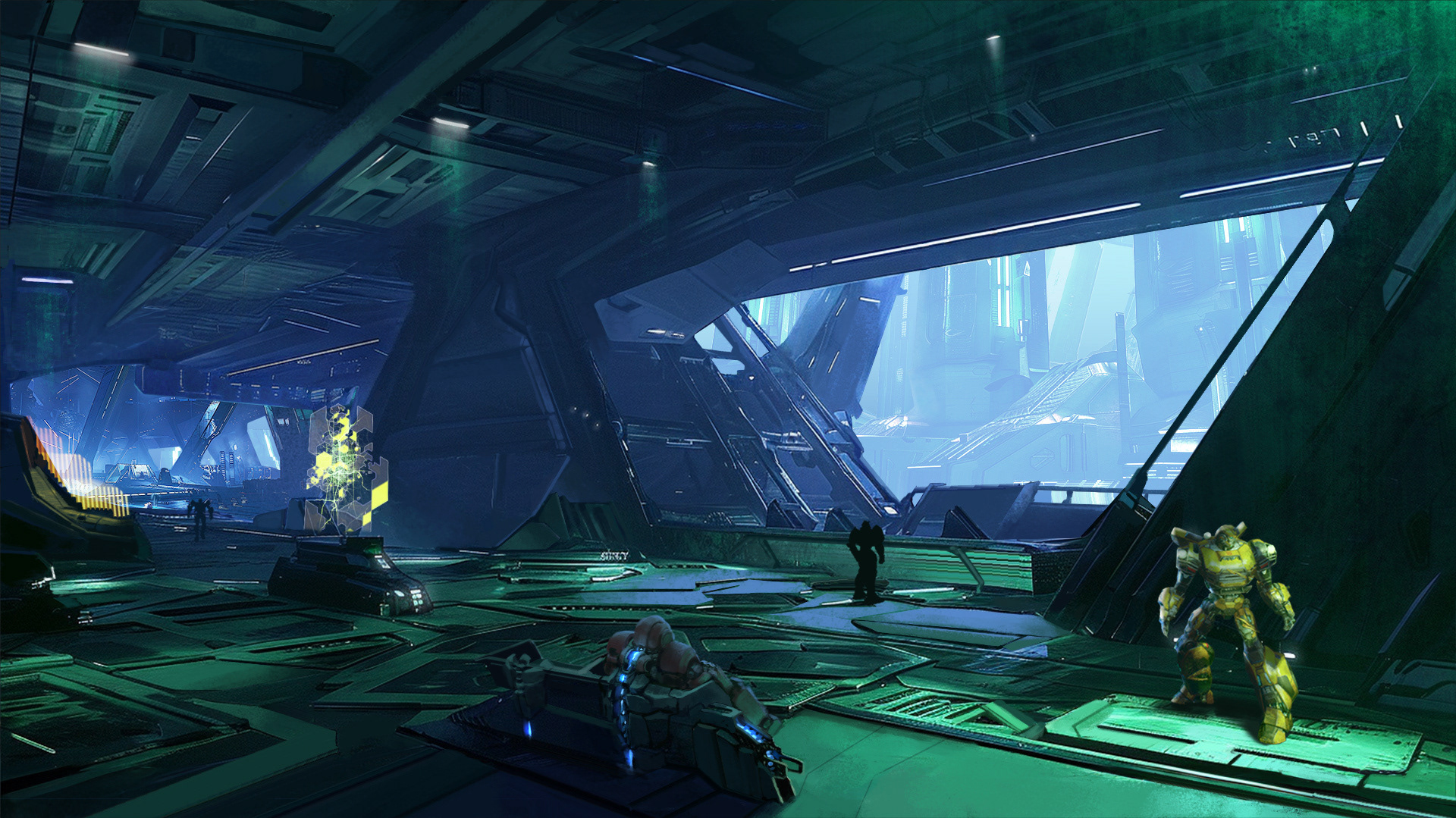
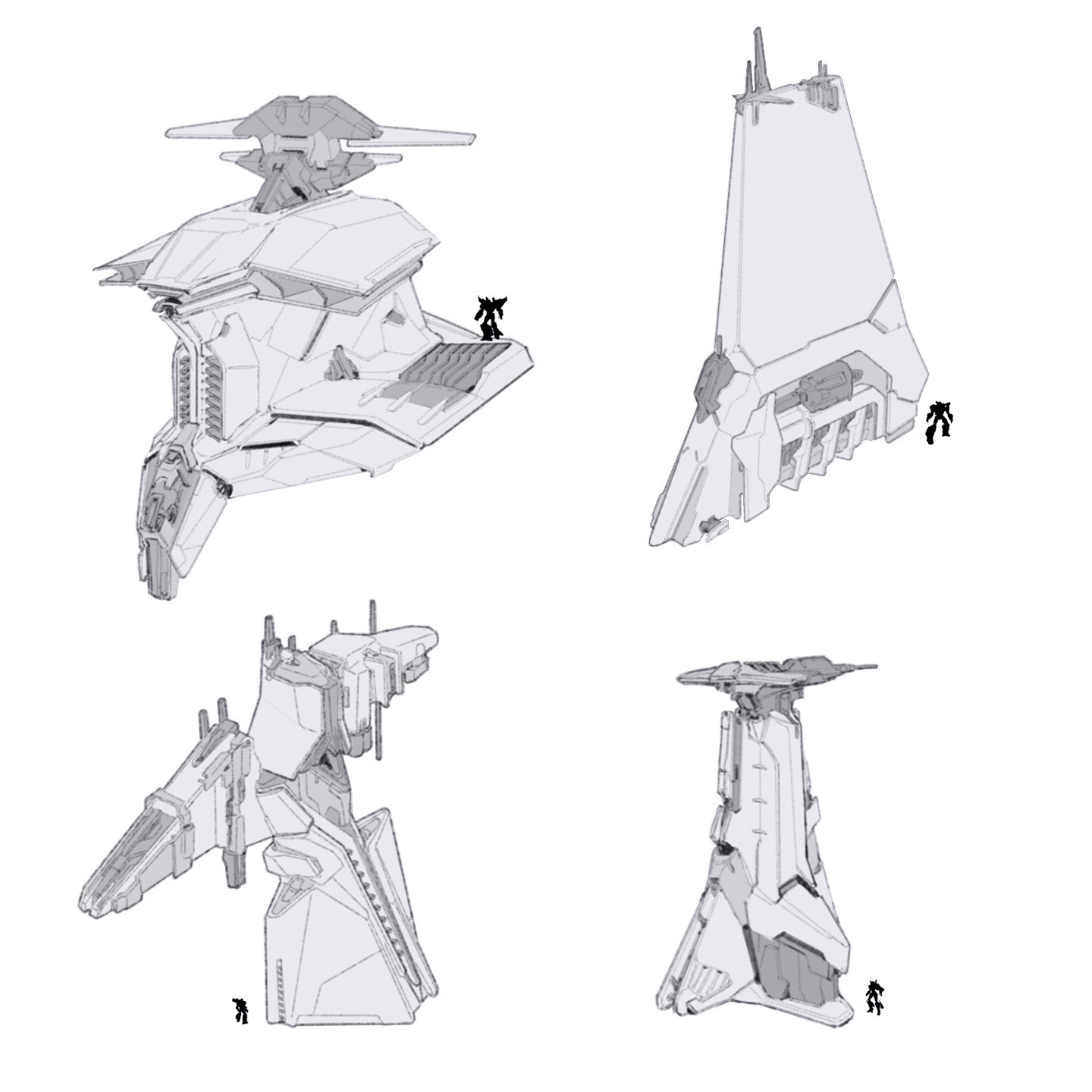
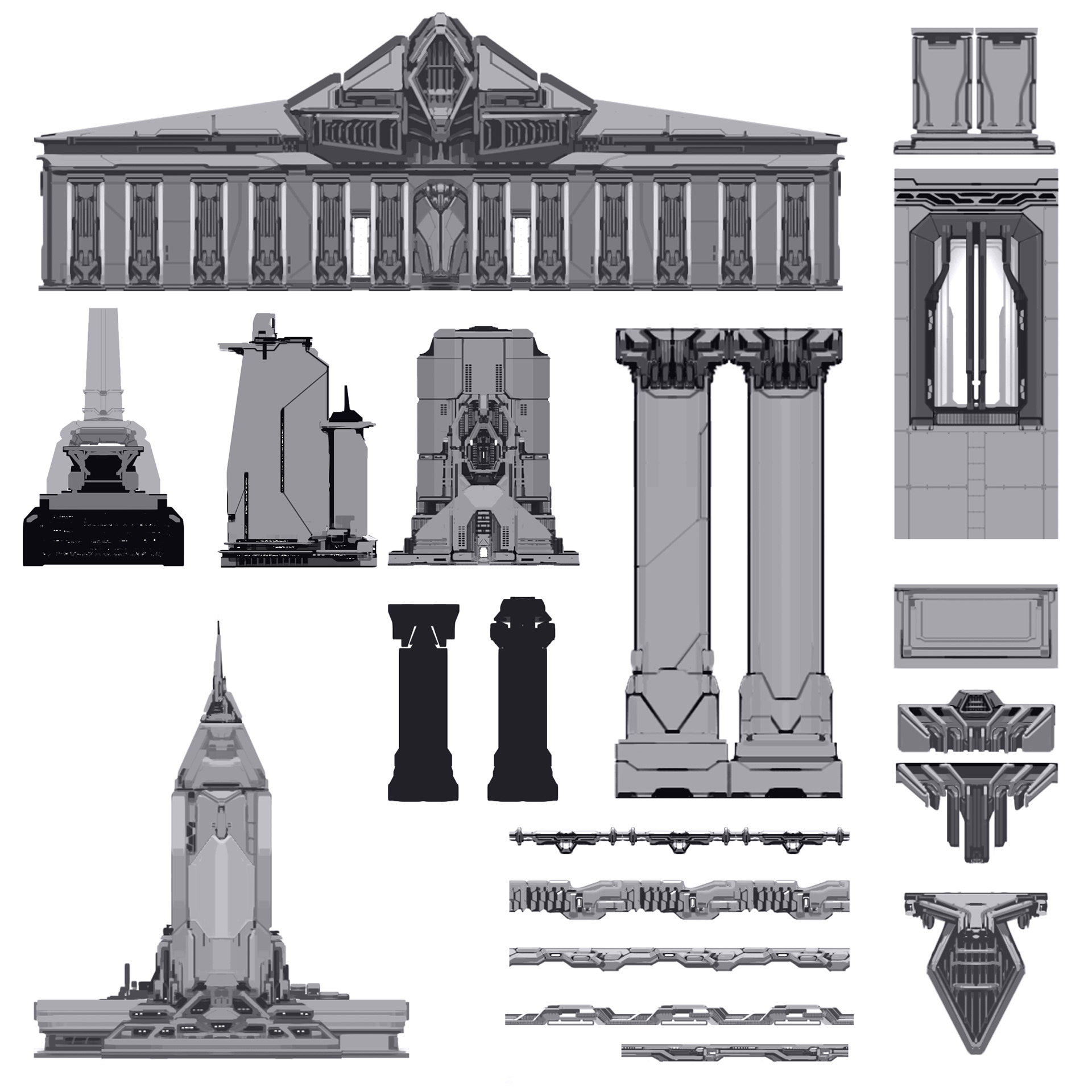
In this section, you can explore my work related to the daily lives of the Transformers on the planet Cybertron and the design of their world. Considering that Transformers can transform into both vehicles and aircraft, how are their transportation routes shaped? How can we remove overly abstract forms from the city’s design and create a harmonious integration with the game world?
For architectural design, I utilized a neo-classical style and blended it with Cybertronian structures. You can also see in my sketches over a couple of days how the tone and atmosphere of the streets and avenues are envisioned. These works aim to illustrate how the living spaces of the Transformers are designed to be both functional and aesthetically pleasing.









NEXT PROJECT ↓
Creating atmospheric underwater biomes, props, and visual development Elite Dangerous.

(COMPANY) (ROLE) (FOCUS)
FRONTIER DEVELOPMENT, 2021 CONCEPT ARTIST CHARACTER DESIGN, PROP DESIGN, WORLD DESIGN
FRONTIER DEVELOPMENT, 2021 CONCEPT ARTIST CHARACTER DESIGN, PROP DESIGN, WORLD DESIGN


(INTRODUCTION)
Working on the third development of Elite Dangerous—a game with a rich and deep-rooted history—was truly exhilarating.
While my primary focus was on character design, I also ventured into environmental and prop design, taking on diverse roles throughout the project. For this space simulation, my priority was to create designs that were not only entertaining but also logical and functional.
Each character and life form was crafted with its own unique meaning and logic. I would routinely start by establishing these meanings and messages, with aesthetics as a secondary concern.


(FLORA)
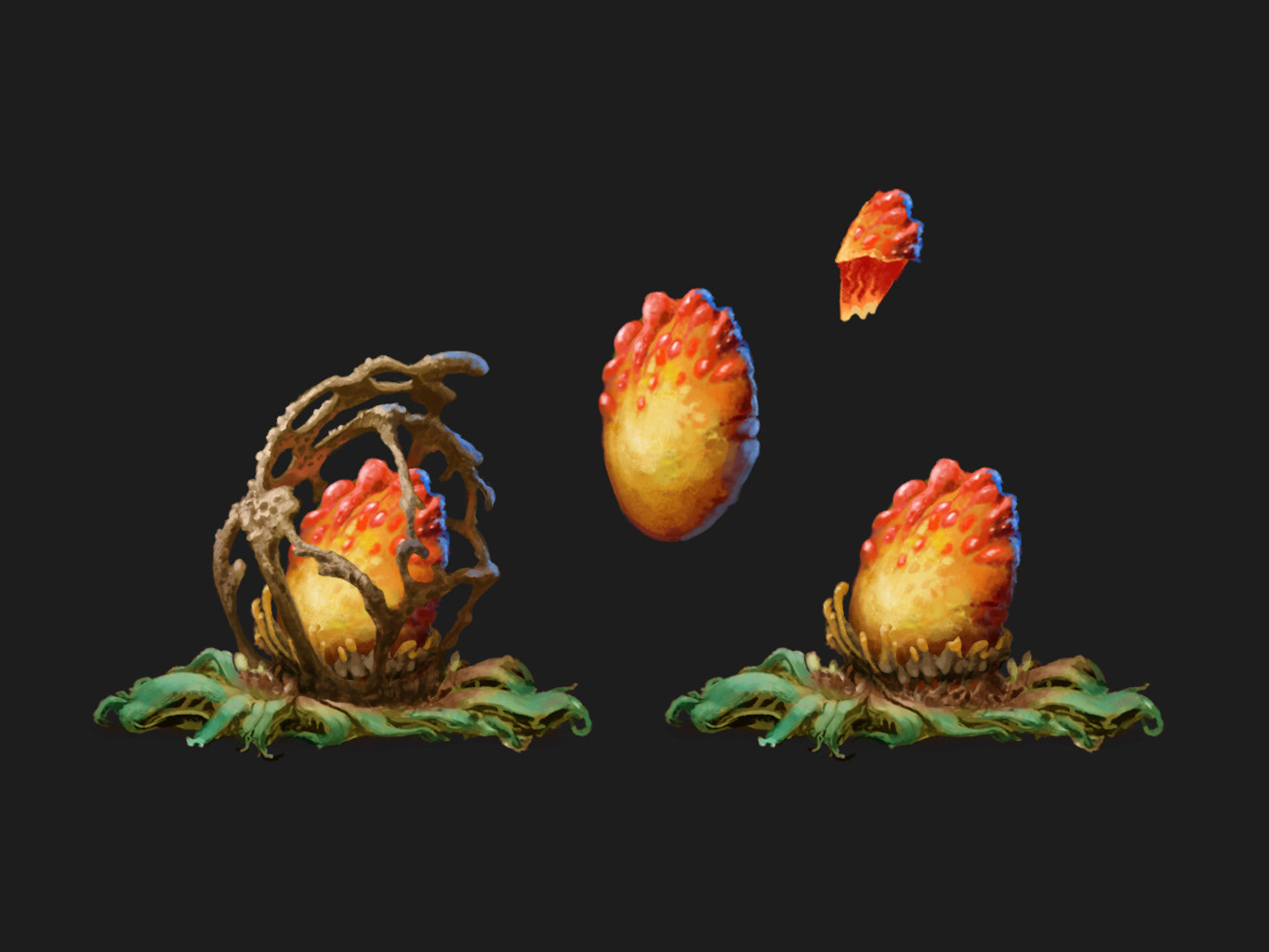
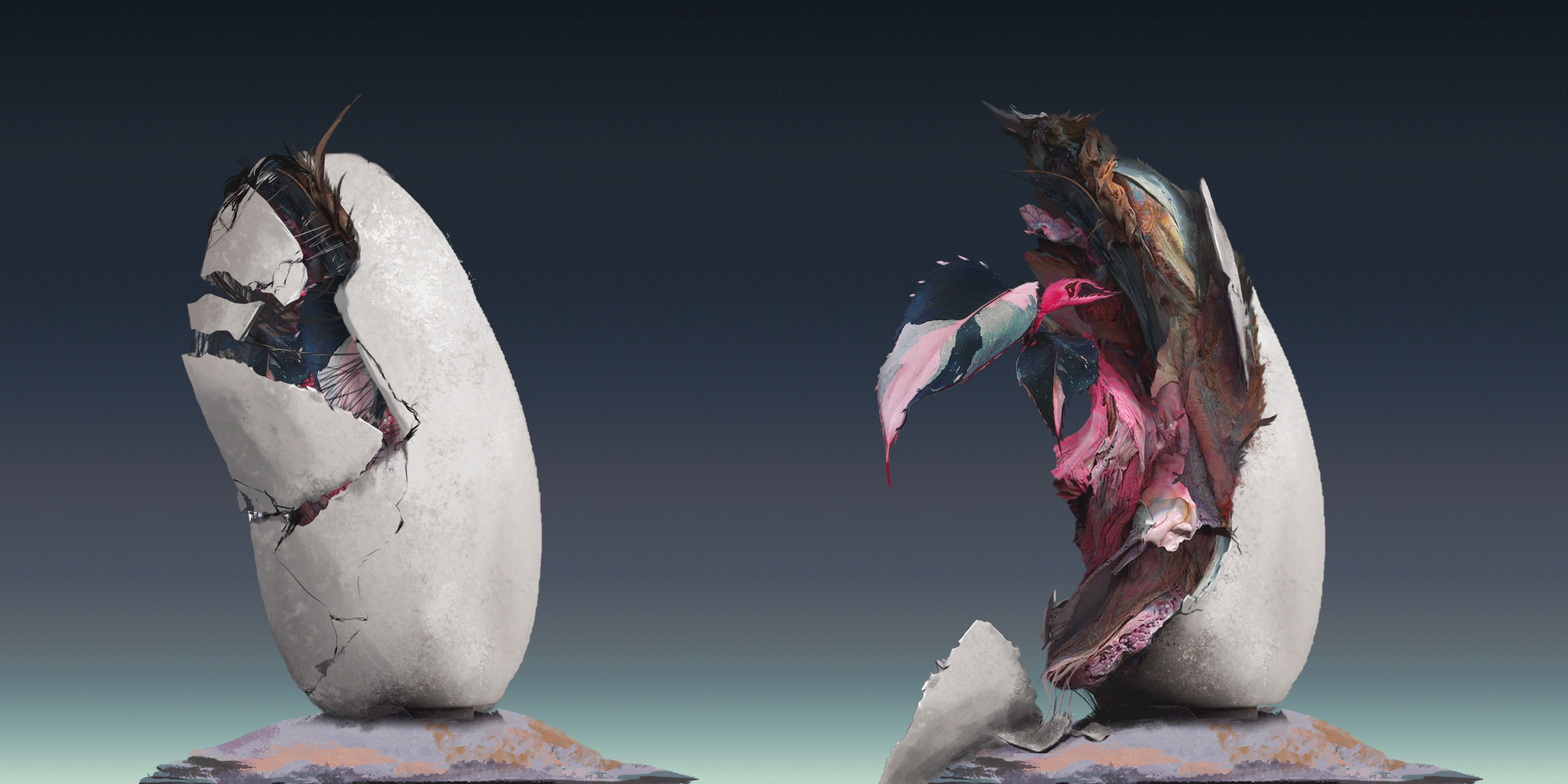
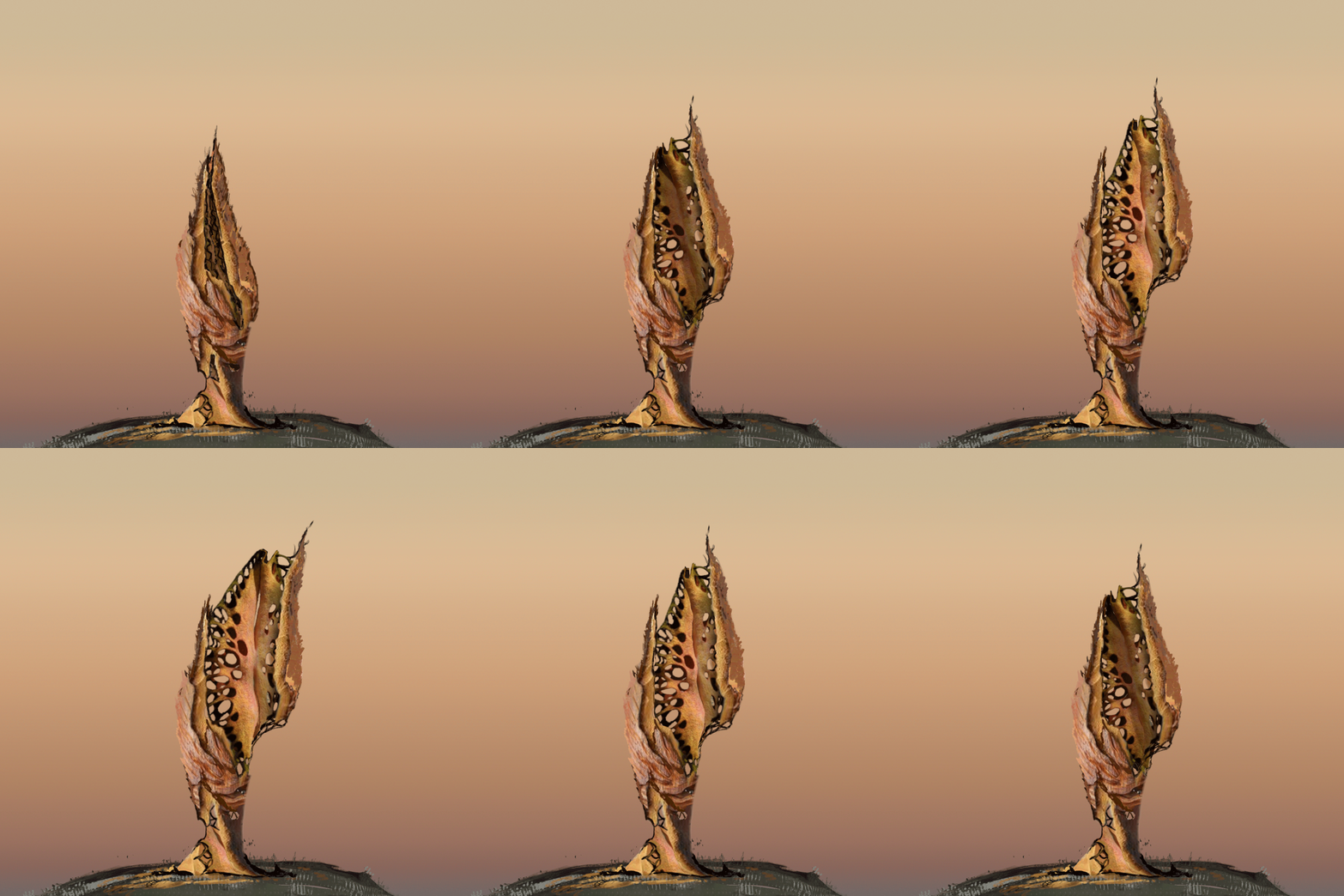
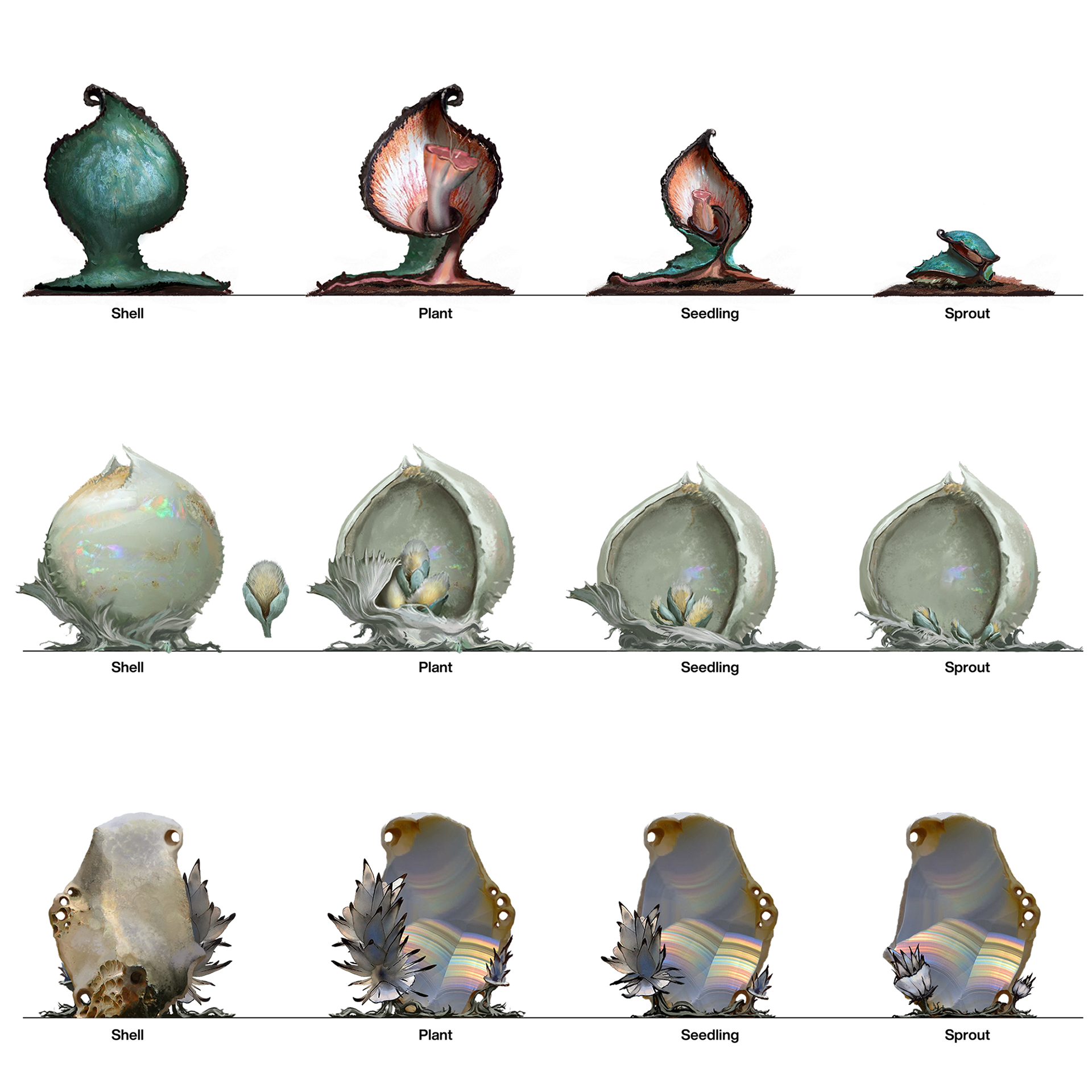
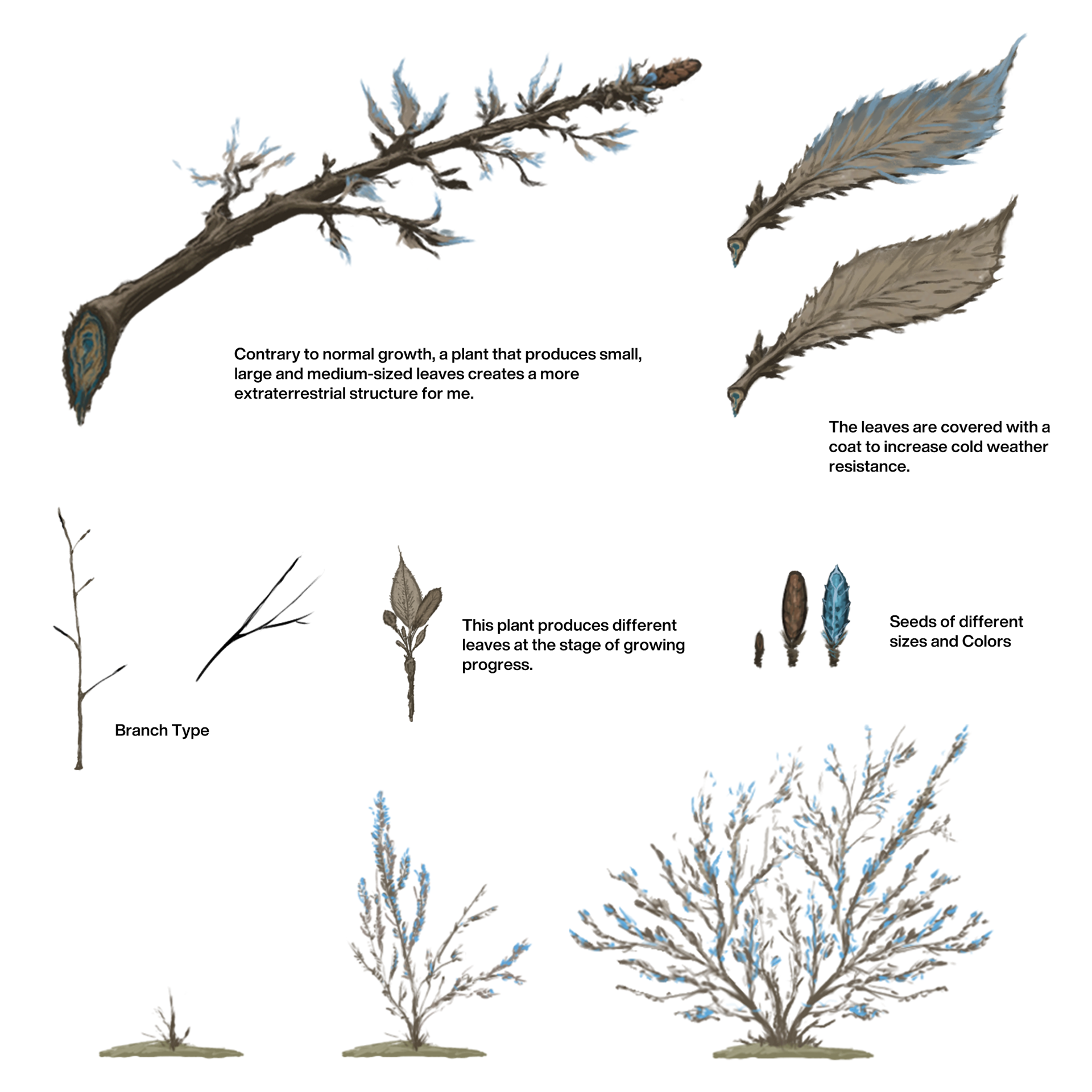
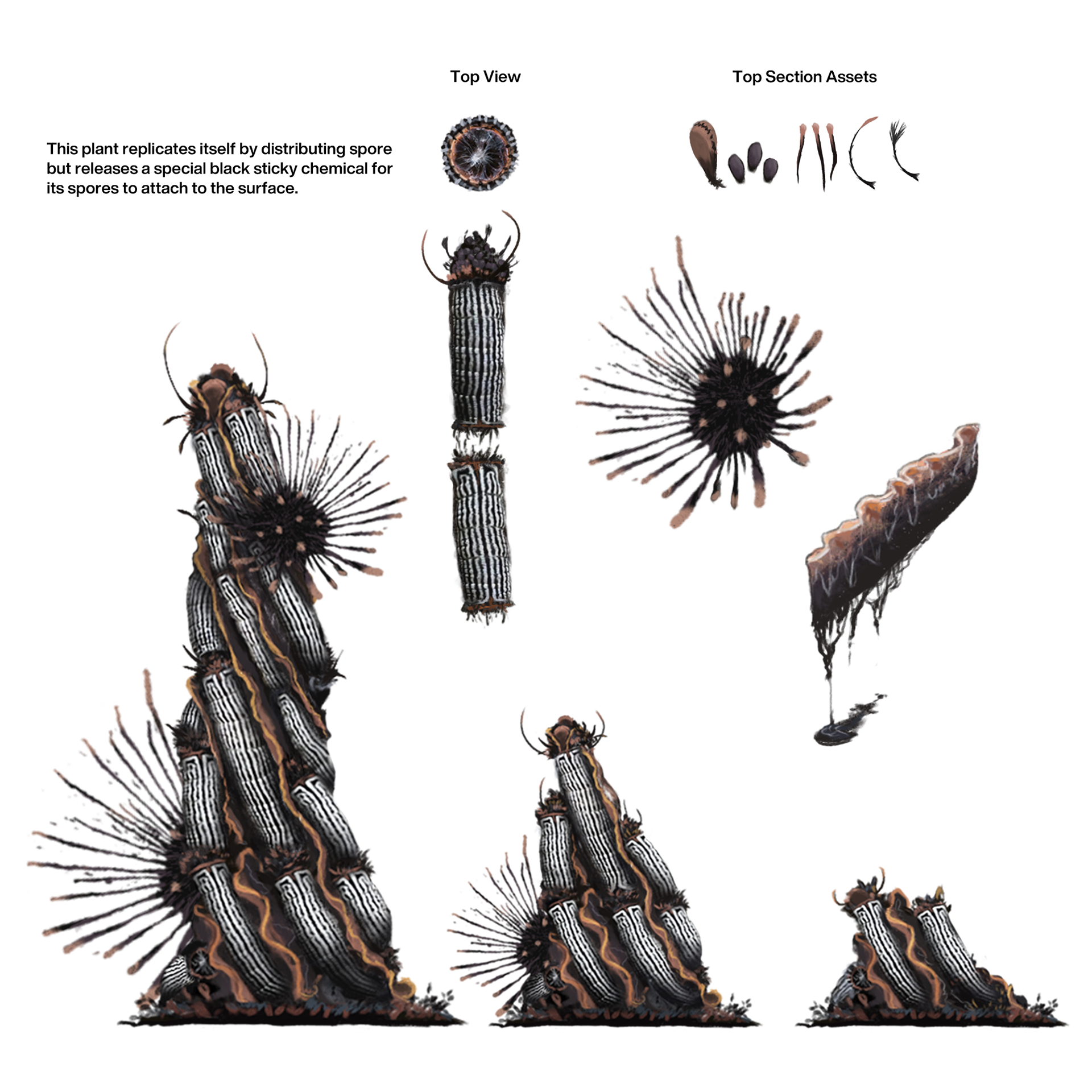
It's not just a white egg. This plant gives us the ability to control texture density in environment design. If I want a white palette in a certain area, these eggs will be perfect, but if I want to create variation in specific focal points, I can break the egg and let the plants grow there.
I've developed various ideas for this and many similar plants.
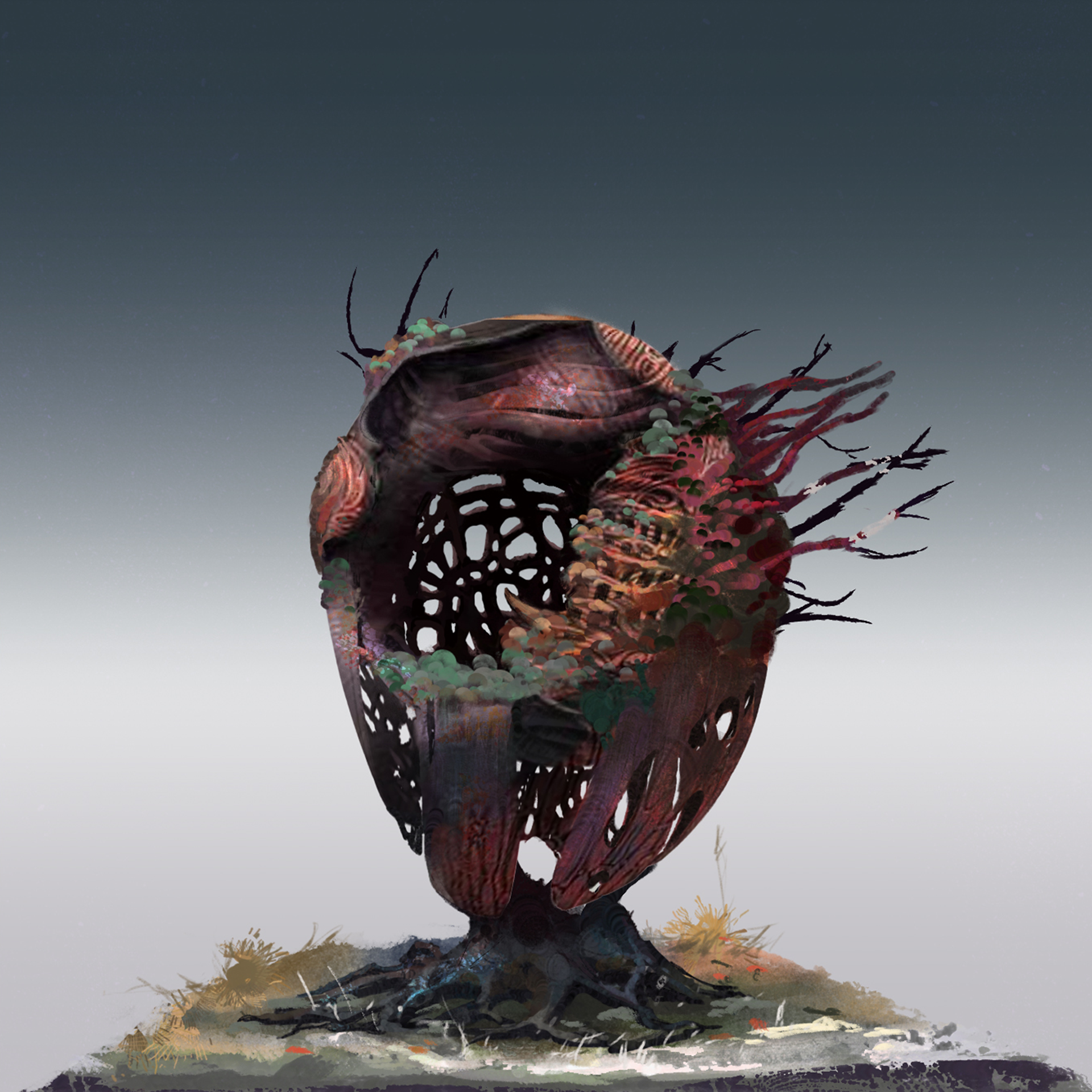
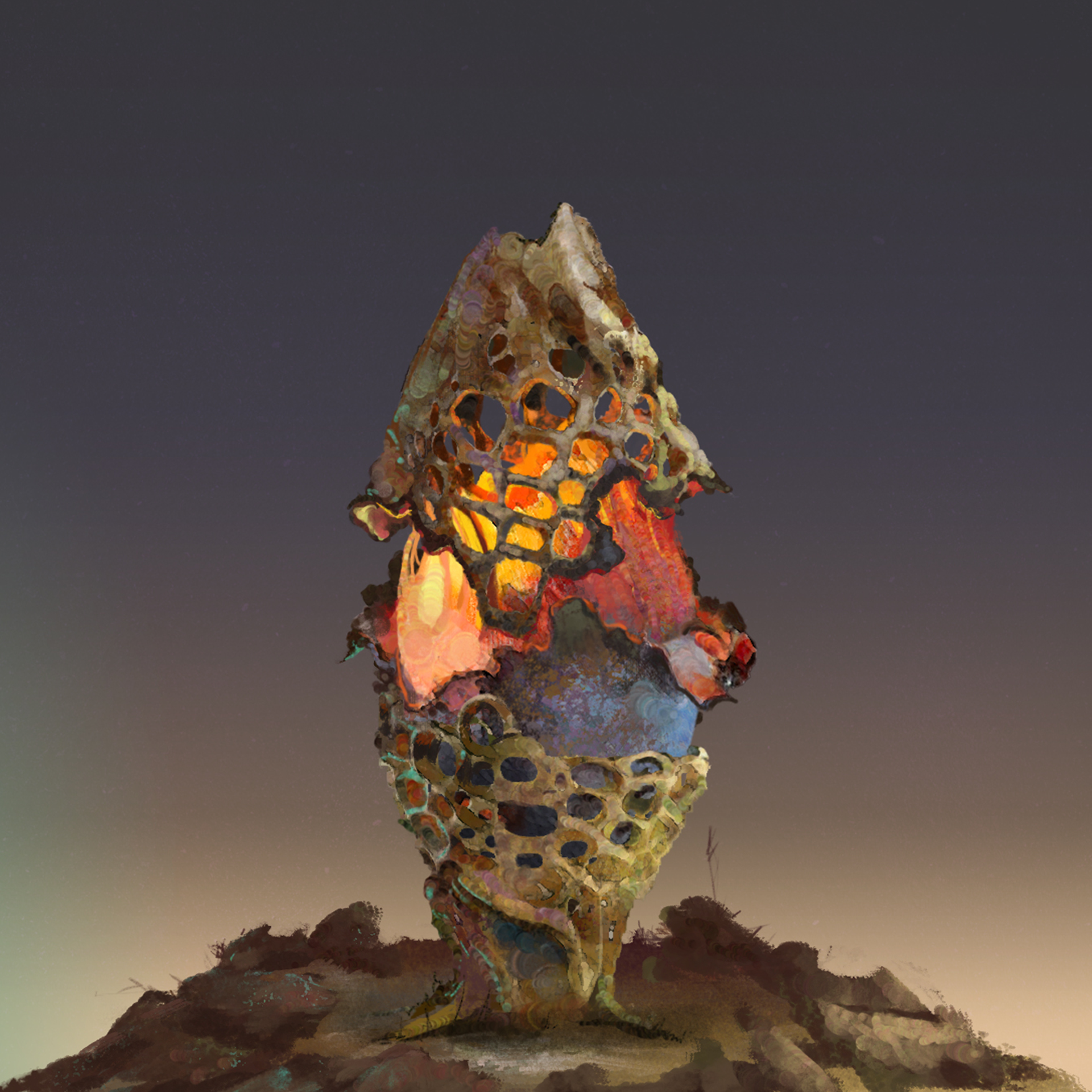
For example, on a planet with strong winds, how could a plant protect itself from being blown away with its hard trunk? I would explore questions like, what kind of contrast would arise from combining delicate beauty with a strong, sturdy trunk? Or how could plants exist on a planet made of lava? How might they benefit from the planet's structure? Could plants made of breathing lungs be possible? I’ve personally worked on hundreds of ideas like these, and you can see some of them here.



The Legion’s colossal machine, the Harvester, plays a crucial role in their conquests. After drawing in Earth's materials, its internal mechanical grinders and filters process these resources.
The Harvester meticulously separates and transforms them into energy and elements, serving as a vital converter that nourishes the Legion’s soldiers.
To neutralize this massive machine, the Transformers launch a daring operation. Their mission is to place an explosive module inside the Harvester and destroy it from within. As they infiltrate the machine, they engage in fierce battles with Legion soldiers.
The battlefield is a chaotic scene of debris and wreckage, with remnants of New York’s massive metro stations, towering buildings, and abandoned vehicles floating through the air. The Transformers' struggle inside the Harvester becomes a critical fight for the future of Earth. The machine’s interior turns into a nightmarish battlefield, filled with mechanical parts and consumed materials.












(CHARACTERS)
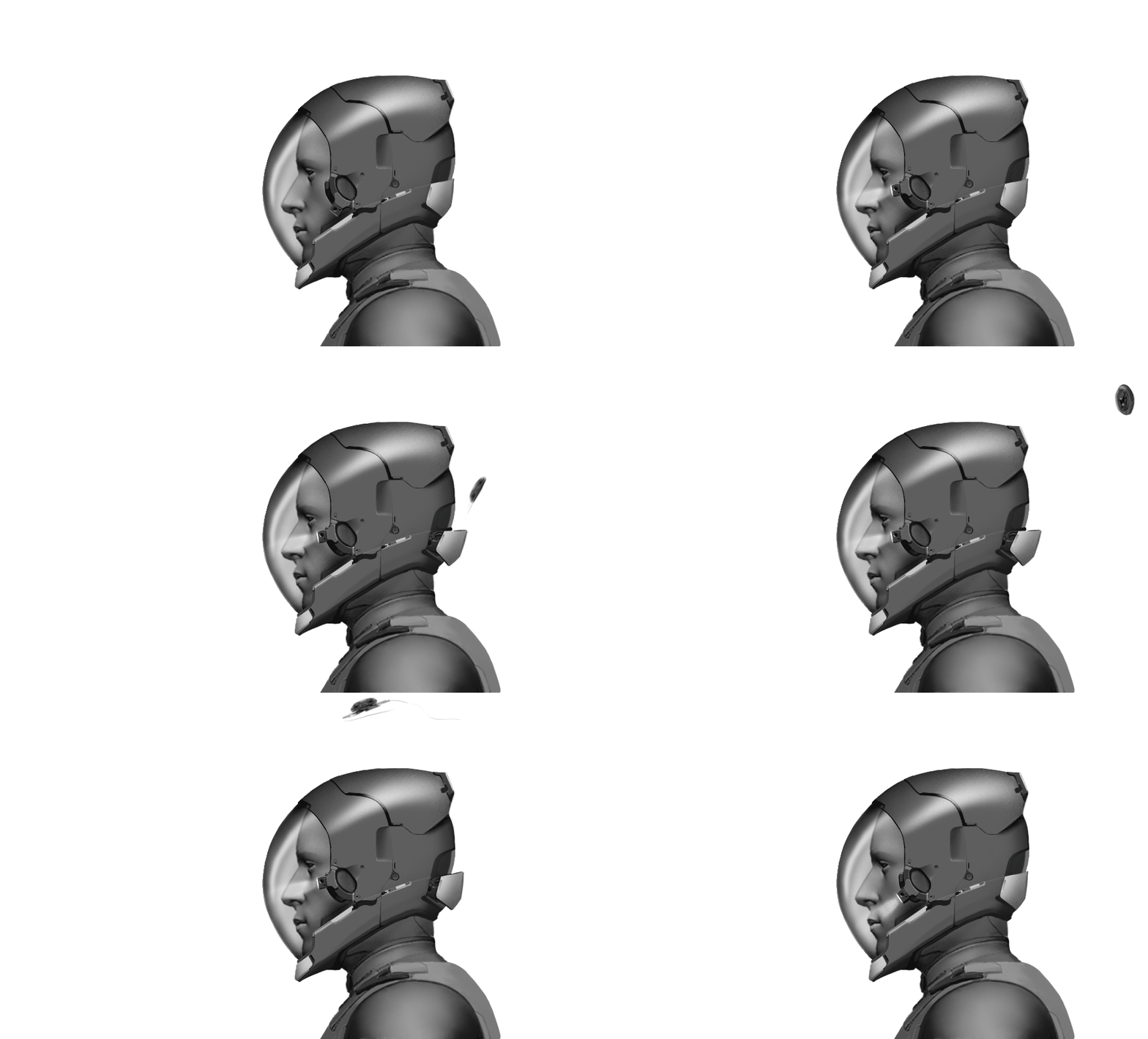
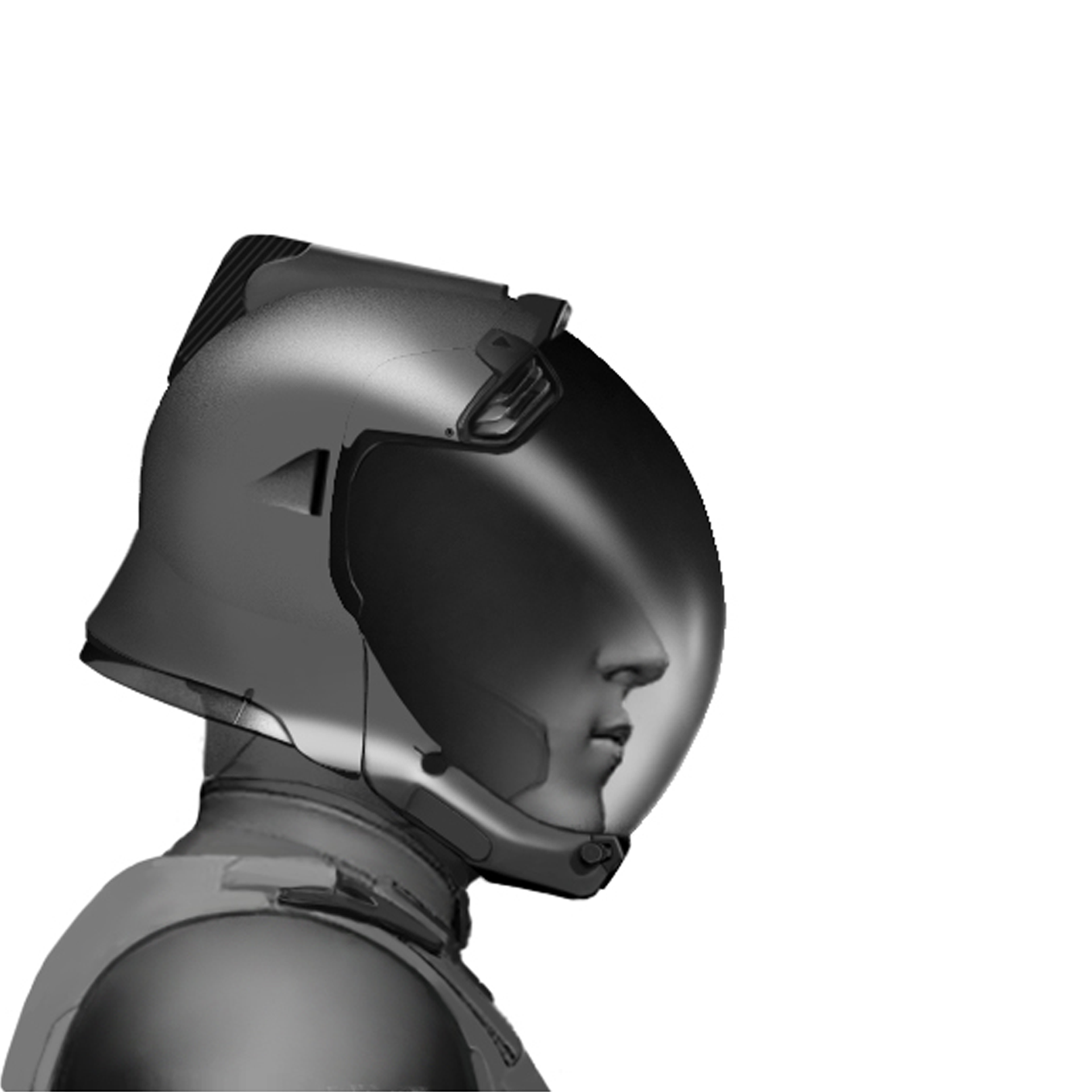
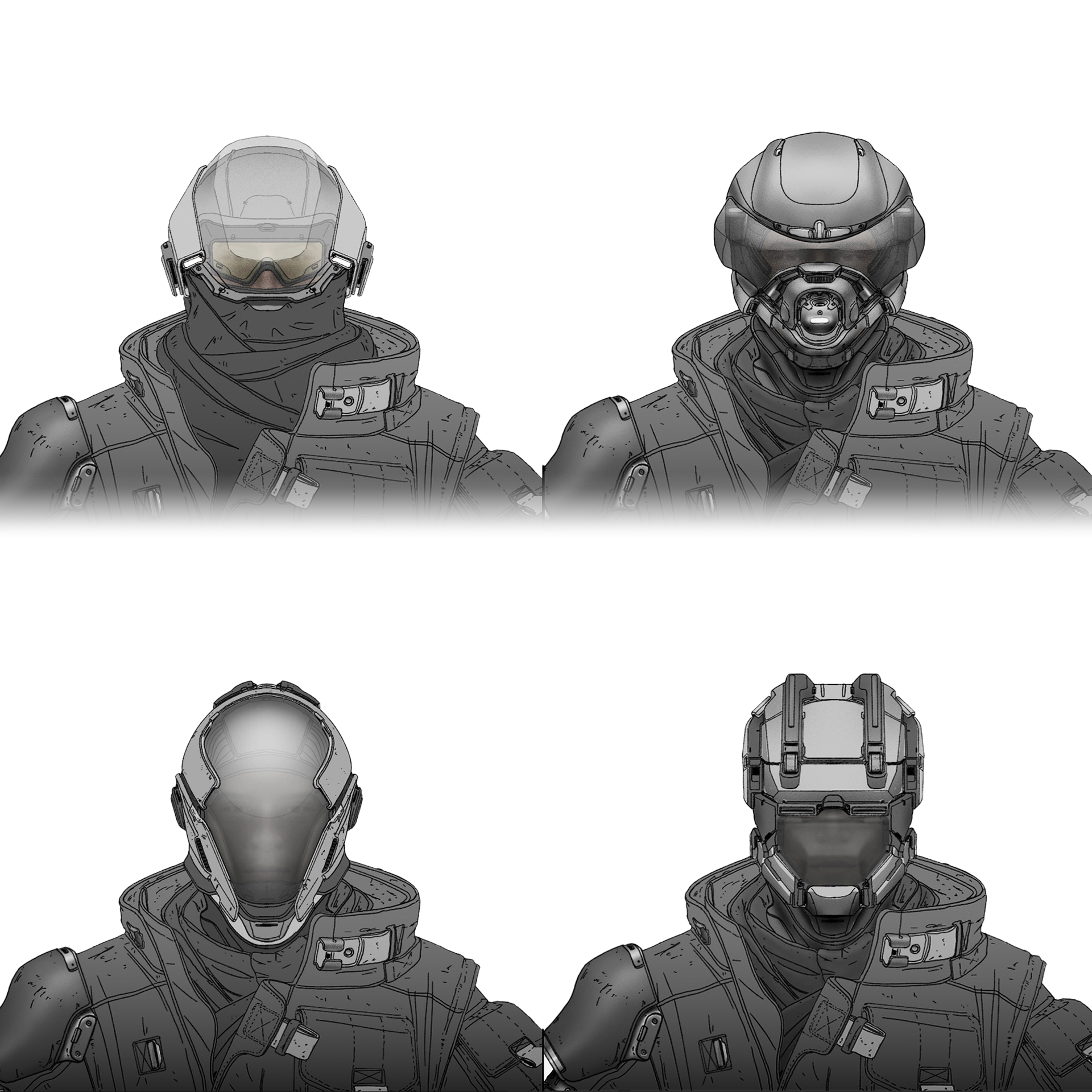
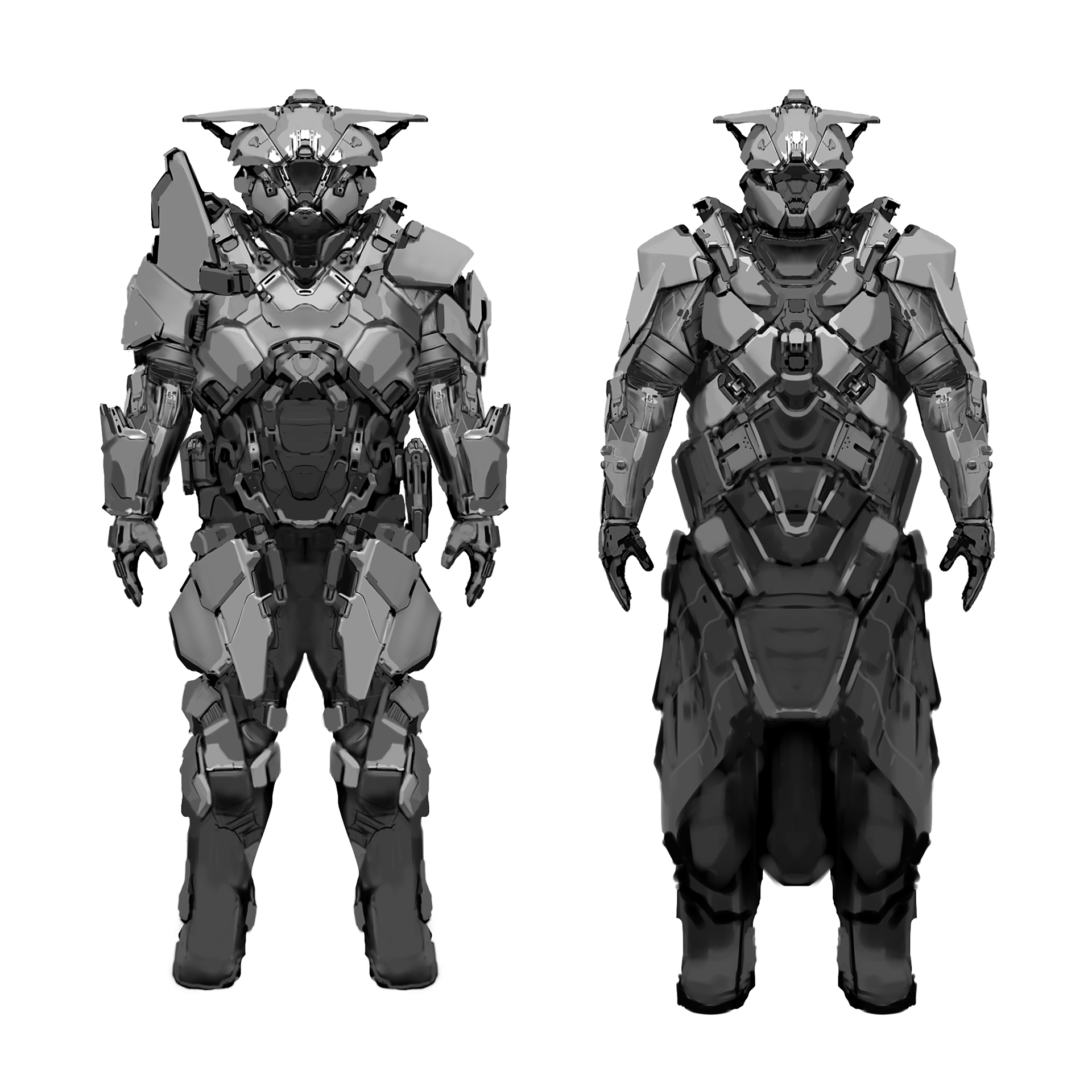
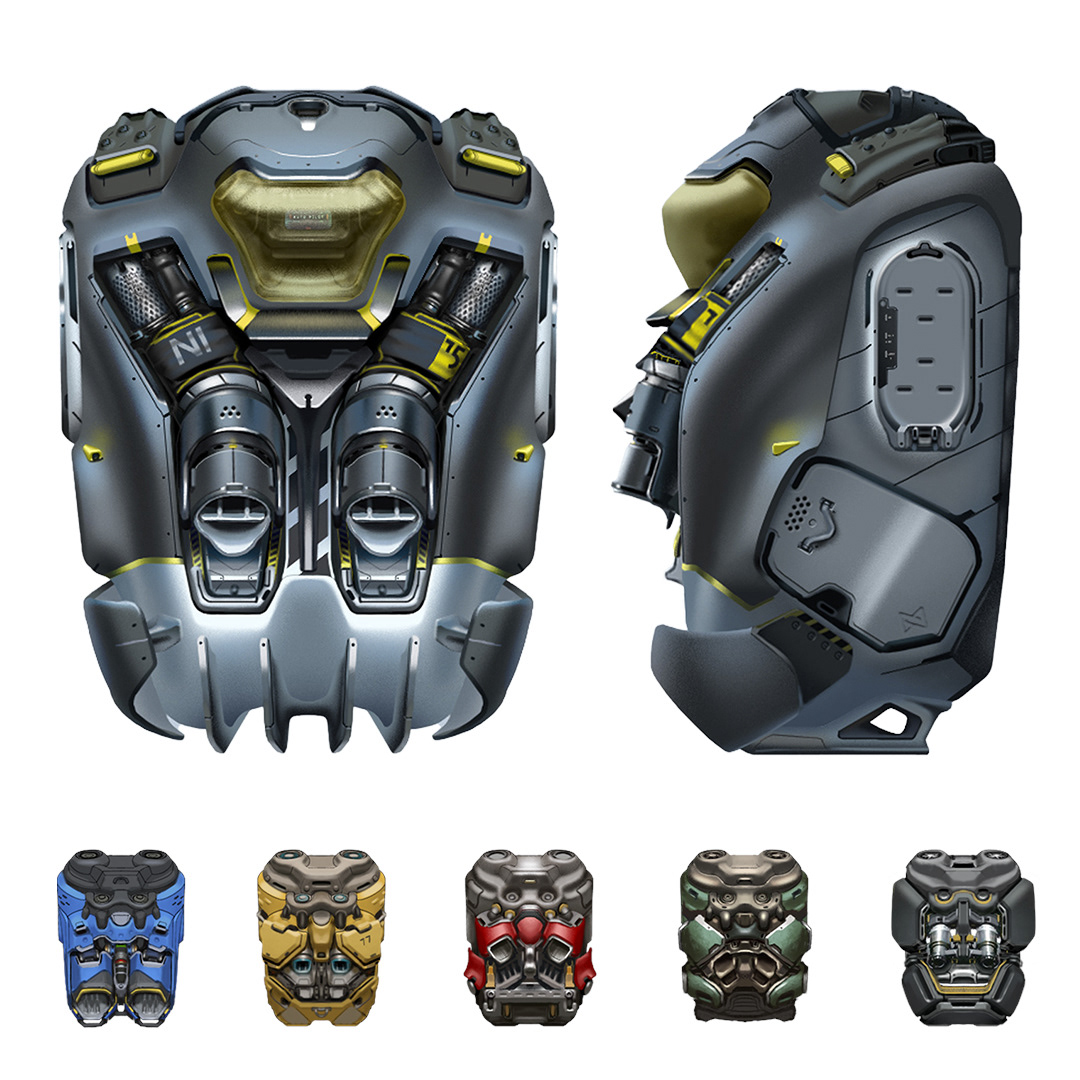
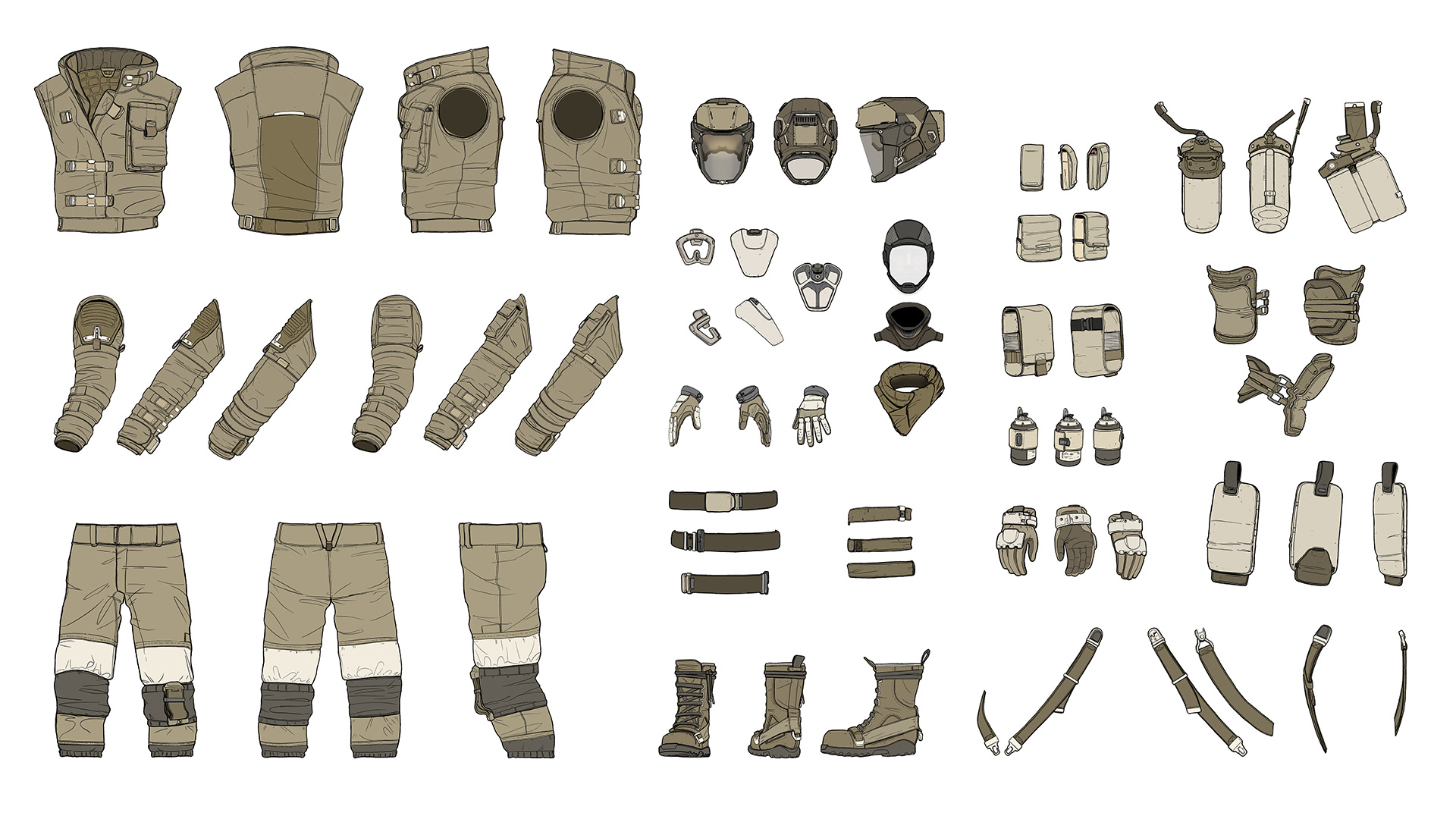
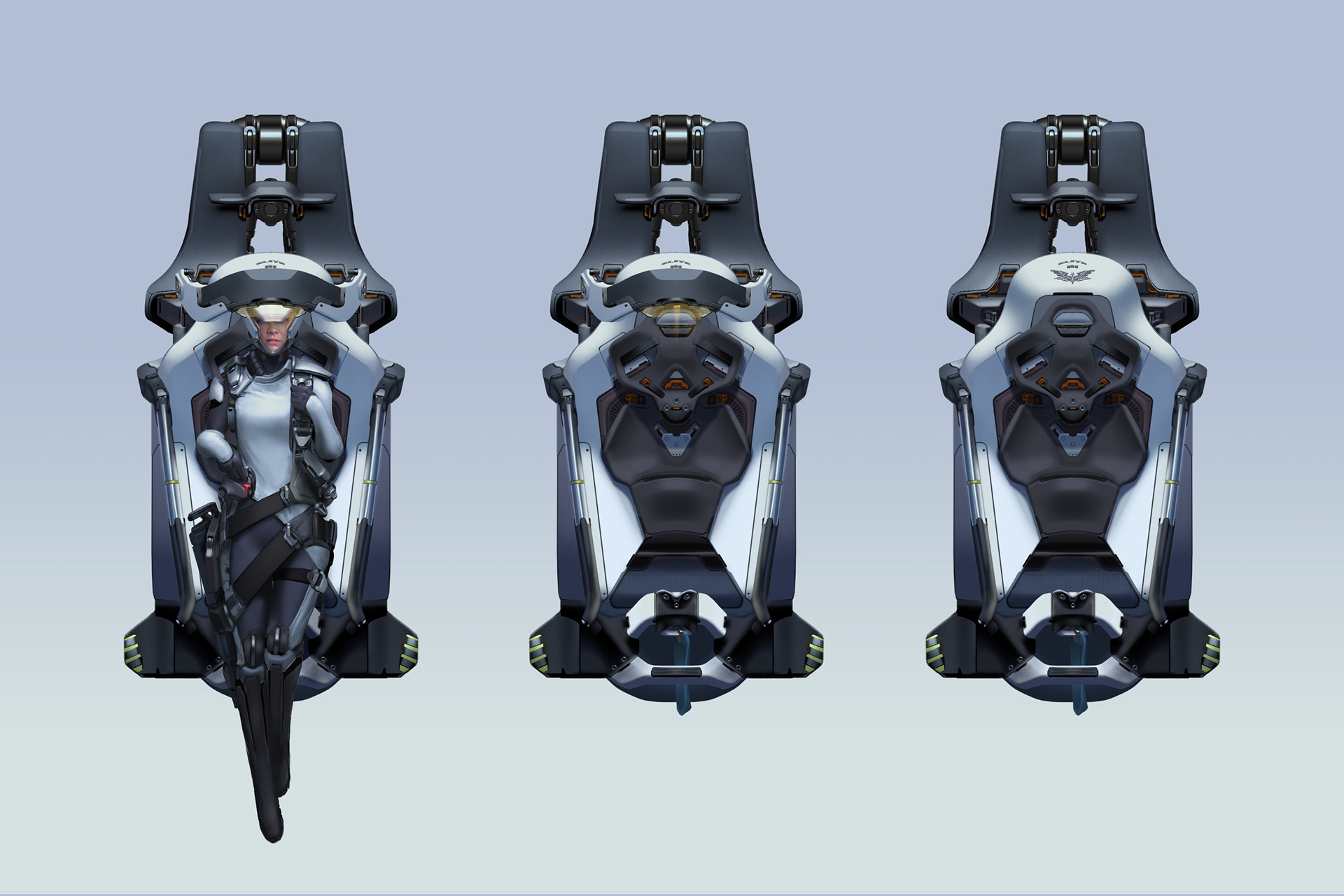
As a space traveler, you're constantly dealing with various challenges. I wanted to capture a few of these issues in a single character design, albeit in an amateur way.
For instance, I incorporated special cuts and mounting holes to protect the electronic equipment you carry from dust. To prevent you from drifting in a zero-gravity environment, I added multiple hooked belts that can be secured around your waist and under your arms, along with mini thrusters for guidance.
Since different types of suns emit different kinds of light, your helmet needs to deploy various filters—sometimes even in liquid form—to shield your eyes from harmful rays. You can see these and many other ideas summarized below.










(THE DEPLOYMENT ROOM)
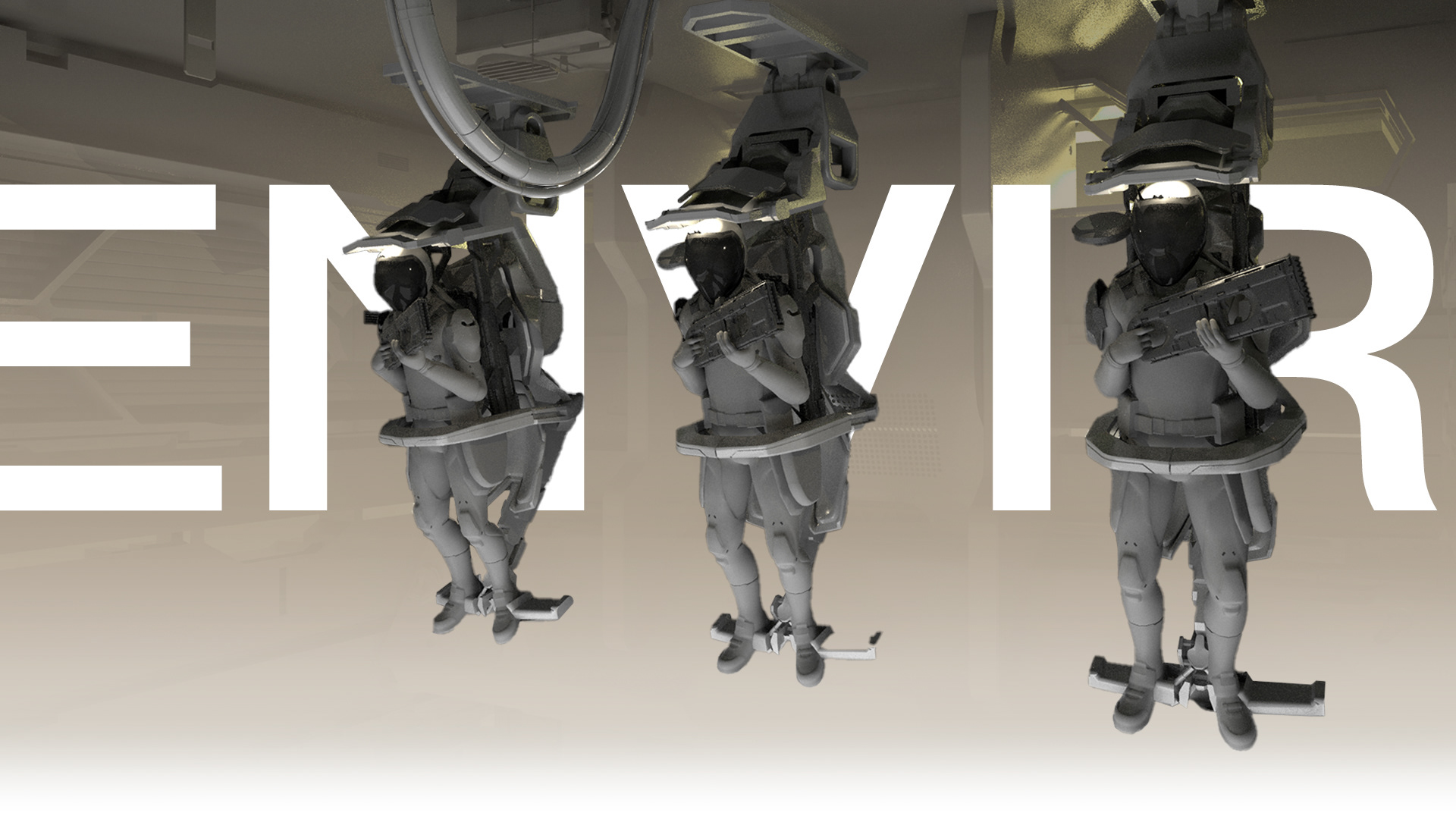
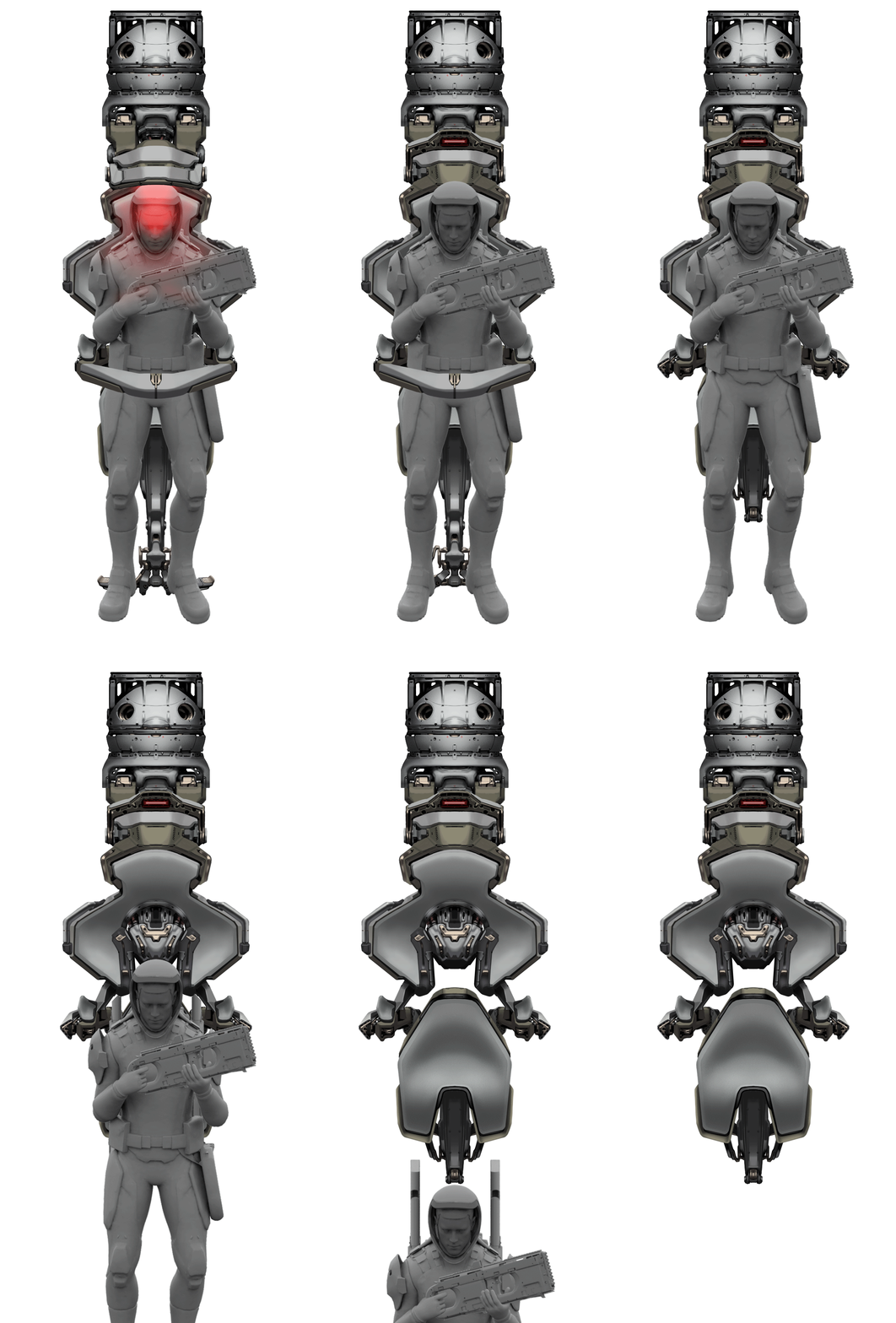
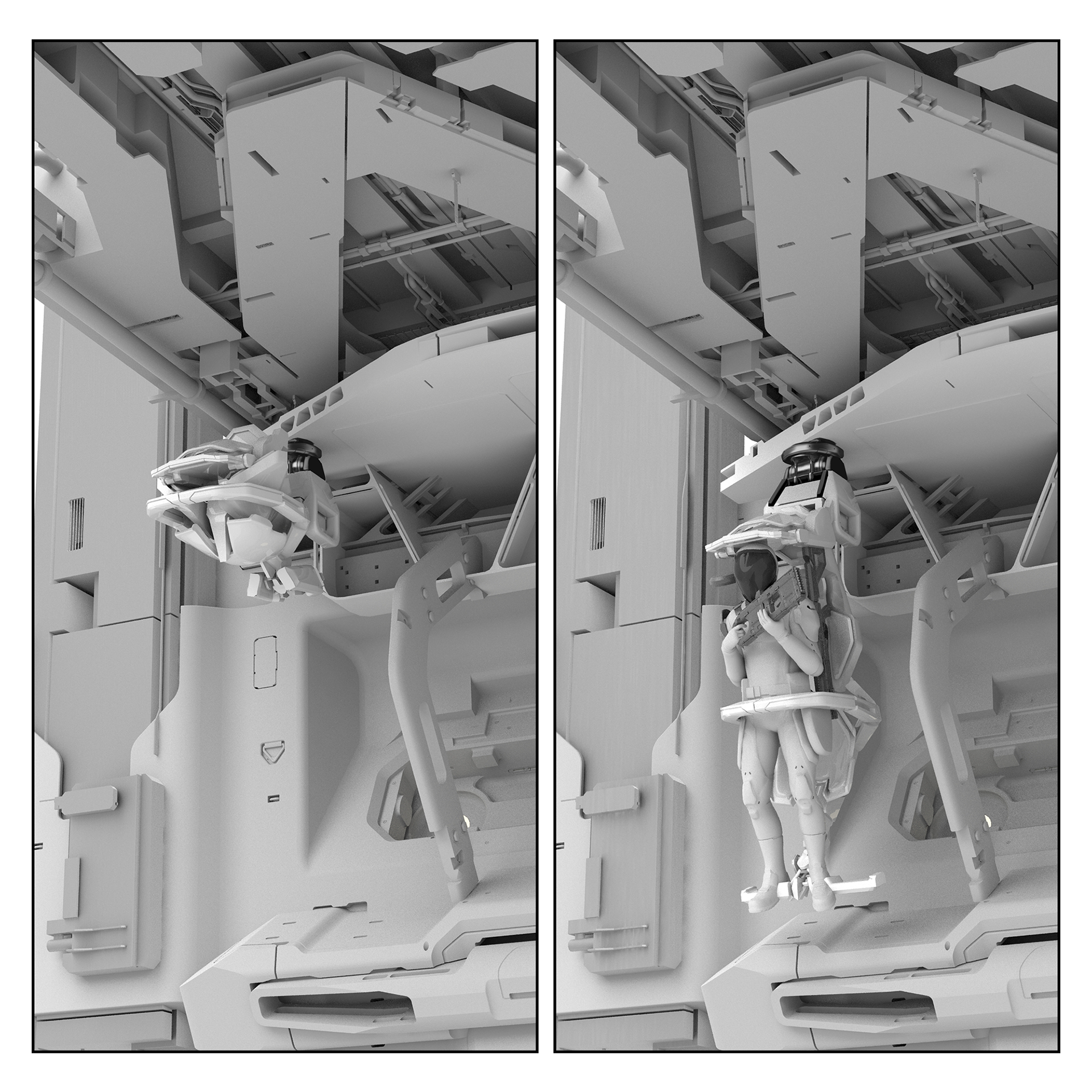
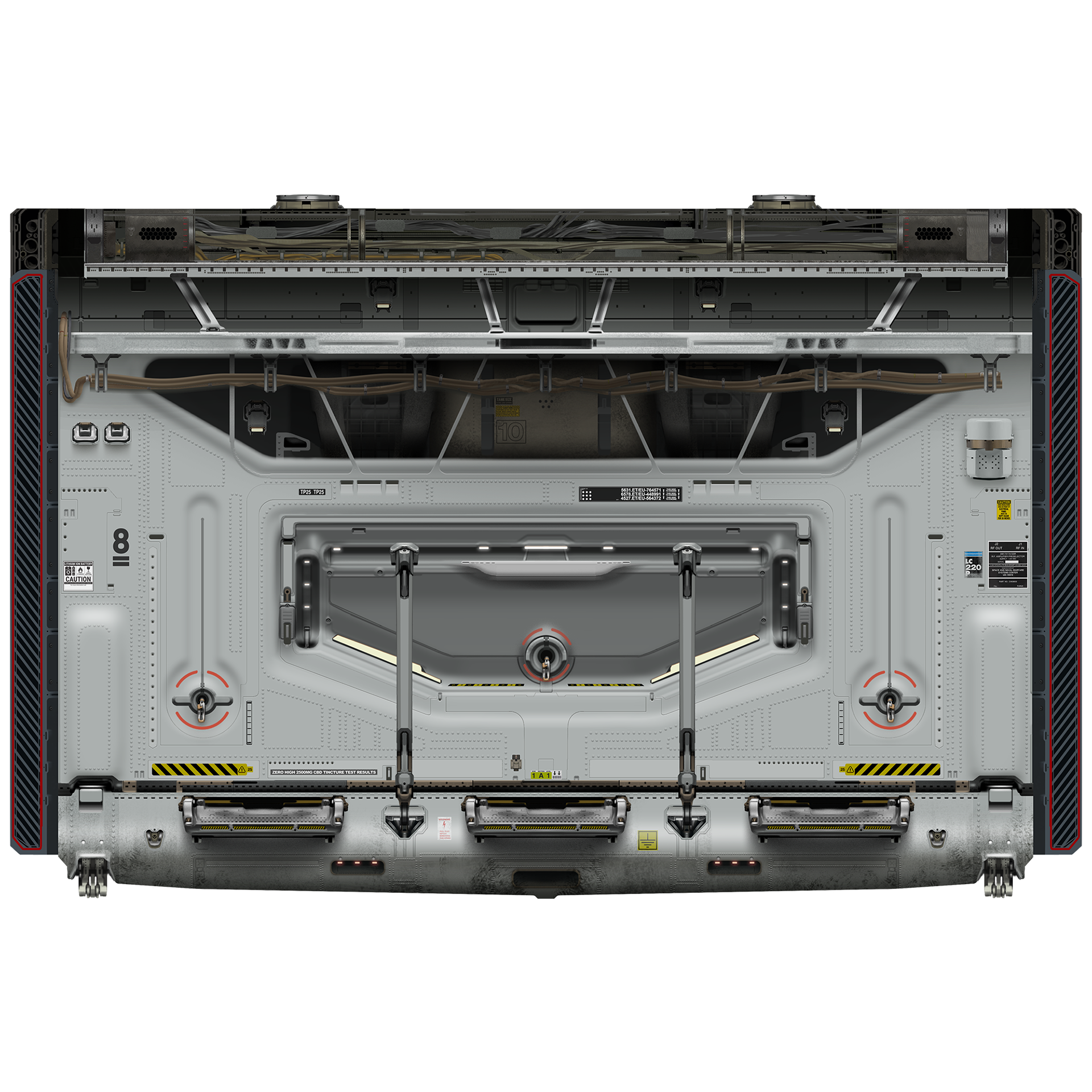
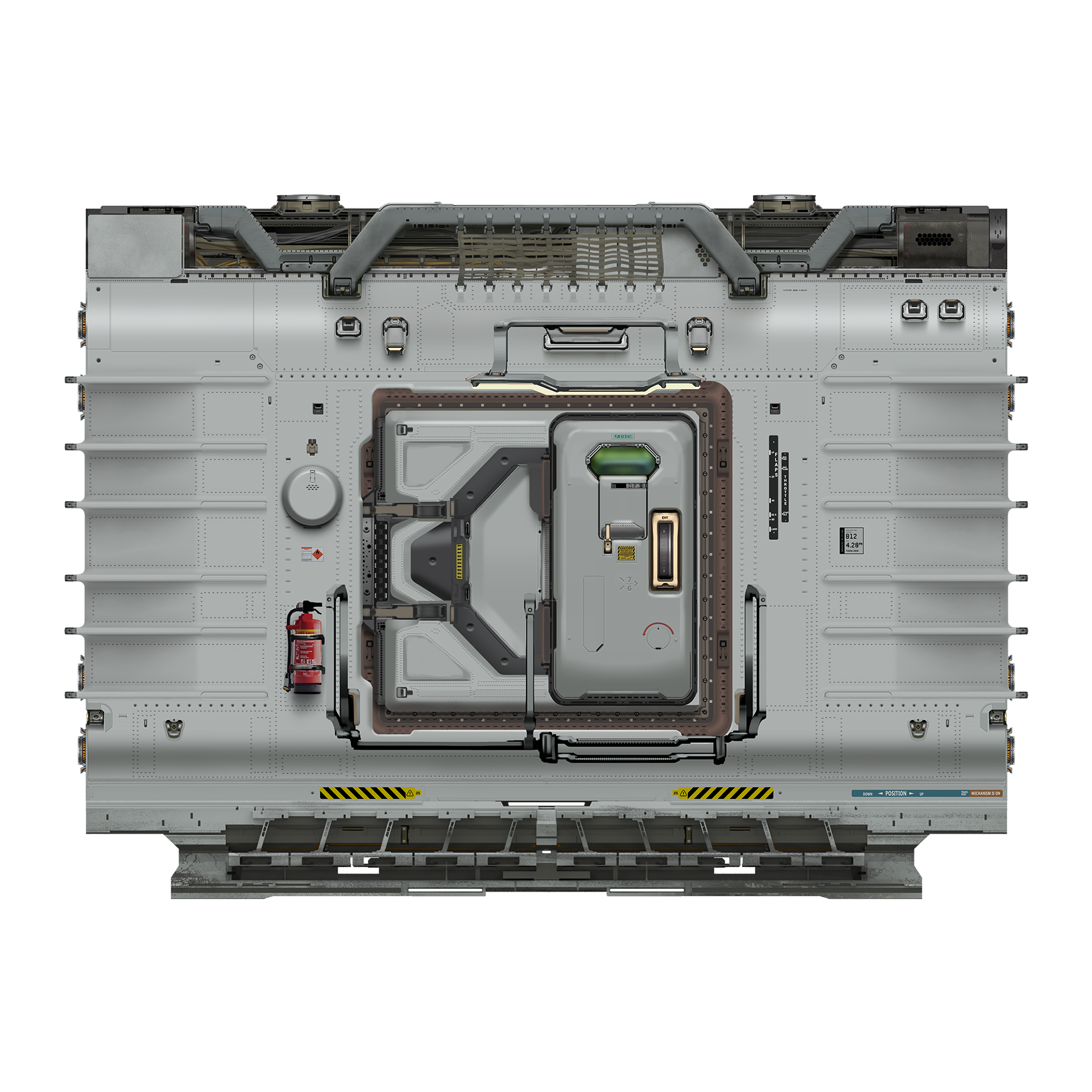
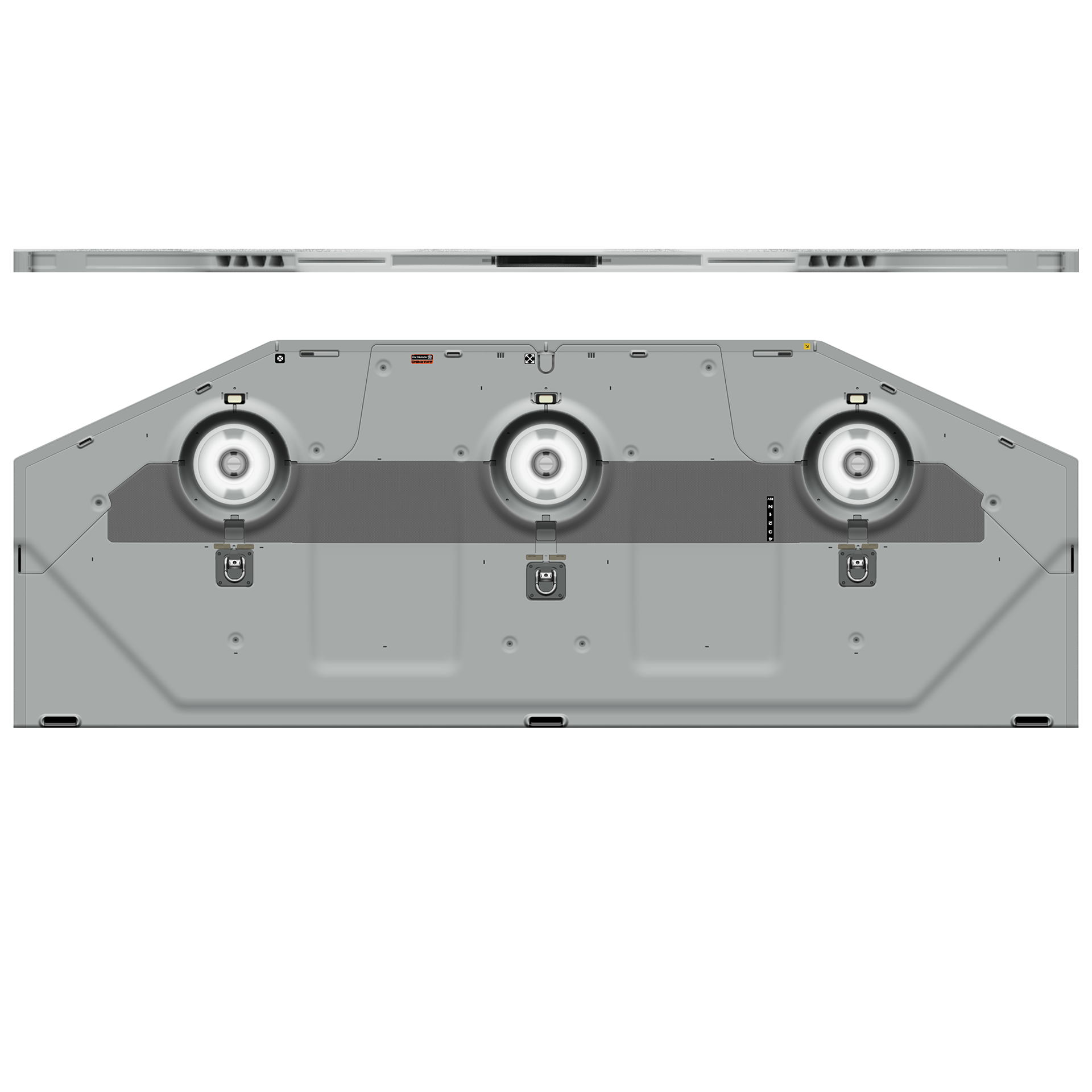
The players had never set foot on solid ground before, having been confined to their ships throughout the game's history. This room would be the first area they encountered when they descended from their ships to the planet's surface. However, constructing this area presented some technical challenges.
The room needed to be compatible with all ships, from the smallest to the largest, which required designing it to fit the smallest scale. It also had to accommodate SRV (short-range vehicles) and include logical mechanisms based on collision boxes to prevent objects from interlocking.
Beyond these technical details, I also had to consider how players would enter the area, as well as the mood lighting and composition. You can find the solutions to these challenges below.






NEXT PROJECT ↓
Creating atmospheric underwater biomes, props, and visual development Stellaris.

(COMPANY) (ROLE) (FOCUS)
SPLASH DAMAGE, 2024 SENIOR CONCEPT ARTIST ENVIRONMENT DESIGN, PROP DESIGN
SPLASH DAMAGE, 2024 SENIOR CONCEPT ARTIST ENVIRONMENT DESIGN, PROP DESIGN


(INTRODUCTION)
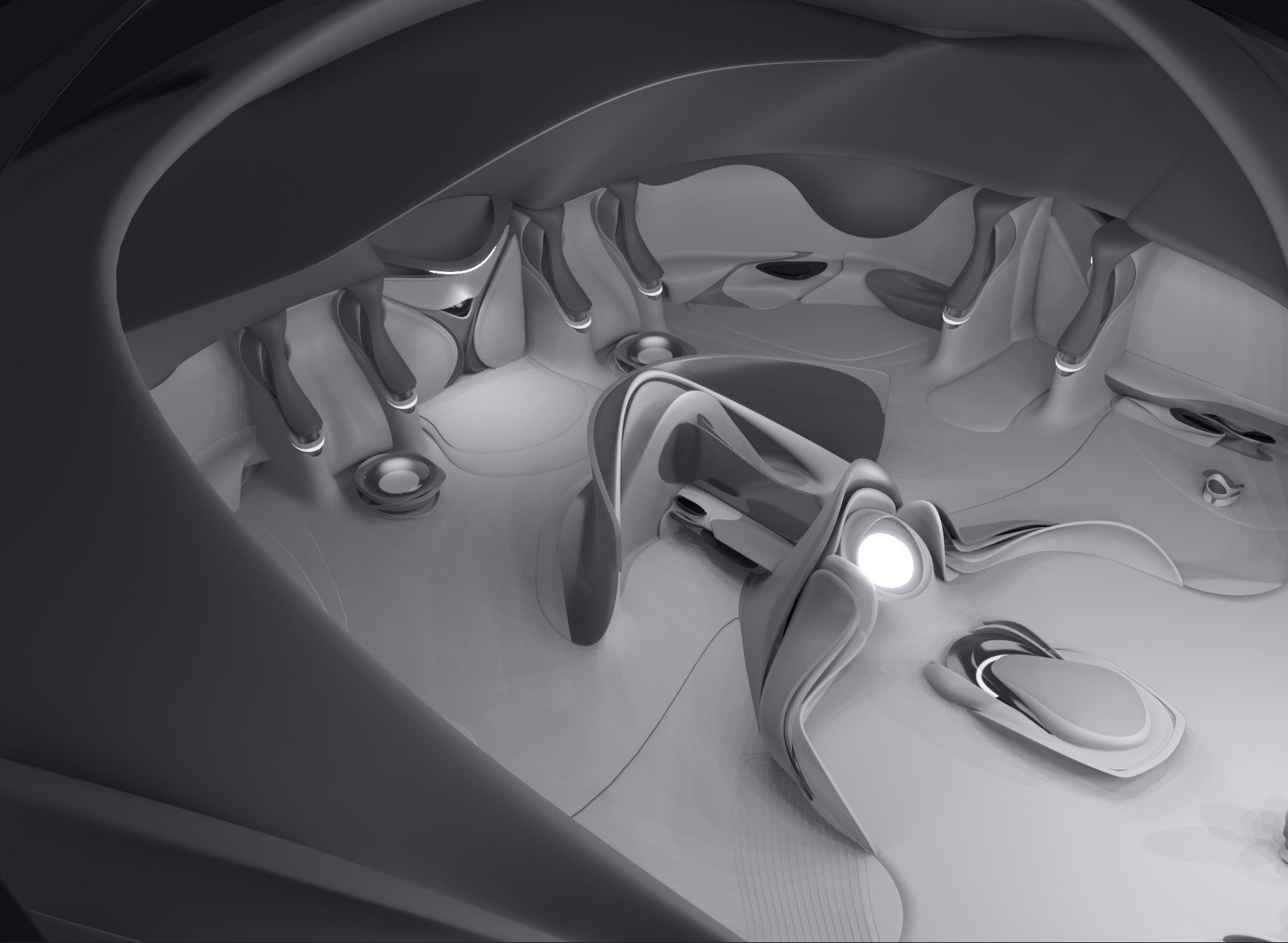
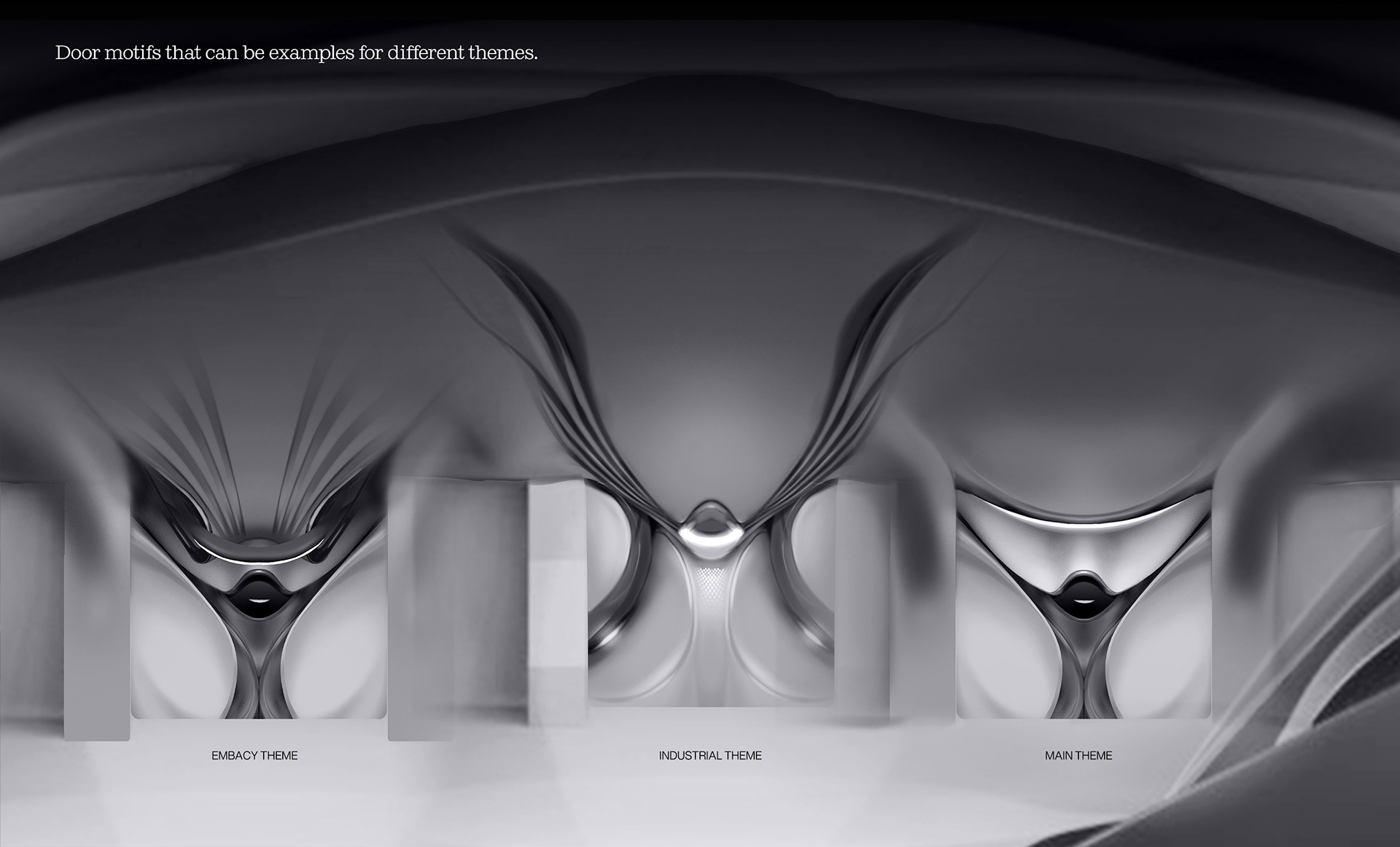
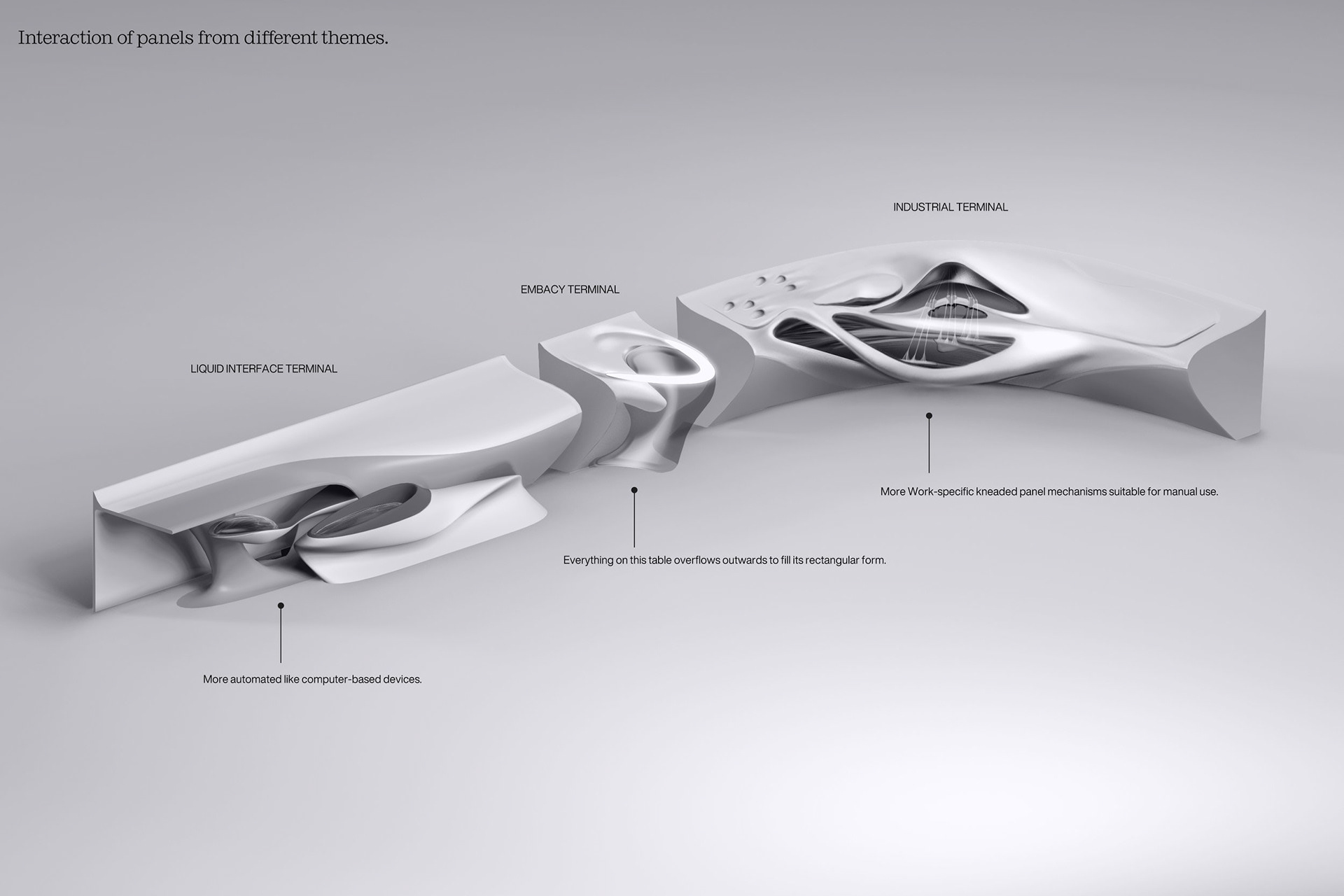
I was working on an expansion pack patch for Stellaris. Although this pack was not released but the design process was incredibly satisfying for me because it required a minimalist style that conveyed the alien language—a concept I find very intriguing.
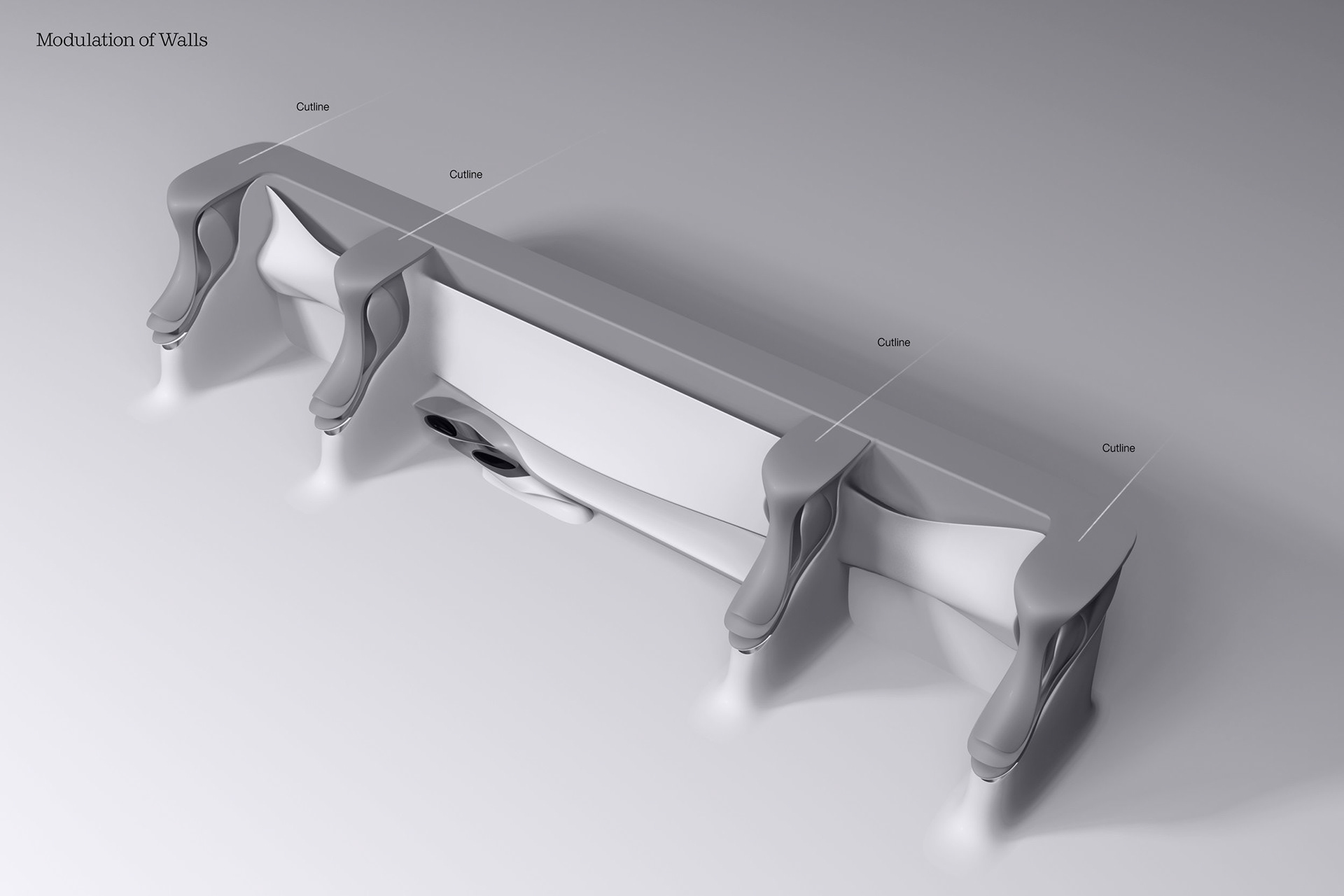
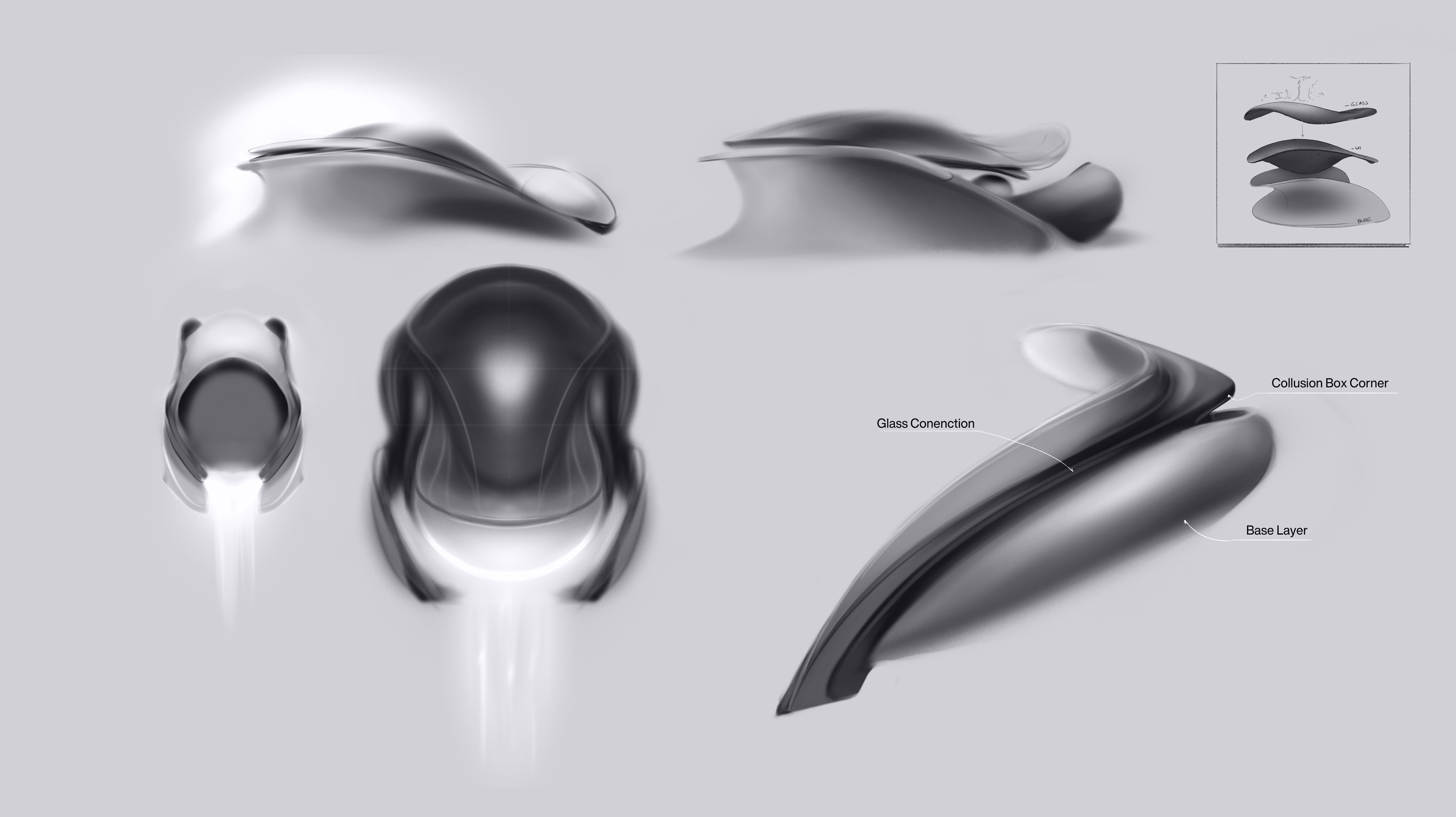
I drew significant inspiration from Zaha Hadid's interior designs, and since the design had to be as simple as possible while also incorporating cover boxes due to mechanics similar to XCOM, it was quite challenging to adjust the organic shapes to fit repeating objects and boxes.
However, I believe the most difficult part was the simplification process. I’ve prepared a guide on this, which you can review below.







FINAL PROJECT ↓
Creating atmospheric underwater biomes, props, and visual development 3D sketches.

(COMPANY) (ROLE) (FOCUS)
NETWORK ASSEMBLY, 2020 CONCEPT ARTIST ENVIRONMENT DESIGN, PROP DESIGN, CHARACTER ART, KEY ART, 3D ART
NETWORK ASSEMBLY, 2020 CONCEPT ARTIST ENVIRONMENT DESIGN, PROP DESIGN, CHARACTER ART, KEY ART, 3D ART


(GEARS OF WAR: ZENITH)
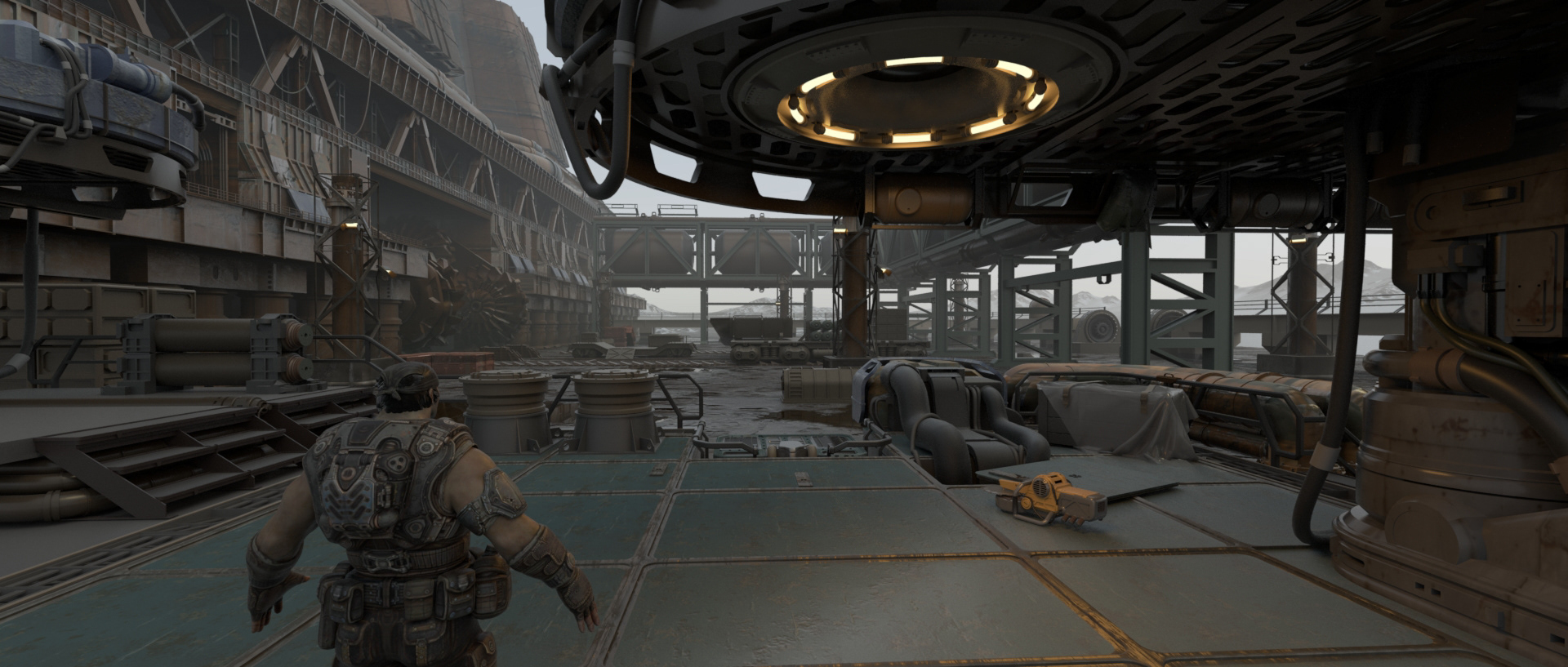
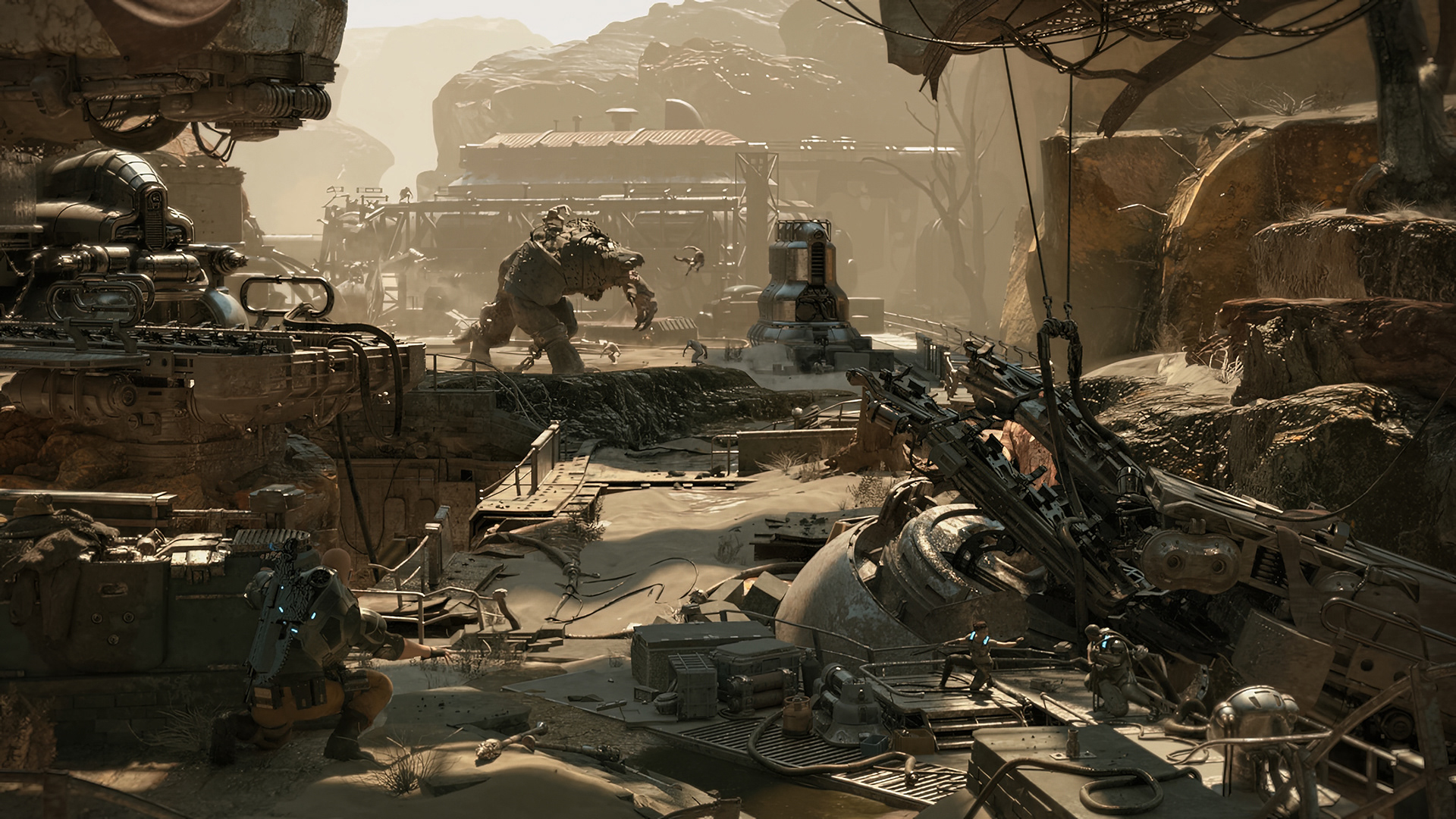
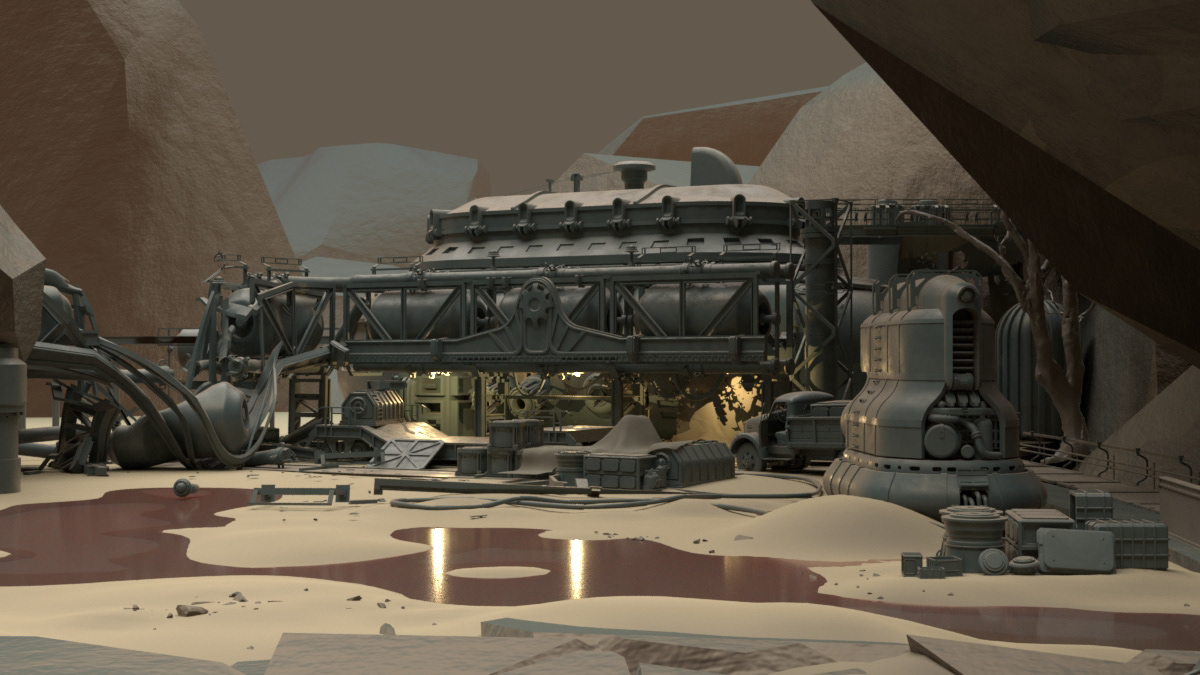
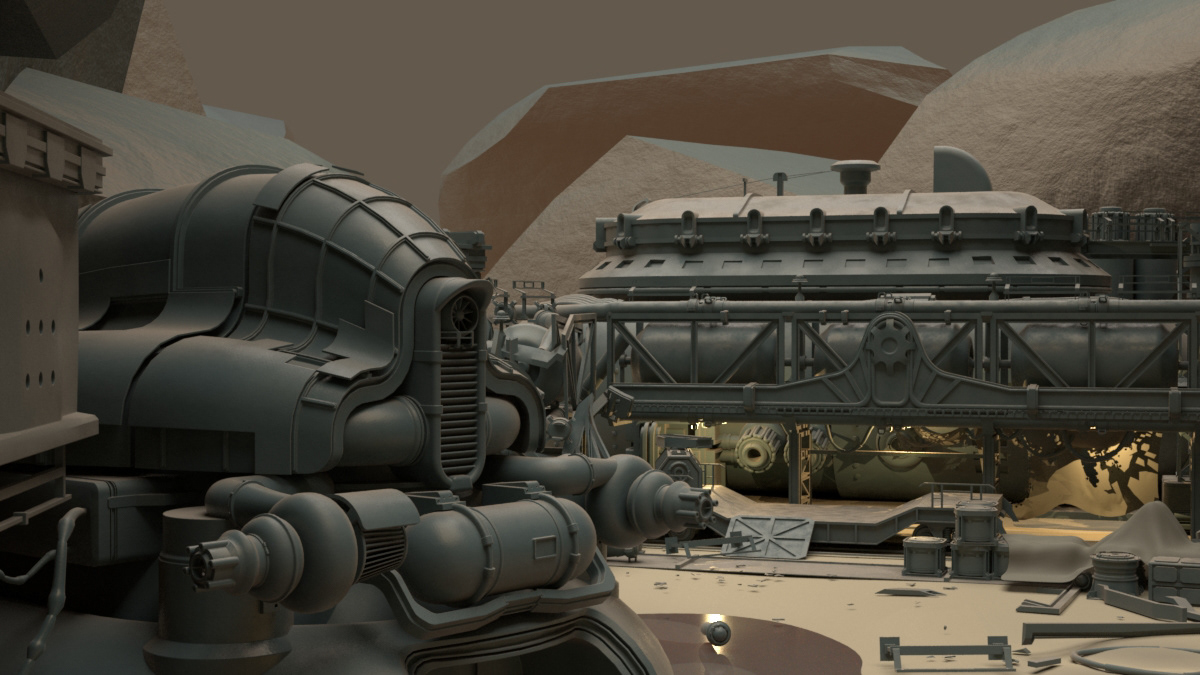
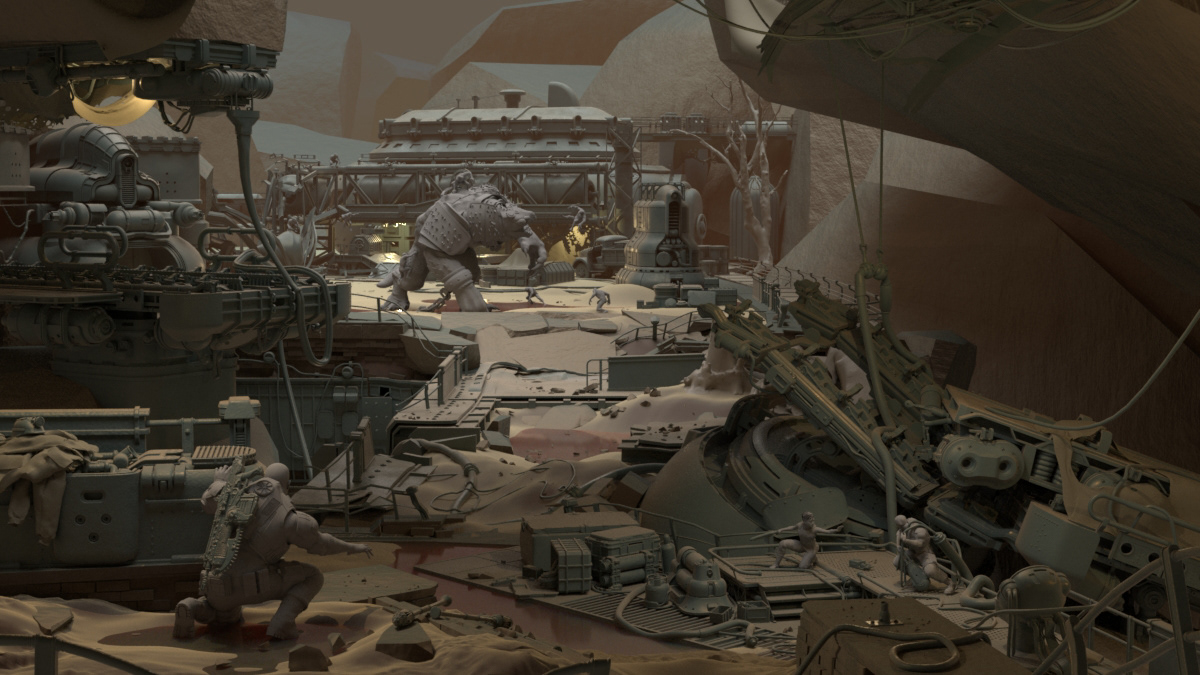
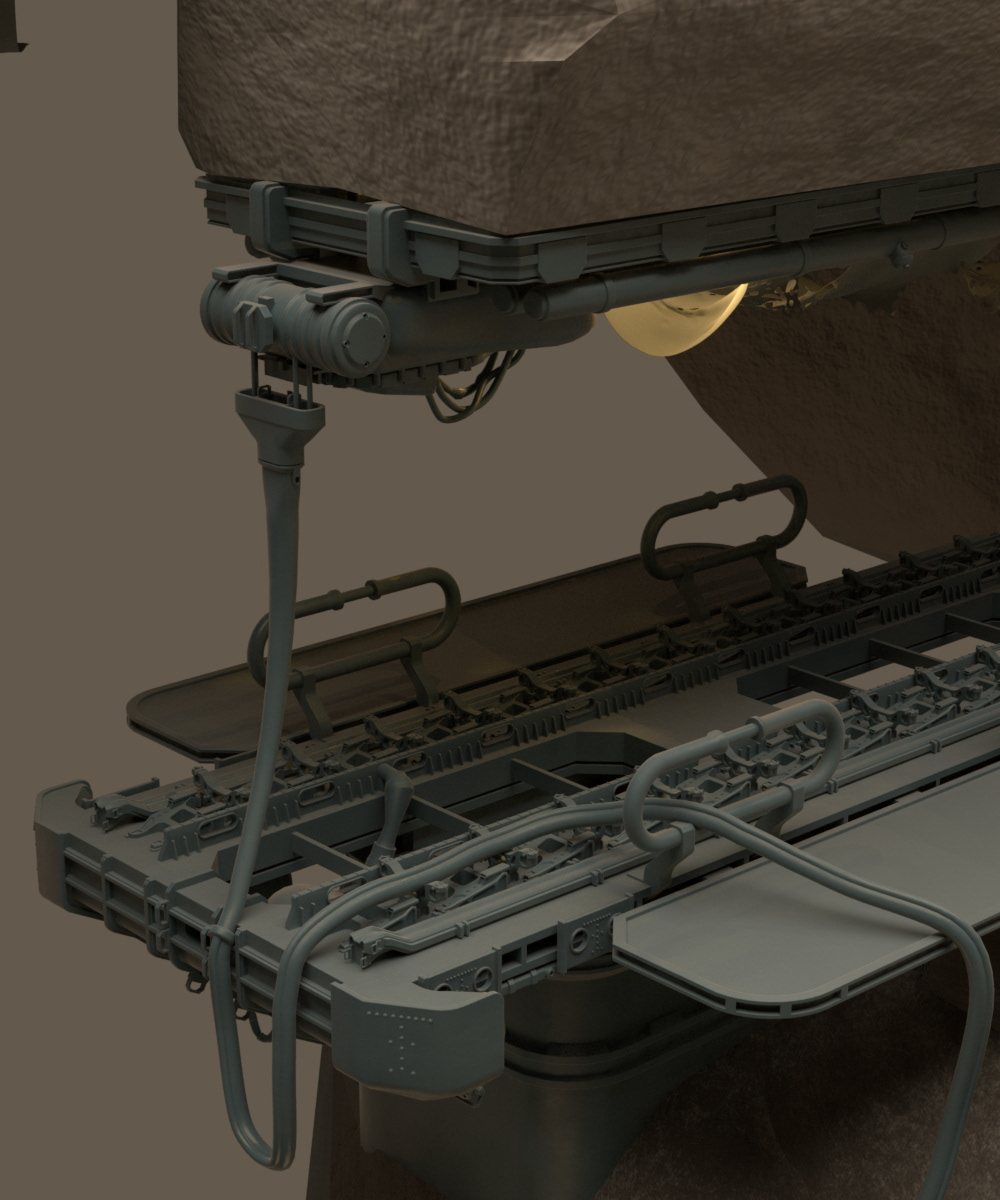
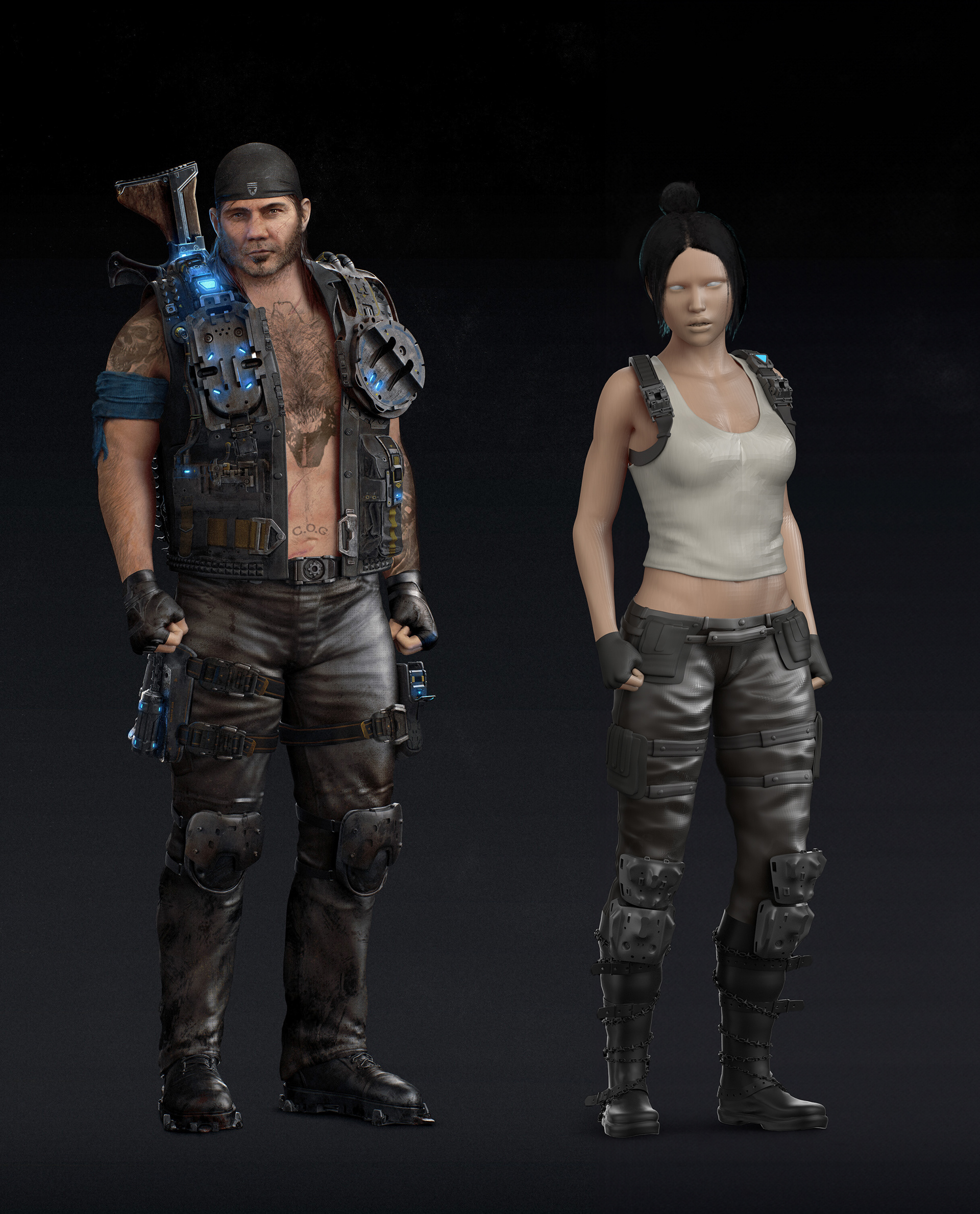
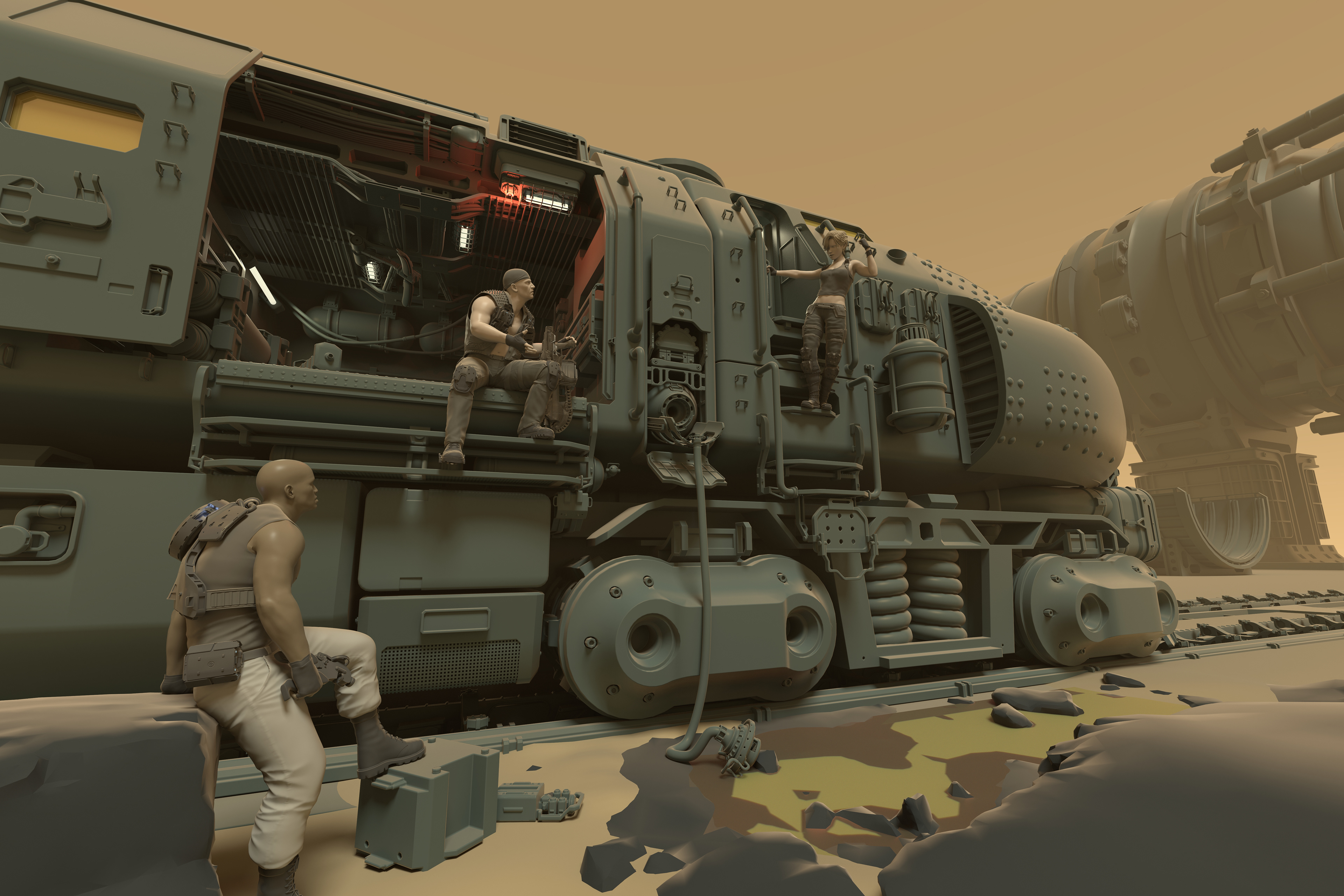
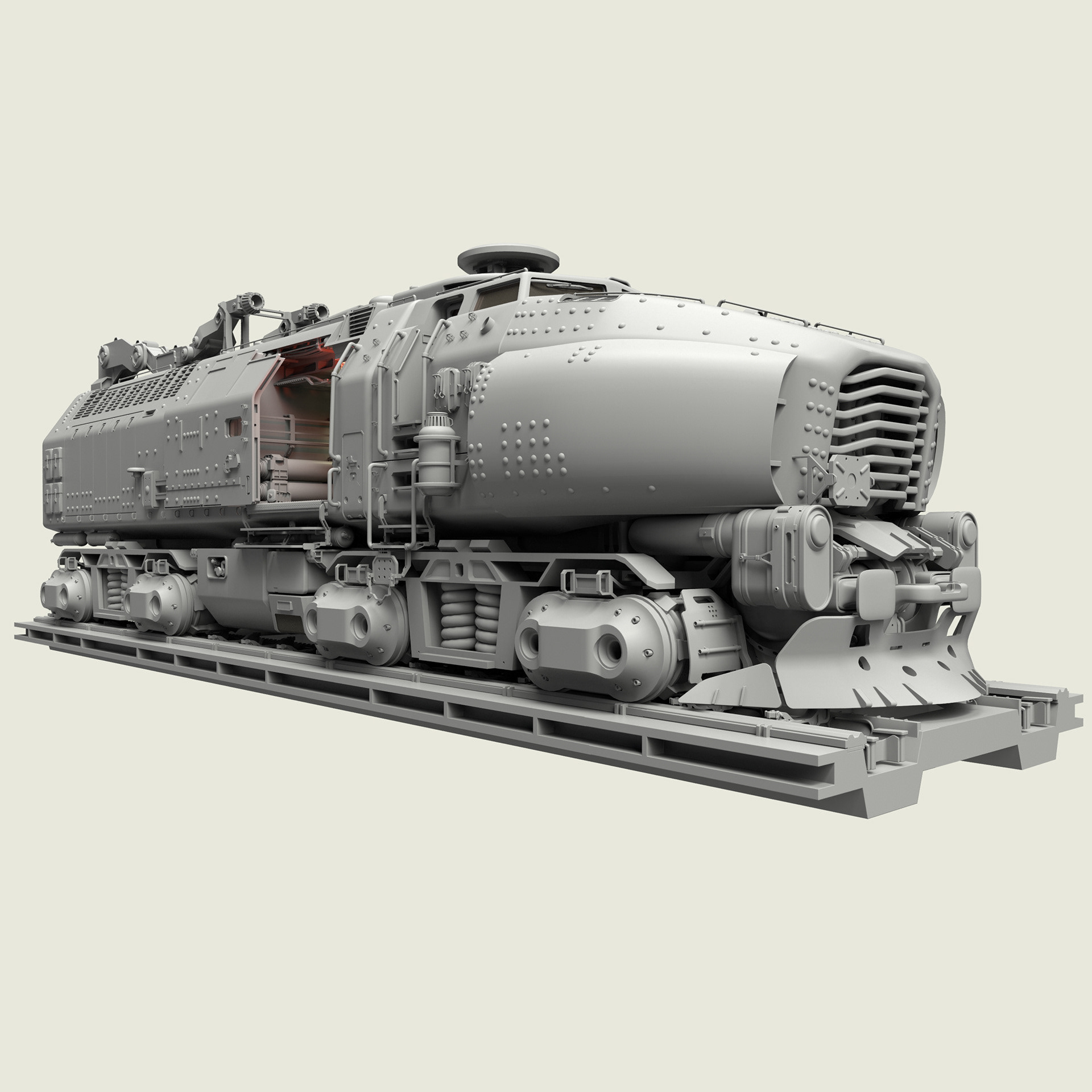
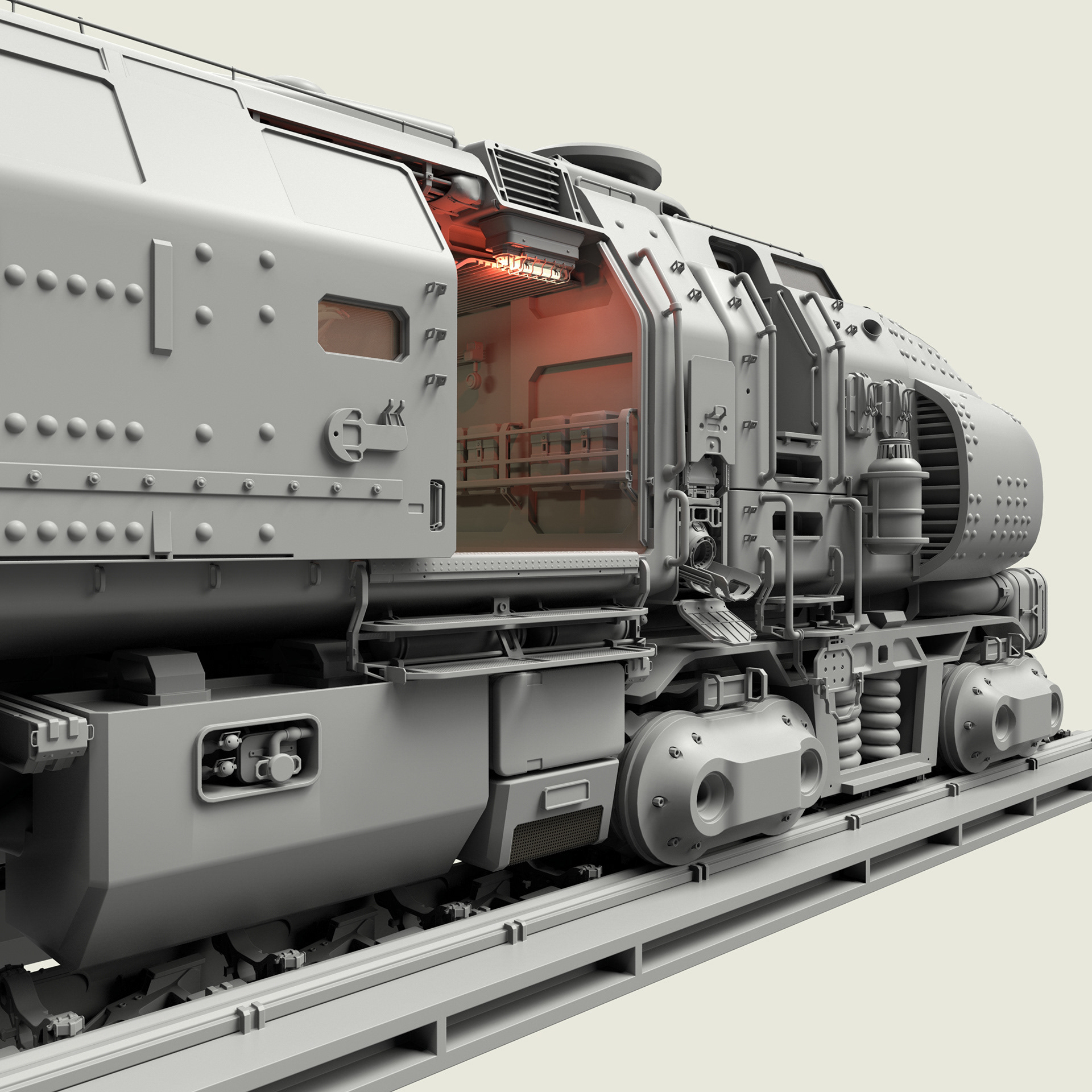
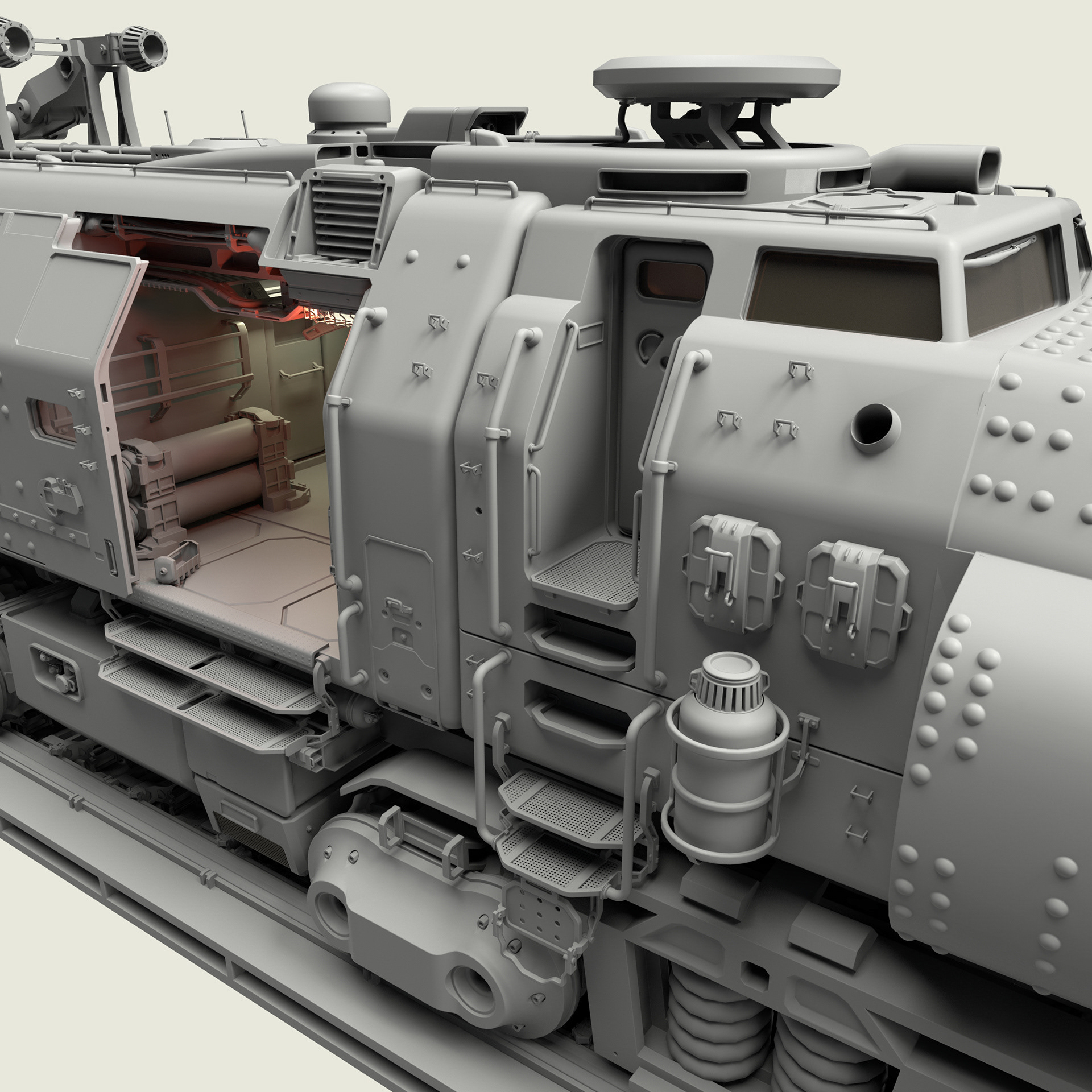
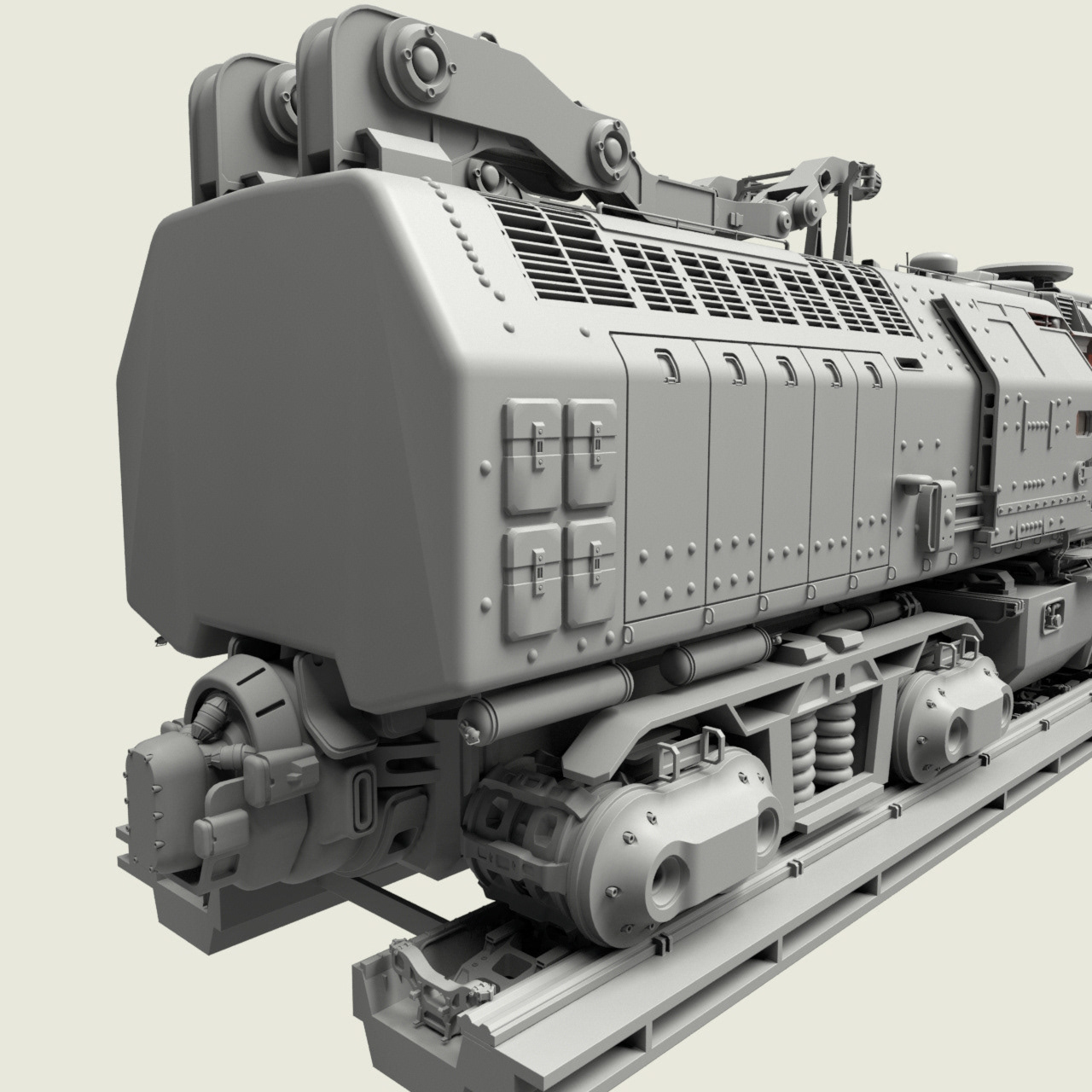
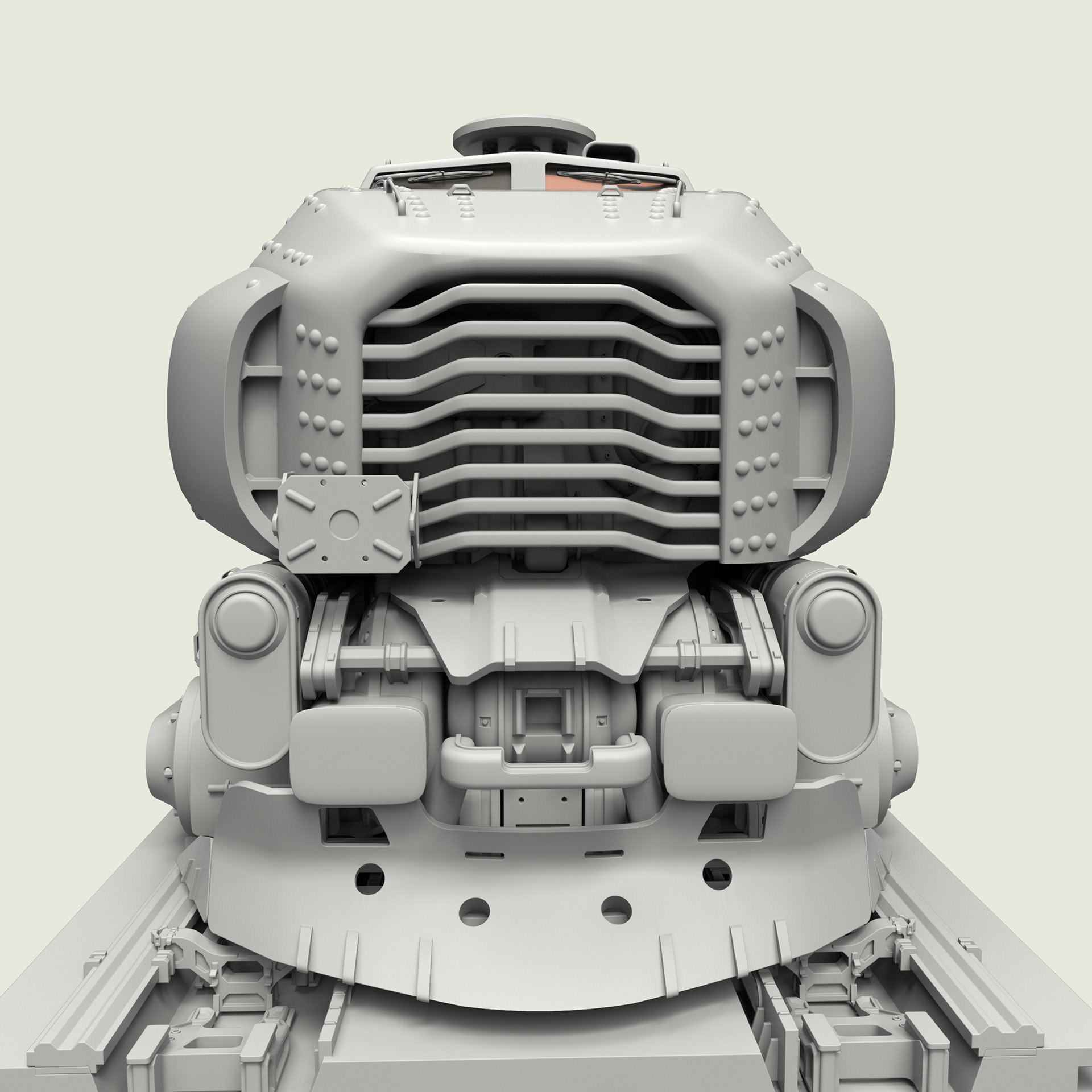
During the concept phase, I create quick 3D sketches to convey my ideas in a comprehensive way.
I primarily use Modo and Blender, focusing on how light interacts with shapes in the scene. My style emphasizes form and composition over textures, aiming for a simple yet impactful narrative through the use of light.
These sketches help provide a quick sense of the scene, and I sometimes place photos over them to create a clearer template.








THANKS FOR WATCHING
